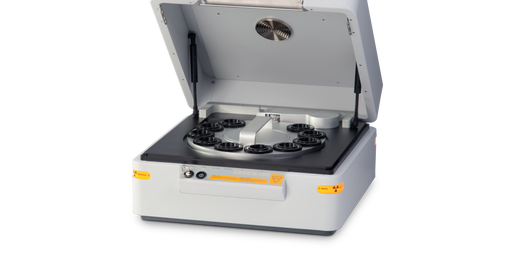
Epsilon 4 Mining & minerals
Increase your process efficiency and recovery rate

Access support to accelerate your scientific discovery with grants of up to $25K, $50K, $75K or 50% off. Apply to our Academic Grant Program now
Apply to our Academic Grant Program now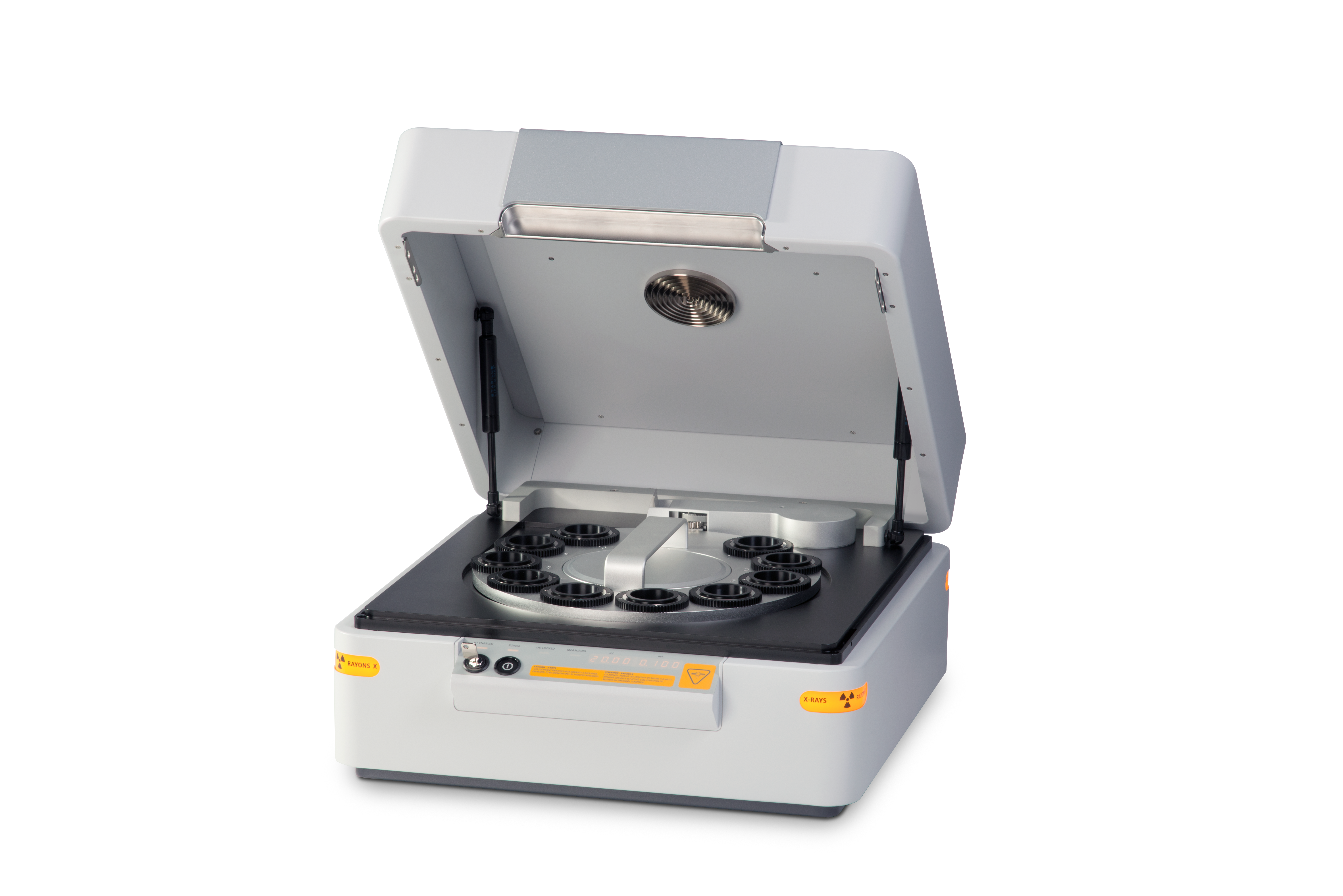

Looking for more information?
To request a quote, more information or download a brochure select an option below.
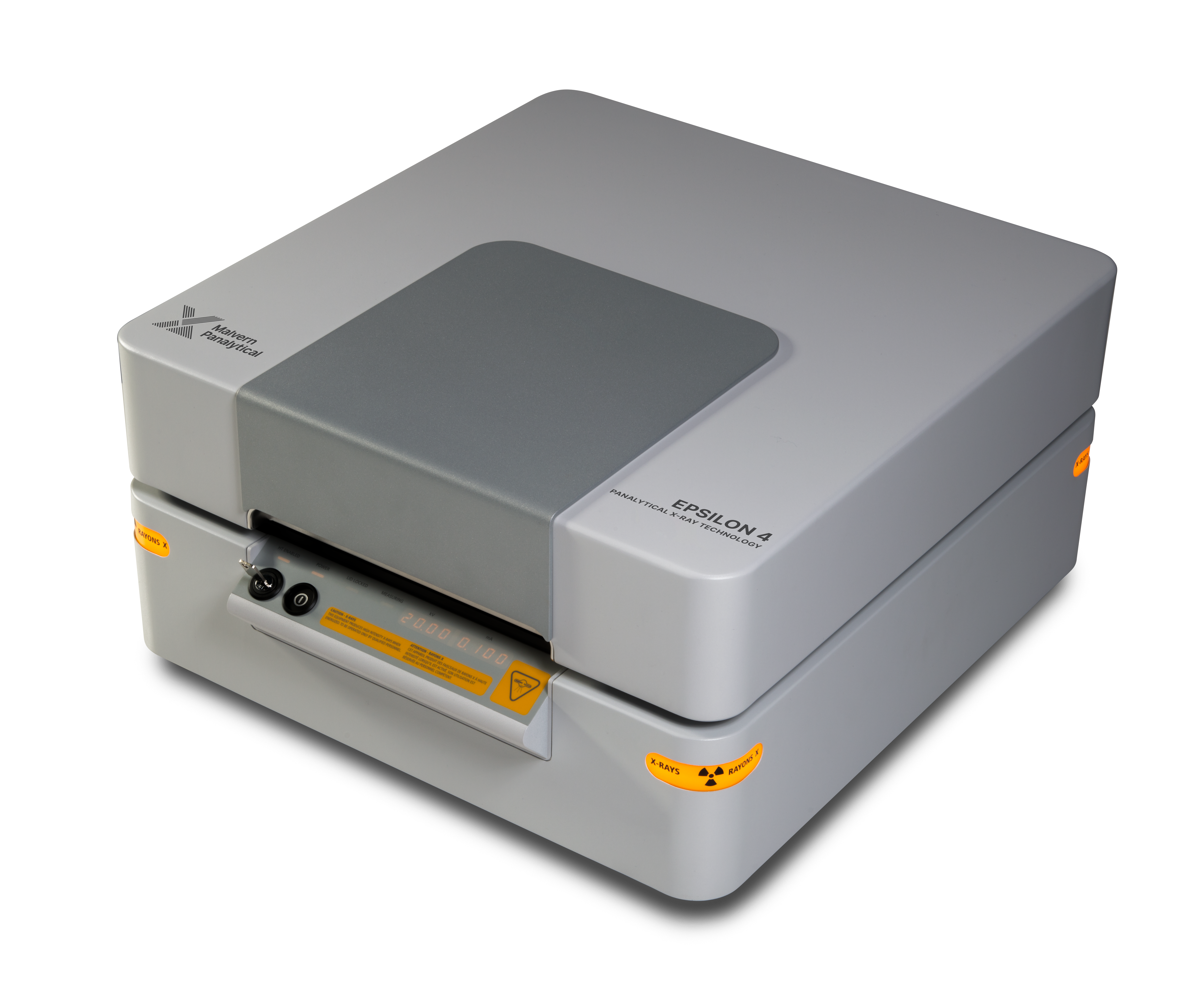
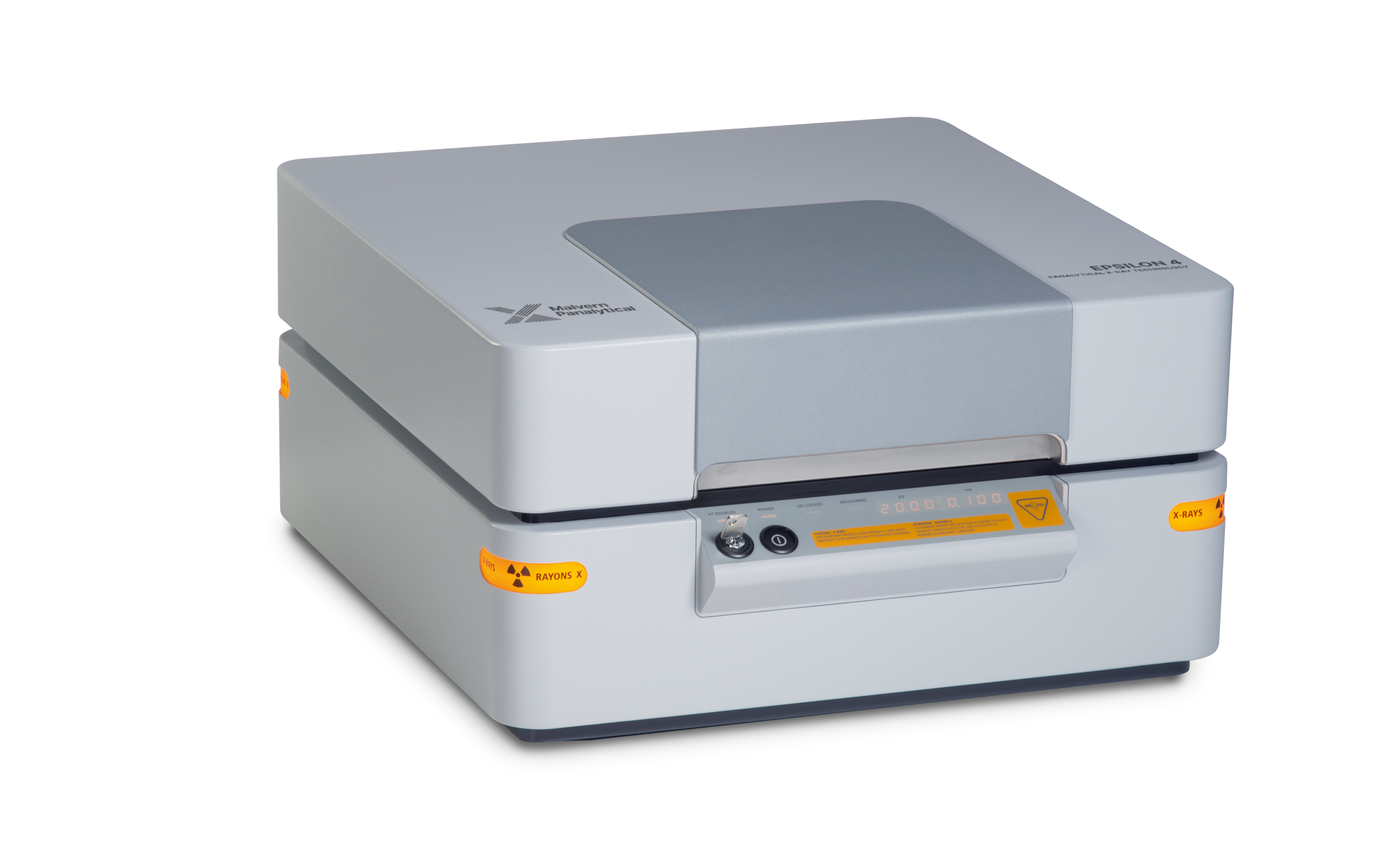
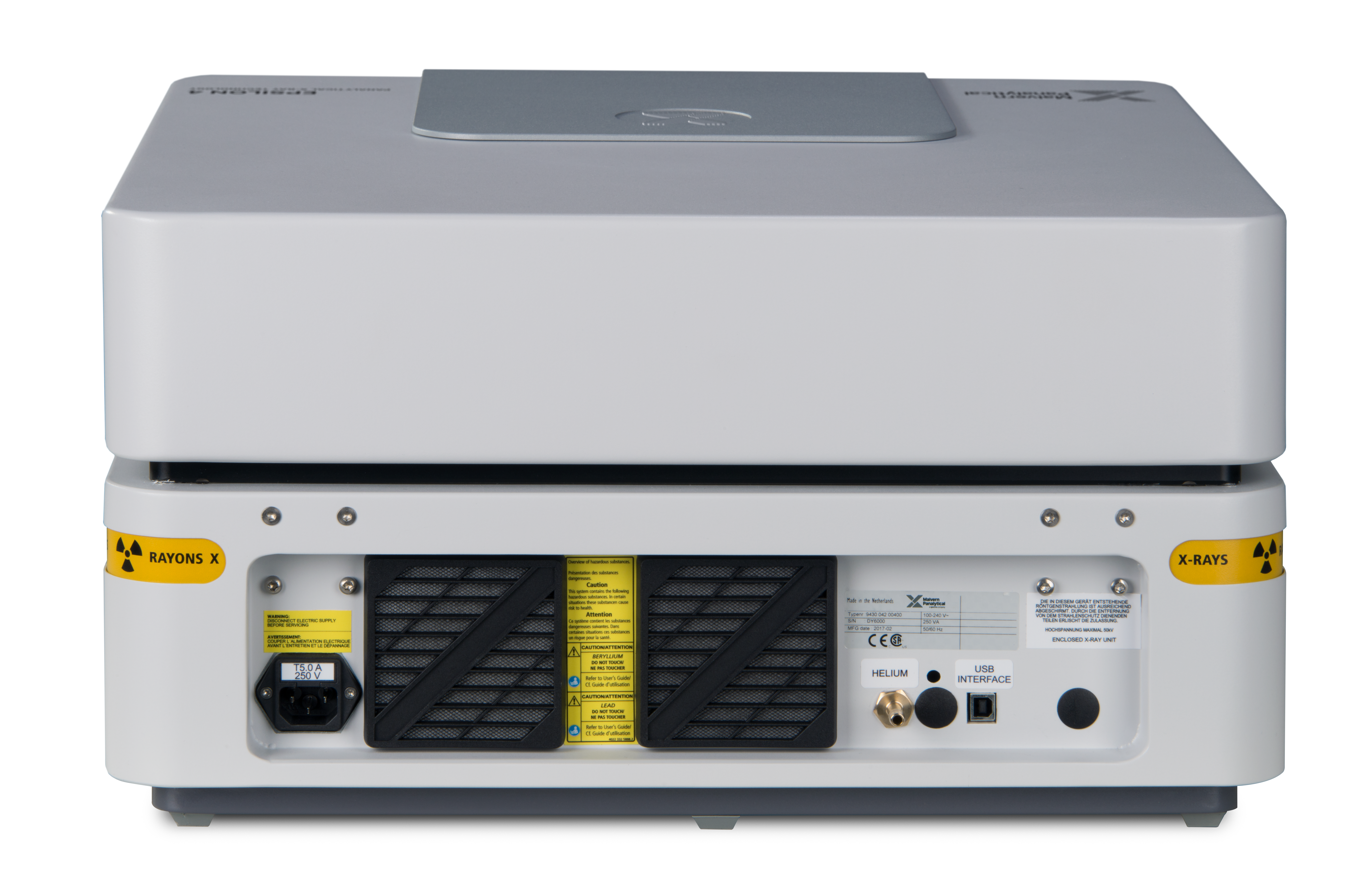
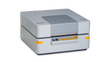
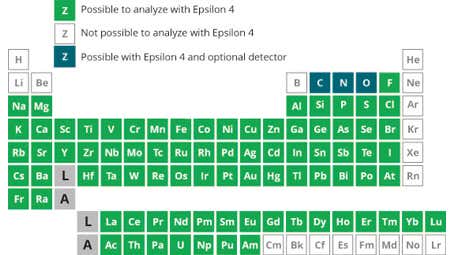
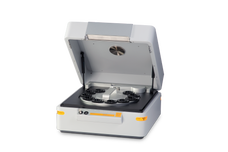
Built on the experience and success of the proven Epsilon 3 range of XRF spectrometers, the Epsilon 4 is a multi-functional benchtop XRF analyzer for any industry segment needing elemental analysis from fluorine (F) to americium (Am) in areas from R&D through to process control.
Combining the latest excitation and detection technologies with mature software and smart design, the analytical performance of Epsilon 4 approaches that of more powerful and floor-standing XRF spectrometers.
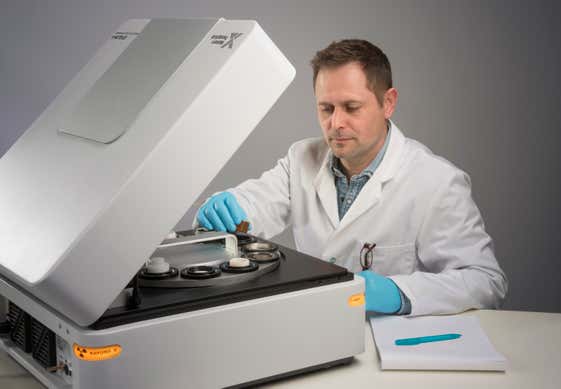
Flexible configurations: Epsilon 4 is a highly flexible analytical tool available in a 10-Watt version for elemental analysis (F – Am) in areas from R&D through to process control. For even higher sample throughput or extended light-element capabilities and in more challenging environments, a 15-Watt version is available, which can even analyze carbon, nitrogen and oxygen.
Latest developments: Epsilon 4 instruments combine the latest excitation and detection technologies with state-of-the-art analysis software. The 15-Watt X-ray tube in combination with the high current (3 mA), latest silicon drift detector SDD30 together with the compact design of the optical path, deliver even better analytical performance than 50-Watt power EDXRF and even benchtop WDXRF systems - with the added bonus of power efficiency.
Fast and sensitive: Fast measurements are achieved by using the latest silicon drift detector technology that produces significantly higher intensities. Unique detector electronics enable a linear count rate capacity to over 1,500,000 cps (at 50% dead time) and a count rate independent resolution typically better than 135 eV for better separation of analytical lines in the spectrum. This allows the Epsilon 4 spectrometer to run at full power and therefore realizes a much higher sample throughput compared to traditional EDXRF benchtop instruments.
Reduce helium consumption: The high performance of Epsilon 4 enables many applications to be operated in air atmosphere, without longer overhead time and costs involved for helium or maintenance of the vacuum system. When measuring in air, low-energy X-ray photons characteristic of sodium, magnesium and aluminum are sensitive to variations in air pressure and temperature. Built-in temperature and air-pressure sensors compensate for these environmental variations, ensuring excellent results whatever the weather.
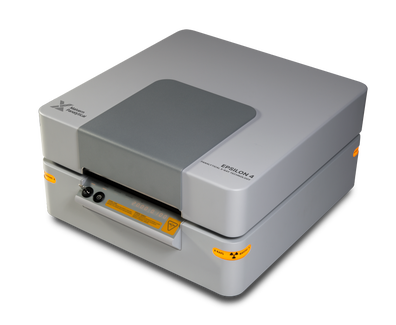
Universal and reliable device.
Jakub Nowak — ComerLab Dorota Nowak
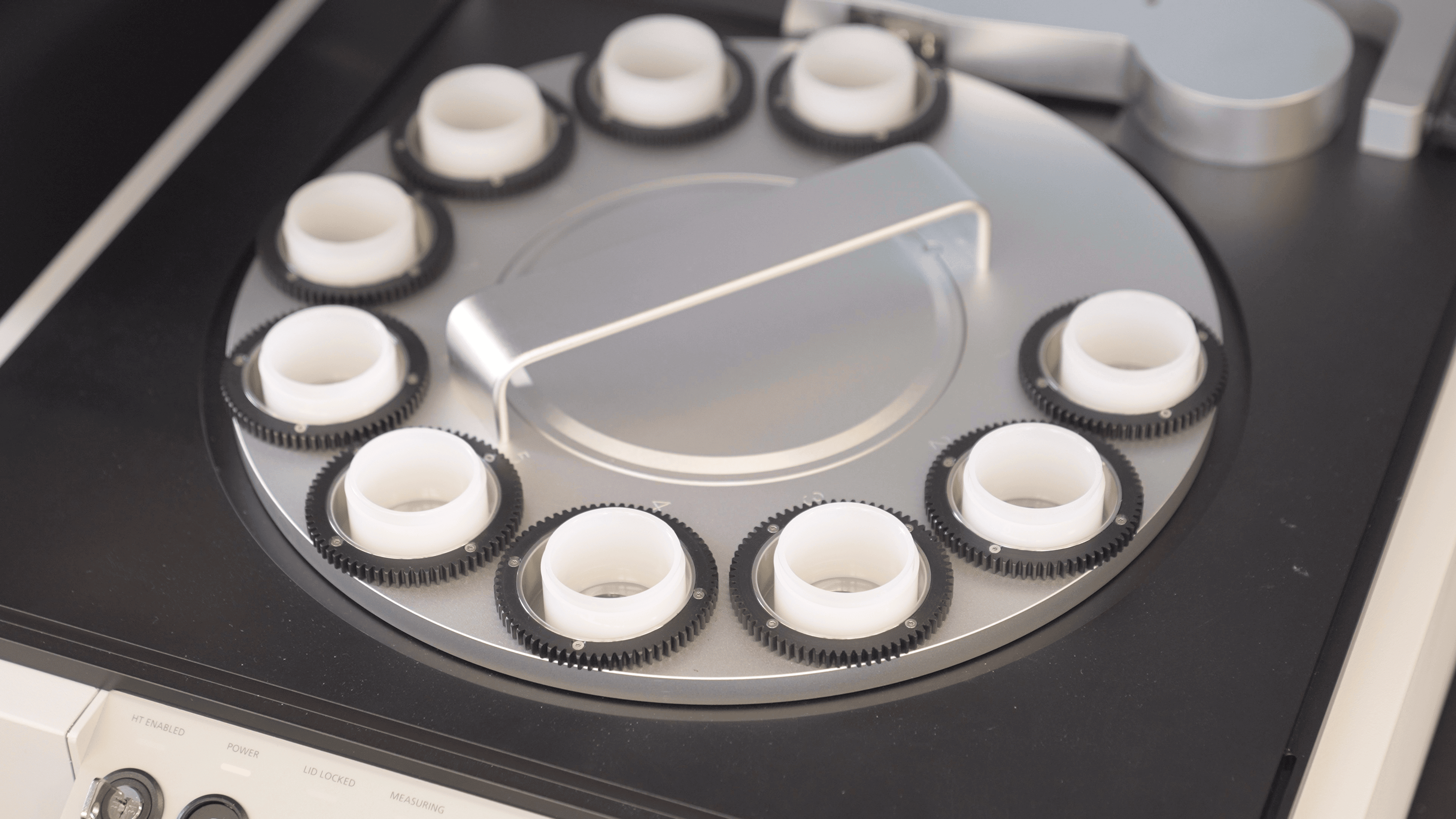
| Sample capacity | 10-position removable sample changer |
|---|---|
| Sample size | Spectrometer can accommodate samples up to 52 mm (2 inch) in diameter |
| Features | Spinner is included for better accuracy of air filter analysis
Large sample mode for analyzing bigger samples up to 10 cm in height |
| Features | Metal-ceramic side window for maximum stability
50 micrometers thin beryllium window for high sensitivity for light elements (Na, Mg, Al, Si) |
|---|---|
| Tube setting | Ag anode X-ray tube for best performance of P, S and Cl analysis |
| Detector type | High-resolution silicon drift detector (SDD), typically 135 eV @ Mn-Kα |
|---|---|
| Features | Max count rate of 1,500,000 counts/s at 50% dead time
Thin-entrance detector window for high sensitivity |
| Software |
|
|---|
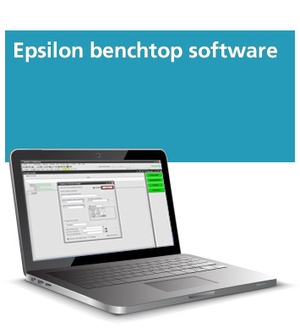
Analytical EDXRF software package for Epsilon benchtop systems
Determination of composition and thickness of coatings and multi-layers

Standardless analysis of all types of samples

Accurate trace element analysis

Instant material identification

Securing your data and satisfying auditors

Accurate elemental analysis by XRF of functional polymer additives

Accurate wide-range oxide analysis of minerals

Excel your analysis with Malvern Panalytical’s pre-calibrated solutions

Accurate elemental analysis of RoHS restricted materials
Accurate analysis by XRF of toxic elements in polymers and plastics

Claisse is always there to meet your needs!

Keeping ahead through Claisse expertise in fusion

Epsilon 4 Anywhere
Due to its low infrastructural requirements, Epsilon 4 can be placed next to the production line anywhere in your process.
Its high performance enables most applications to be operated at ambient conditions, reducing costs for helium or vacuum maintenance.

Energy dispersive X-ray fluorescence spectrometer for the elemental analysis range from carbon (C) to americium (Am) and the concentration range from sub-ppm to 100 wt%.
Use Omnian for standardless analysis, use FingerPrint for material testing when analysis speed is important or use Stratos for a rapid, simple and non-destructive analysis of coatings, surface layers and multi-layered structures.
Users can also use Enhanced Data Security which supports compliance with regulations like FDA 21 CFR Part 11 or use Oil-Trace for quantifying fuel-biofuel mixtures to fresh and used lubricating oils.

The Epsilon 4 handles a wide variety of sample types, including solids, pressed and loose powders, liquids and filters. It performs non-destructive quantitative analysis of elements from carbon (C) fluorine to americium (Am), in concentrations from 100% down to sub-ppm levels, on samples weighing anything from a few milligrams to kilograms.
The Epsilon 4 is a robust and reliable alternative to conventional systems for a wide variety of industries and applications, even when light element analysis is of outmost importance, including: cement production, mining, mineral beneficiation, iron, steel and non-ferrous metals, RoHS screening and quantification, petroleum and petrochemicals, polymers and related industries, glass production, forensics, pharmaceuticals, healthcare products, environmental, food and cosmetics.
Universal and reliable device.
Jakub Nowak — ComerLab Dorota Nowak
| Title | Version | Date | Download |
|---|---|---|---|
| {{ row.title }} | {{ row.softwareVersion }} | {{ row.date }} | Download |
Sorry, no manuals are available for this product
| Title | Version | Date | Download |
|---|---|---|---|
| {{ row.title }} | {{ row.softwareVersion }} | {{ row.date }} | Download |
Sorry, no software downloads are available for this product
To assure that your instrument remains in top condition and performs on the highest level, Malvern Panalytical offers a wide range of services. Our expertise and support services assure an optimal functioning of your instrument.
Service for a lifetime
Adding value to your processes
The latest technology for XRF analysis. Pre-calibrated for your industry. Ready for fast quantification right next to your production line.