AccuSorp HP

Performance under pressure

Static physisorption analysis delivering publication-grade data up to 200 bar. Process-relevant measurement. Walk-away automation. Total confidence in your results.

Performance


Insight into material performance at process-relevant pressures

Accuracy


Publication-grade accuracy for confident decisions

Speed


Run more samples, with less waiting and operator burden

Introducing AccuSorp HP

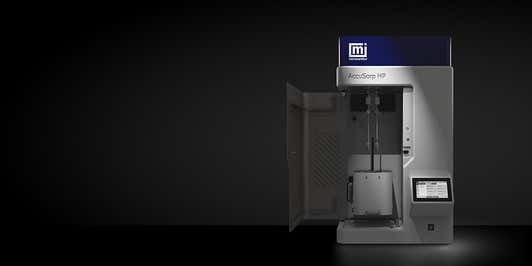
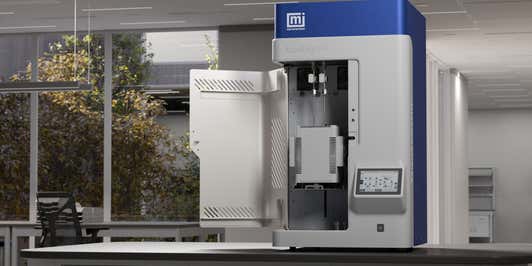
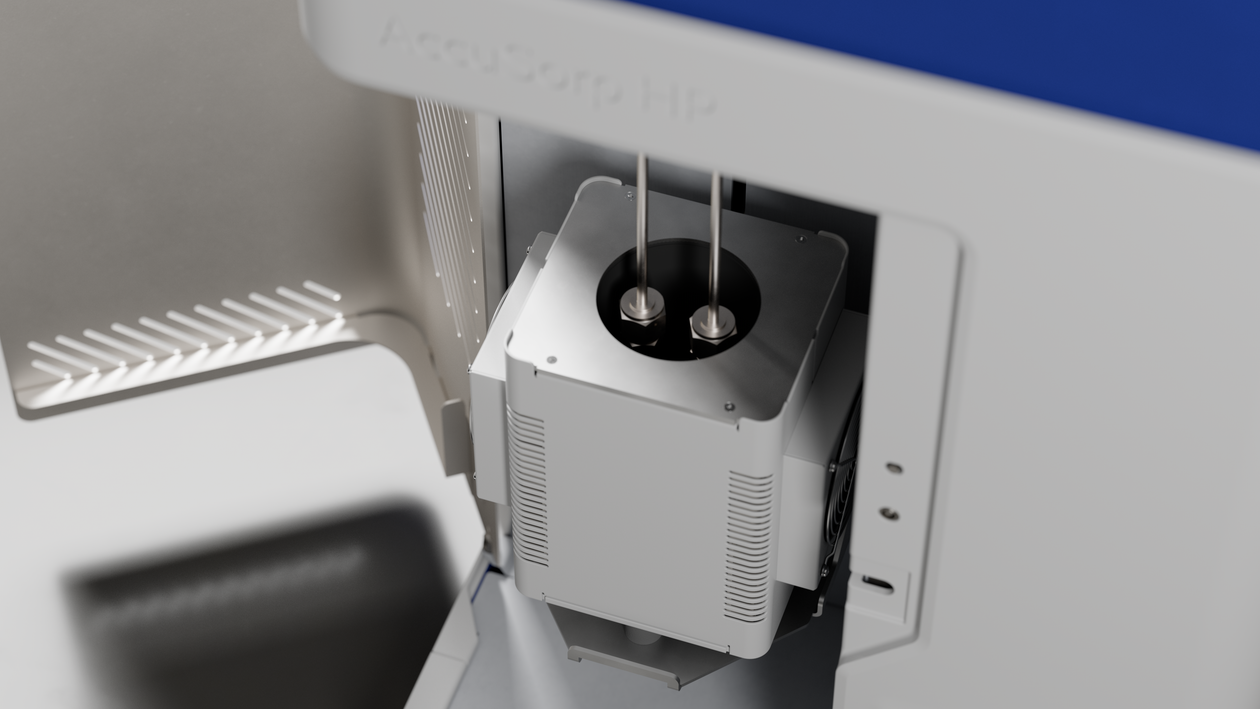
AccuSorp HP (High Pressure) system is a static high-pressure gas adsorption analyzer that measures gas storage capacity, surface area, porosity, and adsorption kinetics at pressures up to 200 bar, reflecting the conditions that matter for real-world applications.

AccuSorp HP builds on more than 60 years of Micromeritics gas adsorption expertise, AccuSorp HP delivers publication-grade accuracy, automated operation, and high throughput to keep pace with the demands of modern R&D and industrial quality control (QC).

Characterization at process-relevant conditions

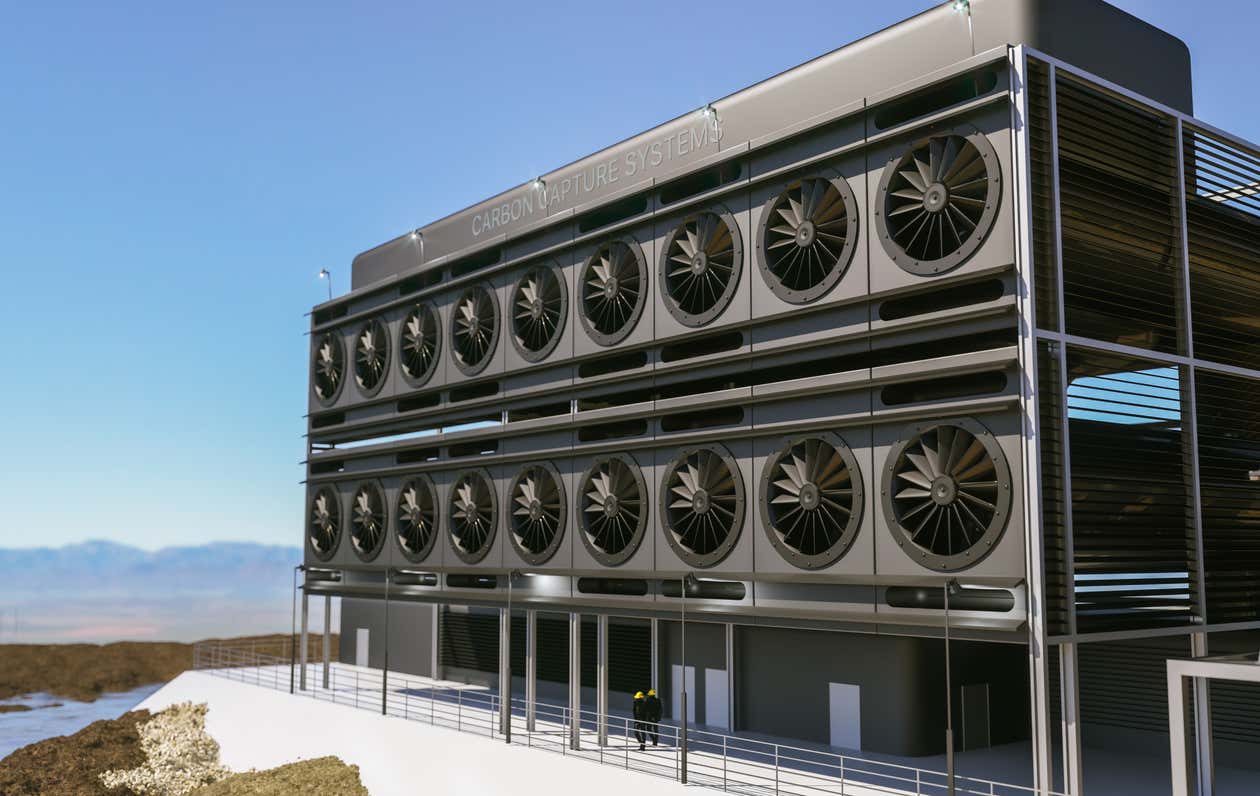
The AccuSorp HP physisorption analyzer characterizes your materials at operating pressures up to 200 bar, so your lab data can help predict real process performance. Make data-backed decisions to optimize processes across applications such as gas storage, separation, carbon capture, and more.

Process-relevant

More high-pressure adsorption data. Less pressure on your operators.

Traditional high-pressure adsorption analysis stifles productivity, requiring constant operator intervention across long analytical runs. AccuSorp HP is different, combining reliable accuracy with unattended operation and dual-sample analysis  so your lab can analyze more, worry less, and trust every data point.

AccuSorp HP is designed for laboratories that need reproducible, high-pressure adsorption data at scale, without the complexity of traditional research systems.

Accuracy you can publish

  • ±0.04% full scale transducer accuracy 
  • Blank tube tests confirm ±0.1% error at 100 bar – enabling confident measurement even with small sample quantities
  • Manifold temperature stable within ±0.02 °C
  • Kinetic data captured every 0.1 seconds 

True walk-away automation

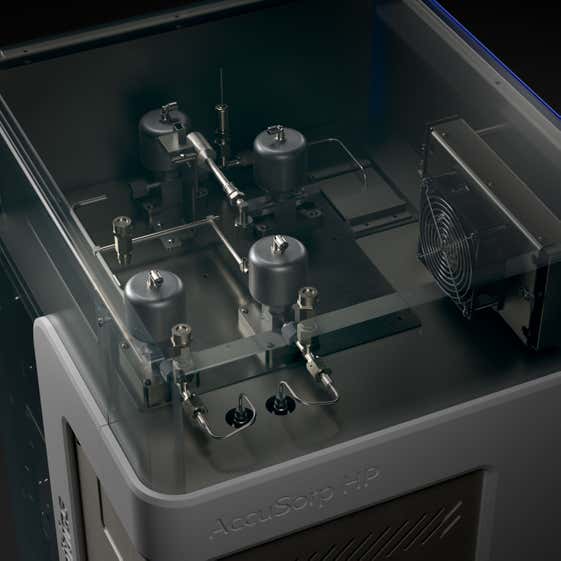
  • Automated elevator for dual free-space measurement
  • Dual servo valves achieve target manifold pressures within <1%
  • Restrictor plates prevent pressure overshoot, saving time and analysis gas
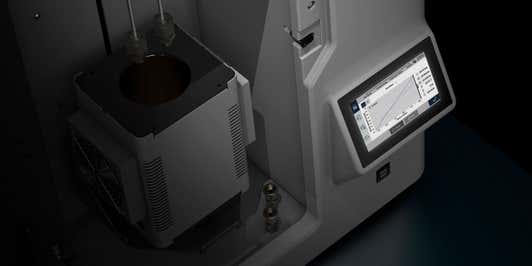
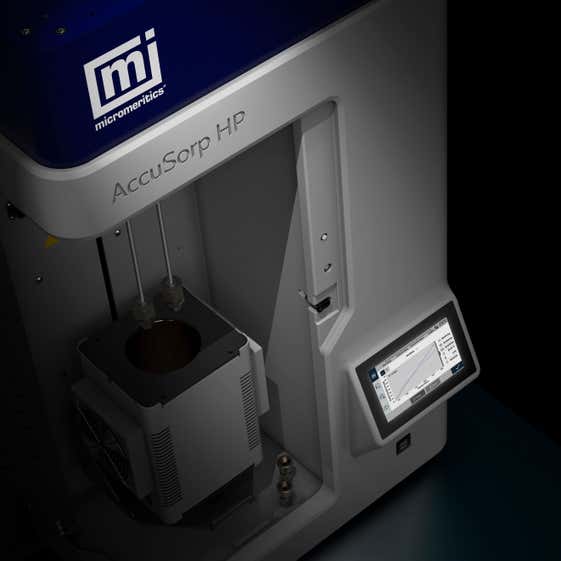
  • Touchscreen-driven stored methods that keep analyses running reliably from start to finish without the need for operator supervision

Throughput that keeps you on target

  • Dual analysis ports for parallel sample runs 
  • Separate degas preparation to reduce downtime and prevent contamination risk
  • Compatible with dedicated degas stations, including new VacPrep (designed specifically for AccuSorp HP) and Smart VacPrep
  • Automated steps that eliminate mid-run interruptions – helping labs meet throughput targets with confidence

Risk-free operation for worry-free deployment

Stringent safety features ensure peace of mind for operators and procurement professionals, even when operating remotely.
  • Automatically shut down the system and vent to safe pressure when 1% concentration is detected, below the LEL of hydrogen and light hydrocarbons

  • Set to 207 bar and 2 bar to protect against over-pressurization

  • Prevents interference while system is pressurized and when hot or cold temperature control devices are in use.

  • Third-party CE declaration and ETL Mark (NRTL) conforms to Pressure Equipment Directive (PED) 61010-1

Smart software. Seamless decision-making.

Our intuitive MicroActive software generates publication-grade excess and absolute isotherms without manual post-processing. Spend less time reducing data and more time acting on it. 

  • Excess and absolute isotherms automatically generated for publication-ready outputs
  • IAST (Ideal Adsorbed Solution Theory) and HOA (Heat of Adsorption) calculations built in for deeper material insight 
  • Remote connectivity for monitoring analysis status or reviewing data from any location
  • Automatic data export to XLS, TXT, and PDF formats for seamless reporting and LIMS integration

Engineered for your sample

AccuSorp HP accommodates a range of sample tube sizes to support different sample types, quantities, and research requirements:

  • Two 2 cc analysis chambers (standard and alternative configuration)
  • 10 cc analysis chamber for larger or lower-density samples

With ±0.1% error confirmed at 100 bar, AccuSorp HP delivers reliable data even with very small sample quantities.  That is a critical advantage for researchers working with novel, scarce, or expensive materials such as MOFs, COFs, and advanced sorbents.

Precision conditions, accurate results

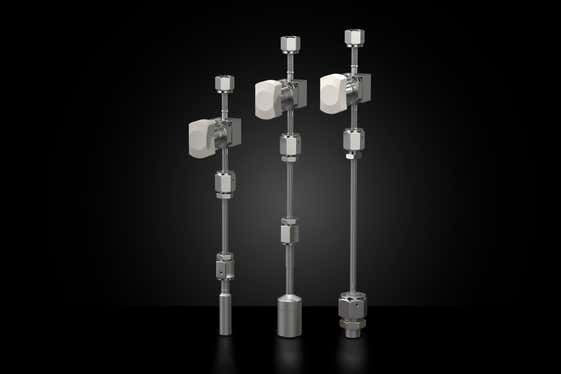
AccuSorp HP supports a range of temperature control devices, giving labs full flexibility to work across cryogenic and elevated temperature conditions

Temperature control

Applications

Whether you’re researching novel materials or performing high-throughput production QC, AccuSorp HP delivers real efficiency gains across applications, backed by our more than 6 decades of expertise as a global leader in gas adsorption.

Carbon capture, utilization and storage (CCUS)

Screen and compare sorbents at scale

Hydrogen and natural gas storage

Benchmark materials with consistant workflows

Catalysts

Enable reproducible adsorption characterization supporting performance evaluation

Especificación

AccuSorp HP is a physisorption analyzer designed to deliver uncompromising precision at pressures up to 200 bar, with automation features that streamline workflows across both research and industrial QC labs.

Analysis range 0.00013 to 200 bar
Transducer accuracy 200 bar ±0.04% FS
1 bar ±0.1% FS
Sample ports 2
Gas inlets 3
Pressure relief valves 2, set at 2.5 bar and 207 bar
Hydrogen sensors 2, triggered at 1% concentration
Dosing and evacuation control Two Servo Valves within <1% of target
Compatible gases H₂, CO₂, CH₄, N₂, He, Ar, C₂H₆, C₂H₄, C₃H₈, C₃H₆, NH₃, and O₂*
*For safety O₂ is limited to 10 bar and requires dry pump
Manifold temperature 30-50°C ±0.02°C
Sample temperature 80-500°C ±0.1°C Furnace
-5-105°C ±0.1°C ISO Controller

Frequently asked questions

Why AccuSorp HP?

Simply put: to automatically measure accurate gas adsorption isotherms at process relevant conditions.  Fundamentally understanding the gas storage capacity of a material is critical for researchers focused on carbon capture, gas separations, and gas storage applications.

Why does adsorption increase with an increase in pressure?

The higher the pressure, the more adsorption occurs. This is because the increased pressure forces the adsorbate molecules closer to the adsorbent surface, making them more likely to stick. Additionally, the higher the concentration of the adsorbate, the more adsorption occurs. AccuSorp HP operates at pressures up to 200 bar, capturing the full adsorption behavior of materials at the conditions where they will actually be deployed.

What industries can benefit the most from using an AccuSorp?
  • Carbon capture
  • Carbon dioxide sequestration
  • Hydrogen and natural gas storage
  • Gas separations
  • Shale gas
  • Coalbed methane (CBM)
What are the advantages of using the volumetric method in gas adsorption measurements?

The volumetric method is the established standard for high-pressure gas adsorption. For professionals prioritizing precise measurements and operational ease, volumetric adsorption systems facilitate straightforward calibration, minimal downtime, and seamless integration into existing workflows. Compared to gravimetric analysis, volumetric systems are more cost-effective to purchase and operate, and they don't rely on a sensitive microbalance that can be damaged through routine use or require frequent recalibration.  

Empower your laboratory to elevate its research quality and make data-backed decisions that drive innovation with every high-pressure adsorption experiment completed. 

What is the difference between an excess and an absolute isotherm?

At low pressures, excess and absolute isotherms are nearly identical, but at high pressures, the difference becomes significant. An excess isotherm measures only the gas adsorbed above what would be present in the bulk gas phase, while an absolute isotherm accounts for the total amount of gas in the adsorbed layer, including the contribution of the bulk gas density. 

For applications such as hydrogen storage and CO₂ capture, the absolute isotherm gives a more physically meaningful representation of true storage capacity. 

Why is it valuable to study the storage capacity of materials at high pressures?

Most real-world gas storage and separation processes operate at elevated pressures. including hydrogen storage tanks, CO₂ capture systems, and gas separation membranes. Measuring adsorption only at low pressure tells you how a material behaves in the lab, not how it will perform in deployment.

High-pressure adsorption data reveals the storage capacity, saturation behavior, and kinetics that determine whether a material is viable at scale. 

What types of materials can be characterized with AccuSorp HP?

AccuSorp HP is suited to a wide range of porous and particulate materials, including metal-organic frameworks (MOFs), covalent organic frameworks (COFs), activated carbons, shales and minerals, catalysts, and other advanced sorbents. Its high-pressure capability makes it particularly valuable for screening and evaluating materials intended for use in gas storage, carbon capture, and separation applications, where performance at elevated pressures determines real-world viability.

Which gases are compatible with AccuSorp HP?

AccuSorp HP is compatible with a broad range of gases, including CO₂, H₂, CH₄, N₂, O₂, and NH₃ (ammonia), among others. 

Compatibility with O₂ and NH₃ extends AccuSorp HP's application range beyond many competing systems. 

Step up your lab efficiency without stepping up your workload

Unlock automated accuracy for high-pressure performance. AccuSorp HP can accelerate your productivity with:

  • ±0.04% full scale transducer accuracy and ±0.1% error at 100 bar
  • Publication-grade data at process-relevant pressures
  • True walk-away automation that keeps analysis running reliably without operator supervision
  • Dual analysis ports for parallel sample runs
  • Intuitive MicroActive software that simplifies data reduction