촉매제 특성 분석
사용자, 제조업체 및 연구자를 위한 촉매 물질 특성 분석 장치


촉매는 수소, CCUS, 지속 가능한 화학 제품 및 순환형 제조의 미래를 이끌어갈 것입니다. 산업계, 학계 및 표준화 분야의 전문가들이 앞으로의 전망에 대해 이야기합니다.. 촉매의 미래 살펴보기
촉매의 미래 살펴보기사용자, 제조업체 및 연구자를 위한 촉매 물질 특성 분석 장치
추정에 따르면 상업적으로 생산된 모든 화학 제품 중 90%의 제조 단계에는 촉매제가 관여됩니다. 촉매제의 수요는 약 300억 달러로 추정되며, 공정 비용, 에너지 사용 및 배기가스 배출 감소의 필요성이 증가함에 따라 향후 10년 동안 화학물질, 고분자 및 석유화학제품에 대한 수요가 증가함에 따라 증가할 것으로 예상됩니다.
그러나 더 나은 촉매제의 필요성을 촉진하는 것은 화학물질 생산만이 아닙니다. 환경 요건도 청정에너지 뿐만 아니라 고분자, CO2 등의 폐기 물질의 활용에 대한 필요성을 높이고 있습니다. 이를 위해서는 새로운 공정과 촉매 물질 개발이 필요합니다. 예를 들면 다음과 같습니다.
이러한 요건은 자동차 부문을 위한 촉매제 변환기의 최적화 및 생산, 석유화학 산업을 위한 보다 효율적인 유체 촉매제 균열(FCC) 촉매제와 같은 기존 요구 사항에 가장 부합합니다.
특성 분석은 새로운 촉매제의 설계 및 개발뿐 아니라, 규모 확대 및 문제 해결을 포함한 공정 개발 및 최적화에 매우 중요합니다. 예를 들어 대부분의 불균일 촉매제는 금속 산화물 지지체의 표면의 촉매성 활성 금속이나 금속 산화물로 구성되어 있으므로 의도한 공정에 적합한 선택성과 반응성을 제공하기 위해 구조 및 표면 화학을 최적화하는 것이 중요합니다. 입자 크기, 다공성, 표면 영역 등의 다른 특성은 확산 및 흡착 등의 최적화에도 중요합니다.
Malvern Panalytical은 입자 크기, 입자 형상, 제타 전위, 원소 조성 및 결정 구조를 포함한 촉매제 물질의 물리적, 구조 및 원소 분석을 위한 다양한 보완 솔루션을 보유하고 있습니다.
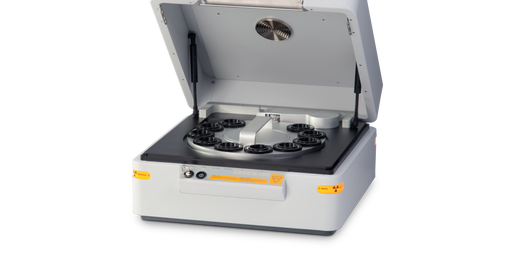
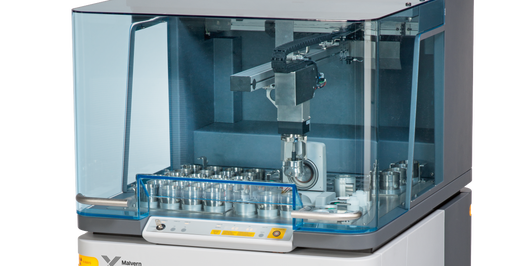
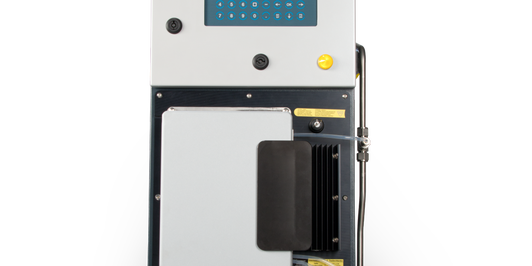
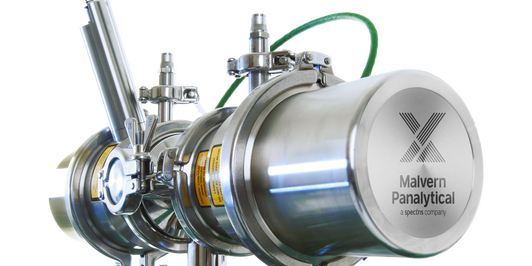
X선 형광(XRF)은 높은 정밀도와 재현성으로 다양한 촉매제의 원소 조성을 분석하는 데 널리 사용됩니다. 촉매 변환기의 Pt, Pd 및 Rh, FCC 촉매 공정의 Al, Ni, V, Ti, Fe 및 S, 제올라이트의 Si/Al 비율 등이 이에 해당합니다. XRF는 또한 Cl, S, Sn 및 Pb 등 화학적 비활성화를 유발하는 촉매제 독물의 존재와 농도를 검출하는 데 사용할 수 있습니다. XRF 분석은 다른 기법에 비해 많은 시간과 비용을 절약할 수 있으며, Malvern Panalytical은 Epsilon 4와 같은 EDXRF 벤치톱 시스템, Zetium과 같은 플로어 스탠딩 WDXRF 시스템, Epsilon XFlow와 같은 온라인 솔루션 등 세 가지 주요 솔루션을 제공합니다. 또한 Malvern Panalytical은 Claisse 포트폴리오를 통해 XRF, ICP, AA를 위한 몇 가지 샘플 준비 솔루션을 제공합니다.
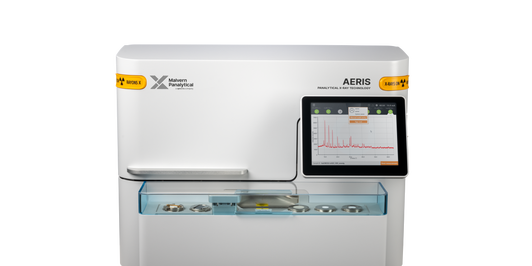
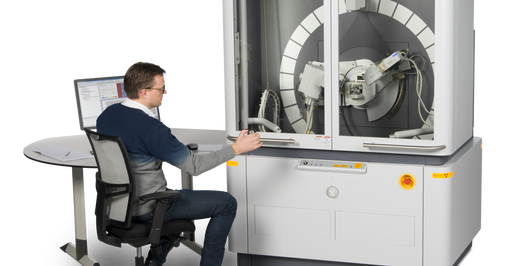
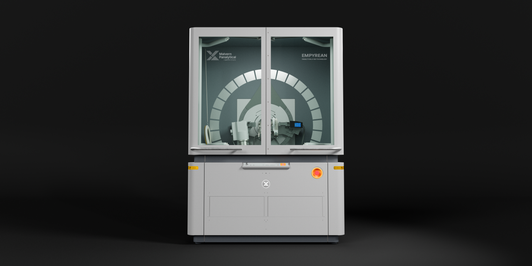
X선 회절(XRD)은 금속 산화물 및 제올라이트와 같은 고체 촉매제 물질의 벌크 구조와 조성에 대한 정보를 제공할 수 있기 때문에 촉매제의 설계, 개발 및 생산을 위한 기본적인 도구입니다. XRD 시스템은 FCC 촉매제의 생산, 특히 단위 세포 크기와 결정도를 분석하는 데 일상적으로 사용됩니다. XRD는 일반적인 회절 측정에서 피크 폭을 분석하거나 소각 X선 산란(SAXS)을 사용하여 결정화 크기를 측정하는 데 사용할 수도 있습니다. 비결정 물질은 쌍 분포 분석(PDF)을 사용하여 연구할 수도 있습니다. Malvern Panalytical은 두 가지 주요 XRD 솔루션인 Aeris 벤치톱 회절계와 보다 상세한 구조 분석을 위한 Empyrean 다목적 회절계로 구성됩니다.
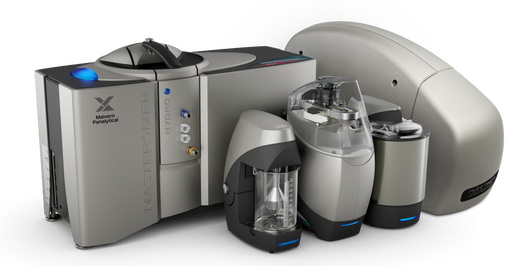
레이저 회절은 수백 나노미터에서 수 밀리미터 크기의 물질에 널리 사용되는 입자 크기 측정 기법으로 실험실이나 공정 라인에서 습식 또는 건식 분산에 적용할 수 있습니다. 촉매제 응용 분야의 경우, 레이저 회절을 사용하여 생성된 입자 크기 데이터는 보고된 부피 분포를 표면적 분포로 변환하여 특정 표면 영역(SSA)을 계산하는 데 사용할 수 있습니다. 압력에 따라 유동층 반응기에서 촉매제의 수명 예측에 중요한 요소 중 하나인 감손 위험을 이해하는 데에 도움이 될 수 있습니다. Malvern Panalytical의 Mastersizer은 실험실 환경에서 촉매제 분석을 위해 가장 널리 사용되는 입자 크기 측정 도구이며 Insitec은 생산 환경에서 온라인 분석에 사용할 수 있습니다.
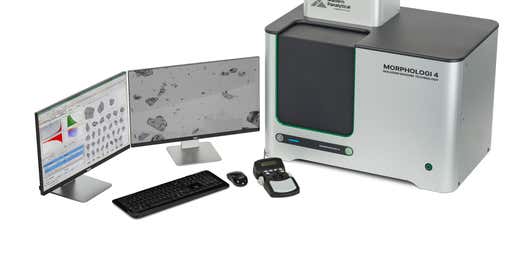
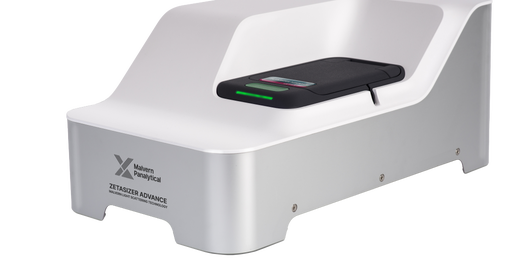
위에서 언급한 기법 외에도 Malvern Panalytical은 입자 분산의 크기와 안정성을 평가하는 데 사용되는 Zetasizer와 입자 형상 및 크기 분포를 결정하기 위해 이미지 분석을 사용하는 Morphologi 4를 비롯한 기타 촉매제 분석용 솔루션을 제공합니다. Morphologi 4는 입자별 화학 정보를 제공하는 통합형 Raman 분광기에서도 사용할 수 있습니다.
Gas porosimetry enables the measurement of BET surface area and micro/meso pore size distributions (0.35 nm ≤ 50 nm). Mercury porosimetry provides data in the meso/macropore range (3.6 nm ≤ 1,100 µm). This data may be used together in a unified method for pore volume to report micro, meso and macro areas and volumes. The porous properties of the catalyst support impact metal loading/dispersion and diffusion of both reactant and product molecules in use. Initial and in-use characterisation are important fundamental properties that influence design, chemistry and the time for which they can be used if sintering or blockages occur in the process.
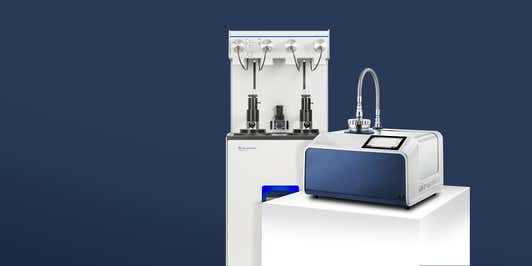
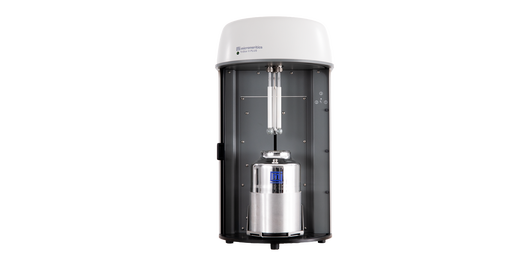
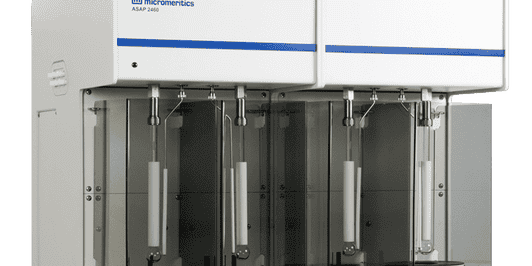
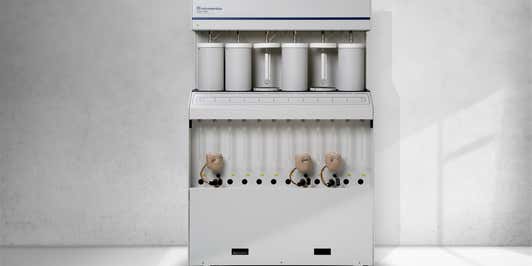
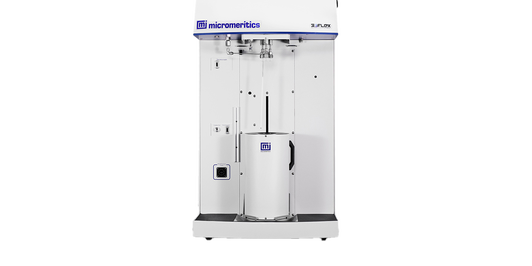
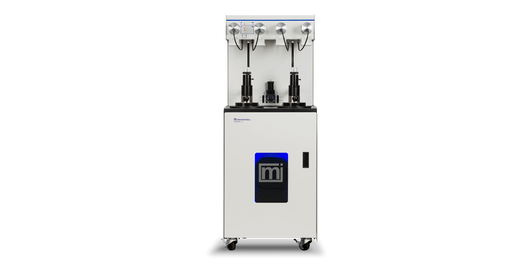
Micromeritics range of gas porosimeters includes multi-station and on-demand analysers in the form of the TriStar, ASAP 2460 and ASAP 2425 and the 3Flex high-resolution micropore analyser delivers exceptional low-pressure data, needed for accurate micropore analysis. Micromeritics AutoPore technology provides mercury porosimetry, studying larger meso/macro pore sizes and porosity, important for understanding reactant and product transfer.
Use of static and dynamic chemisorption experimentation is routine in the catalyst industry. These techniques are used to determine metal surface area, dispersion, and crystallite size. Dynamic chemisorption can also be used to study activation through temperature-programmed reduction (TPR), the range and strength of chemisorbed species through temperature-programmed desorption (TPD), and surface chemistry through temperature-programmed surface reactions (TPSR).
Temperature programmed oxidation (TPO) is another important technique that can be used to study samples that have deactivated due to carbon deposition. In-situ dynamic analysis is a further option where the analysis system can be connected across the reactor, enabling the catalysts to be characterised in-situ at the start and end of an experimental cycle.
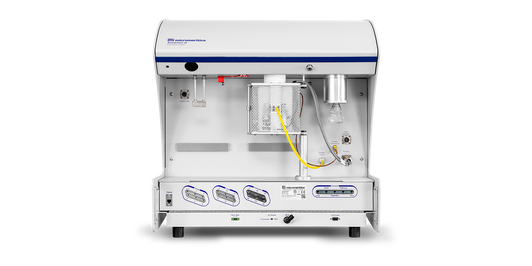
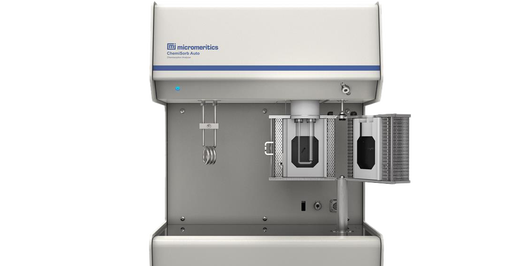
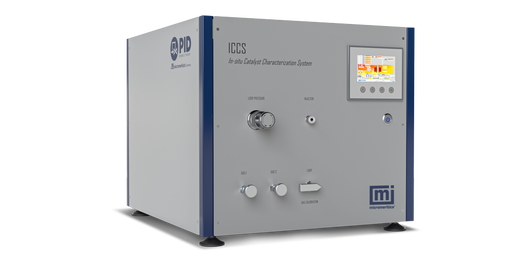
Micromeritics AutoChem and ChemiSorb Auto offer dynamic chemisorption routines whilst the 3Flex can be used for both static and dynamic chemisorption. Our In-situ Catalysts Characterisation System (ICCS) connects directly across the reactor and enables in-situ dynamic chemisorption experimentation.
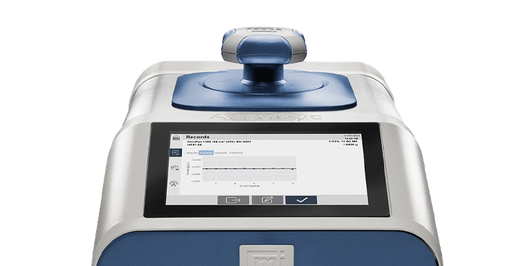
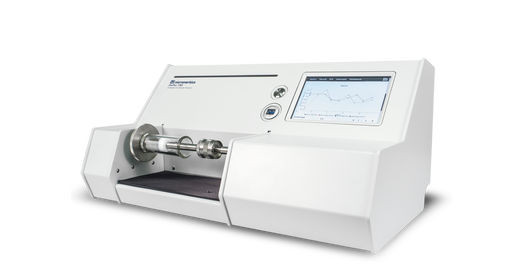
Micromeritics offers two pycnometry technologies: the AccuPyc and GeoPyc. The AccuPyc is a gas pycnometer that determines true density, a useful QC metric since whether a single element or mixture of materials in known proportions are measured, true density can be accurately defined and monitored. The AccuPyc is fast, easy and accurate and can differentiate density to the fourth decimal place. The GeoPyc offers both envelope and bulk density measurement. Envelope density can be carried out in samples such catalyst extrudates and together with the AccuPyc true density allows sample porosity to be determined.
Bulk density is useful metric for particulate materials and be determined with differing consolidation force. Bulk density is influenced by a number of parameters but principally size and shape distributions which can be investigated with our Mastersizer and Morphology products.
X-ray fluorescence (XRF) is widely used for analyzing the elemental composition of a range of catalysts due to its high precision and reproducibility. Examples include Pt, Pd, and Rh in catalytic converters; Al, Ni, V, Ti, Fe, and S in FCC catalytic processes; and Si/Al ratios in zeolites. XRF can also be used to detect the presence and concentration of catalyst poisons that cause chemical deactivation, including Cl, S, Sn and Pb.
XRF analysis can save a lot of time and money compared with alternative techniques, and Malvern Panalytical provides three main solutions: EDXRF benchtop systems such as Epsilon 4, floor-standing WDXRF systems such as Zetium, and on-line solutions such as Epsilon XFlow.
Malvern Panalytical also provides several sample preparation solutions for XRF, ICP, and AA through its Claisse portfolio.
X-ray diffraction (XRD) is a fundamental tool for the design, development and production of catalysts since it can provide information on the bulk structure and composition of solid catalyst materials such as metal oxides and Zeolites. XRD systems are routinely used for monitoring the production of FCC catalysts, in particular analysing unit cell size and crystallinity.
XRD can also be used to determine crystallite size either by analysing peak widths from a typical diffraction measurement or by using Small Angle X-ray Scattering (SAXS). Non-crystalline materials can also be studied using Pair Distribution Analysis (PDF). Malvern Panalytical provides two main XRD solutions: Aeris compact XRD diffractometer for routine analysis, and the Empyrean multi-purpose diffractometer for more detailed structural analysis.
Laser diffraction is a widely used particle sizing technique for materials ranging in size between hundreds of nanometers and several millimeters, and can be applied to wet or dry dispersions in the laboratory or on a process line. For catalyst applications, the particle size data generated using laser diffraction can be used to calculate a specific surface area (SSA) by converting the reported volume distribution into a surface area distribution.
Pressure titrations can also help to understand the risk of attrition, an important factor for predicting the life of catalysts in fluidized bed reactors. Malvern Panalytical’s Mastersizer is the most widely used particle sizing tool for catalyst analysis in a laboratory setting, while Insitec can be used for on-line analysis in a production environment.
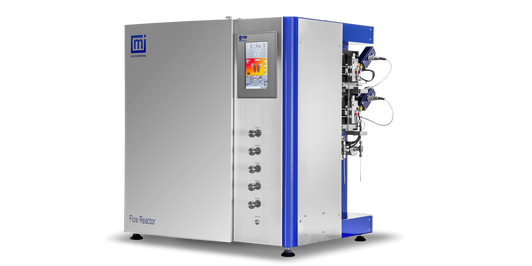
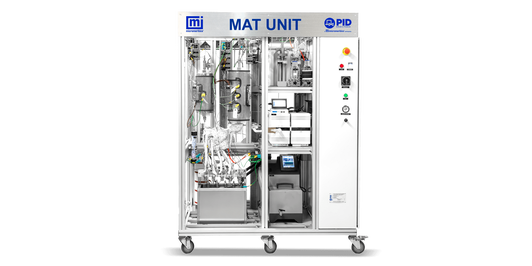
Catalyst characterisation is only half of the story! Having produced a catalyst, it then needs to be evaluated for performance. This is where our PID Flow Reactor and Pilot Plant technologies can be used to perform the chemical reactions of interest over time. These technologies allow for the study of activation, feed composition and rate, temperature and pressure. Our PID reactor technology is highly customisable and features patented technologies for pressure control, solids feeding and gas/liquid or gas/liquid/liquid separation in near real time. These units can also interface with other technologies such as the ICCS, mass spectrometers and GC for the analysis of the product stream.
We have, over many years, produced units for use in gasification, pyrolysis, Fischer-Tropsch, ammonia, pressure/temperature swing adsorption processes as well as photocatalysis. Safety is key here, and our reactor technologies offer comprehensive safety functions, including the ability to interface with central laboratory alarm systems.
In addition to the techniques mentioned above, Malvern Panalytical offers several other solutions for catalyst analysis, including the Zetasizer, which is used to evaluate the size and stability of particulate dispersions, and the Morphologi 4, which uses image analysis to determine particle shape and size distribution. The Morphologi 4 is also available with an integrated Raman spectrometer, which provides particle-specific chemical information.