
Spray drying is a continuous manufacturing process that converts a liquid feed into dry, granulated powder through atomization and rapid drying. In fine ceramics production, this process can produce highly spherical particles with good flowability and a narrow particle size distribution. These characteristics make spray-dried granules suitable for subsequent ceramic manufacturing operations in which consistent powder behavior is important.
Rotary disk atomizers are commonly used when processing high-solids ceramic slurries. The slurry is fed onto a rapidly rotating disk and atomized at its edge by centrifugal force. The resulting droplets enter the heated drying chamber, where moisture is removed. Feed concentration, slurry rheology, disk speed, spray rate, and drying conditions all influence the properties of the final powder, including particle size, residual moisture, morphology, and bulk density.
Conventional spray dryer control frequently depends on intermittent sampling and laboratory analysis of the finished powder. Although final-product testing can confirm whether a batch meets its specification, it provides limited information about when or why a process variation occurred. The completed product represents the combined effect of changing operating conditions throughout production, without preserving a chronological record of individual deviations.
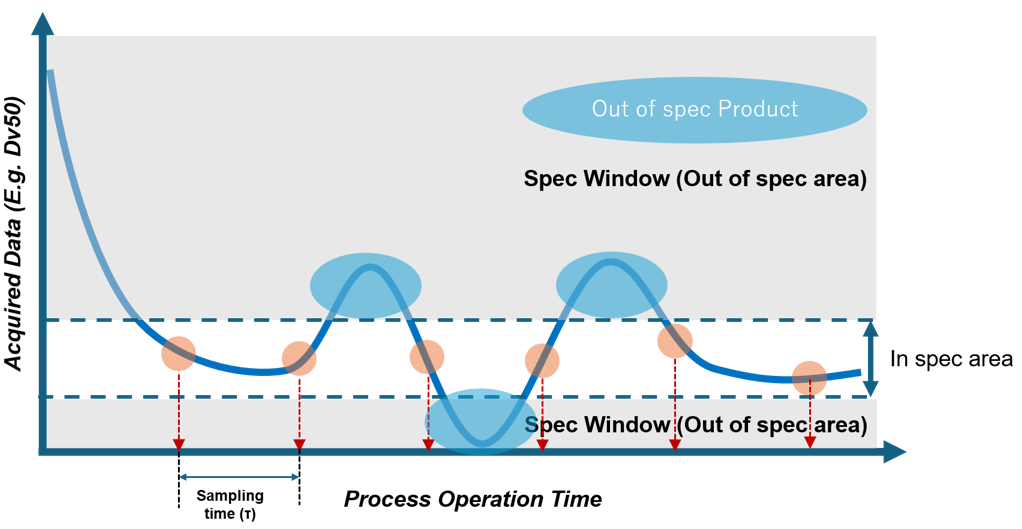
Intermittent sampling can also miss short-lived out-of-specification events. A particle size deviation may occur between two sampling points and remain undetected while affected material continues to enter the collected product. In an energy-intensive process such as spray drying, delayed detection can increase waste, extend processing time, and consume additional heated air and other utilities.
Real-time particle size analysis addresses this limitation by measuring the powder continuously or at high frequency during production. It gives operators and control systems timely information about process behavior, supporting faster identification and correction of deviations.
This application note presents a ceramic spray drying case study in which real-time laser diffraction measurement is integrated with automated process control. The experimental system combines a TR160 spray dryer from Preci Co., Ltd., a rotary disk atomizer, and an Insitec particle size analyzer installed at the dryer outlet.
The analyzer monitors the median particle size, reported as Dv50, while the spray dryer remains in continuous operation. The measured Dv50 is supplied to a feedback control system that adjusts the rotary atomizer disk speed. This closed-loop arrangement connects the measured powder characteristic directly to the operating parameter used to influence it.
The study evaluates the system by changing the target Dv50 sequentially during operation. The automated controller responds by increasing or decreasing disk speed so that the measured particle size moves toward each designated target. This approach demonstrates how real-time measurement can progress beyond process observation and become an active component of manufacturing control.
The complete document explains the development and evaluation of the automated spray drying system, including:
This application note is relevant to ceramic process engineers, powder-processing specialists, production managers, quality teams, process analytical technology professionals, and researchers working with spray drying. It is also useful for manufacturers investigating smart manufacturing strategies that connect in-process measurement with automated equipment control.
Register for full access to review the experimental setup, operating conditions, real-time particle size results, automated responses to changing Dv50 targets, and conclusions from this ceramic spray drying study.
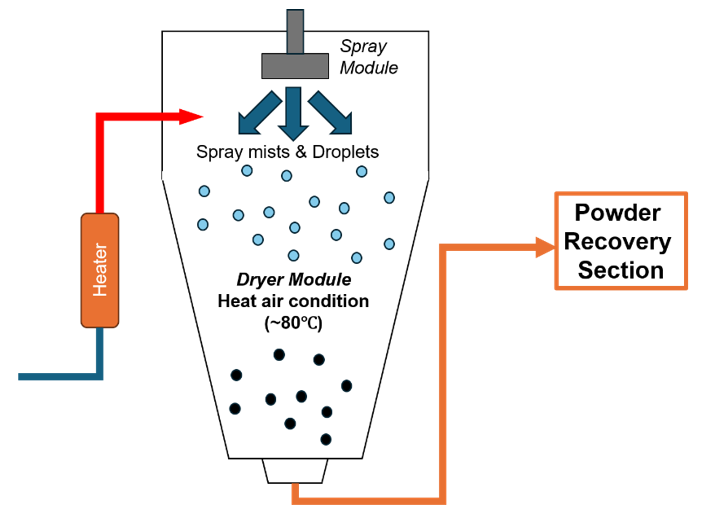
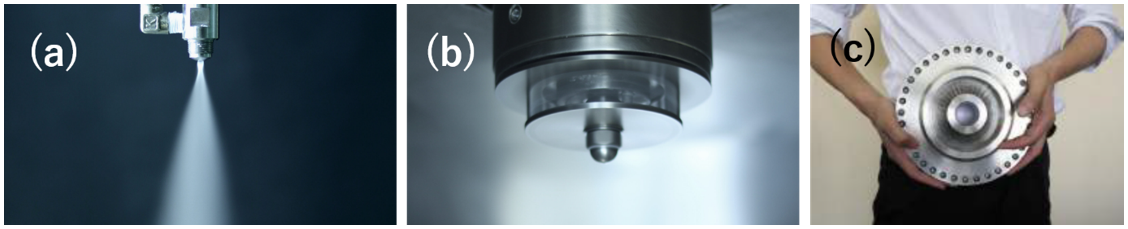
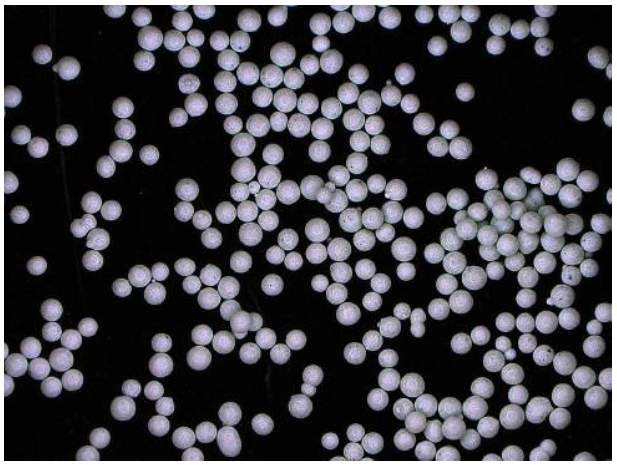
Spray drying (SPD) facilitates the direct production of dry, granulated powders from liquid raw materials through simultaneous atomization and drying. The liquid feed enters the drying chamber as fine droplets and dries almost instantaneously, yielding highly spherical particles. These particles exhibit excellent flowability and minimal thermal history, rendering the process ideal for heat-sensitive materials (Fig. 1). Atomization utilizes various techniques; notably, rotary disk atomizers are prevalent in fine ceramics manufacturing due to their capacity to process high-solid slurries. Raw material fed onto a high-speed rotating disk is atomized at the periphery via centrifugal force (Fig. 2). Adjusting feed concentration, rotational speed, and drying conditions enables precise control over particle size, residual moisture, and bulk density. This continuous process yields spherical granules with a narrower particle size distribution than alternative manufacturing methods (Fig. 3).
However, rigorous optimization is essential to stabilize particle size, morphology, and bulk density, as these characteristics depend on numerous parameters, including feed concentration, slurry rheology, rotational speed, spray rate, and drying conditions. Furthermore, SPD is highly energy-intensive due to the large volumes of heated air required. Optimizing operational parameters is critical to minimize energy consumption and reduce processing costs.
Furthermore, suboptimal conditions may induce particle agglomeration, wall deposition, and excessive fines, thereby degrading the particle size distribution and overall yield. Despite its advantages, SPD presents an inherent challenge: powder characteristics fluctuate sensitively with atomization and drying conditions.
Consequently, real-time particle size measurement emerges as a critical tool for monitoring and optimizing the SPD process.
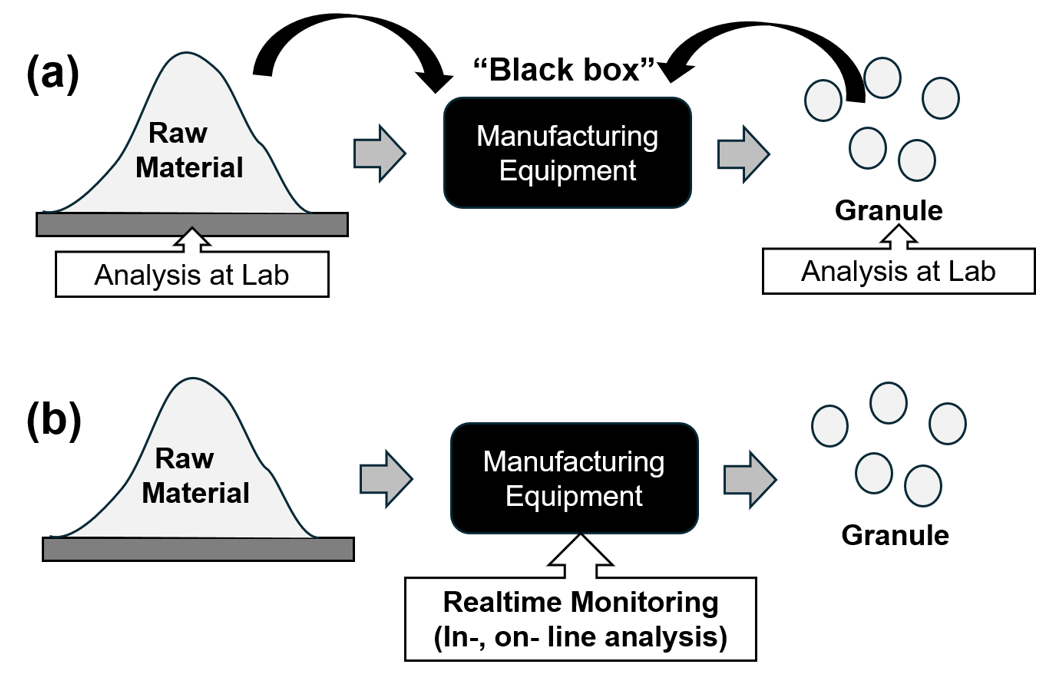
Conventional process control relies on varying processing conditions and analyzing final product characteristics as the primary response. Although final products are easily analyzed, the internal temporal dynamics of the manufacturing equipment remain a black box. The final product represents merely the integrated output of process fluctuations, retaining no chronological record of transient variations. Consequently, deducing intermediate temporal behavior from final product analysis is fundamentally limited (Fig. 4(a)). Addressing this limitation requires real-time process monitoring to elucidate dynamic behavior during production (Fig. 4(b)), rather than relying on retrospective estimation [1,2,3].
Furthermore, intermittent sampling may fail to detect transient deviations from specification limits (Fig. 5). This introduces the risk of off-specification material contaminating the final product batch, underscoring the critical importance of high-frequency measurement. Given the substantial energy consumption of spray drying utilities, reducing out-of-specification production time via real-time measurement yields significant economic benefits. This highlights the primary advantage of adopting a fully automated, real-time particle measurement system.
Experiments evaluated the performance of a feedback control system based on real-time particle size distribution [4]. A TR160 spray dryer (Preci Co., Ltd., φ1600 mm) equipped with a rotary disk atomizer was utilized (Fig. 6). The feed slurry comprised 50 wt% alumina, 49.75 wt% water, and 0.25 wt% polyvinyl alcohol (PVA). Operating conditions included a hot air temperature of 150 °C, an exhaust air temperature of 78–85 °C, and a feed rate of 5 kg/h. System evaluation involved monitoring the median particle size (Dv50) using an Insitec analyzer installed at the dryer outlet to assess the tracking response to target value modifications. During continuous operation, the target Dv50 was sequentially adjusted to 60 μm, 30 μm, and 40 μm to verify control response and transient particle size variations.
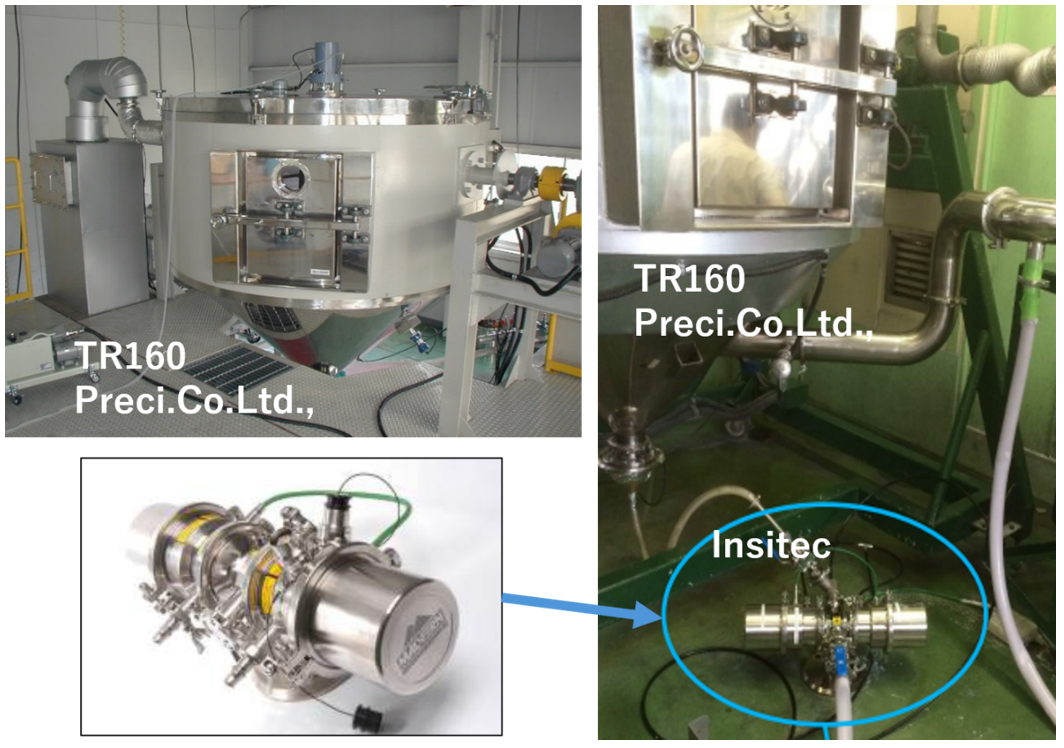
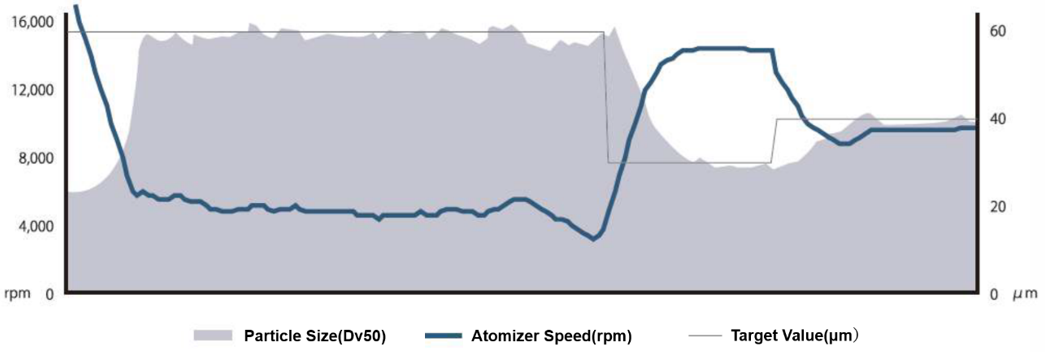
Figure 7 presents the operational and particle measurement results of the automated system. With an initial target Dv50 of 60 μm, operation commenced at a disk speed of 17,000 rpm, yielding an initial Dv50 of 23 μm. The control system rapidly decelerated the disk, stabilizing the Dv50 at 60 μm upon reaching a speed of approximately 5,000 rpm. Following a target shift to 30 μm, the disk speed rapidly increased to 14,300 rpm, successfully stabilizing the Dv50 at the new target. A subsequent target adjustment to 40 μm induced a rapid deceleration to 9,600 rpm, again stabilizing the Dv50 at the designated 40 μm.
This study demonstrated that real-time monitoring of particle size distribution enables robust, automated control of particle size during continuous SPD operation. Such automated feedback control stabilizes product quality, minimizes off-specification waste, and expedites process optimization, concurrently reducing operational downtime and energy consumption. Integrating real-time particle measurement with automated control technology provides a highly effective framework for advancing spray drying processes toward smart manufacturing.
The present study represents the outcome of a collaborative research effort conducted primarily with Mr. Shinya Kawaguchi (Director, Particle Technology Center [PTC], Preci Co., Ltd.) and Mr. Yuichi Misumi (Leader, Application Group, PTC, Preci Co., Ltd).