Revontium
The performance of floor-standing XRF with the versatility of table-top instruments

Elemental analysis is faster, greener, and safer with X-ray fluorescence (XRF)

Elemental analysis is a cornerstone of pharmaceutical development and manufacturing, ensuring the quality, safety, and efficacy of drug substances and products.
By detecting contaminants and verifying purity, elemental analysis supports regulatory compliance and helps to safeguard public health.
Offering a blend of speed, accuracy, and efficiency, XRF analysis is helping pharmaceutical companies BIG and small to enhance processes, optimize workflows, reach their sustainability goals, and get their products to market faster.
Currently, ICP-OES and ICP-MS are the go-to solutions for elemental analysis in the pharmaceutical industry. However, there are many challenges associated with ICP:
Introducing energy-dispersive X-ray fluorescence (ED XRF) into your workflow will allow you to accelerate your drug development process and shorten route to market significantly.
It’s fast and non-destructive, making it a robust screening solution for the elemental purity of drug substances, pharmaceutical intermediates, and final drug products.
In fact, the versatility of ED XRF and its ease of use make it suitable for a wide range of drug development and manufacturing applications.
XRF is an atomic emission method, similar in this respect to optical emission spectroscopy (OES), ICP and neutron activation analysis (gamma spectroscopy).
Such methods measure the wavelength and intensity of ‘light’ (X-rays in this case) emitted by energized atoms in the sample.
In XRF, irradiation by a primary X-ray beam from an X-ray tube causes the emission of fluorescent X-rays with discrete energies characteristic of the elements present in the sample.
Malvern Panalytical provides a range of X-ray fluorescence (XRF) technologies, each designed to meet specific analytical needs. Choosing the right XRF spectrometer for your application depends on factors like sample type, required sensitivity, and precision.
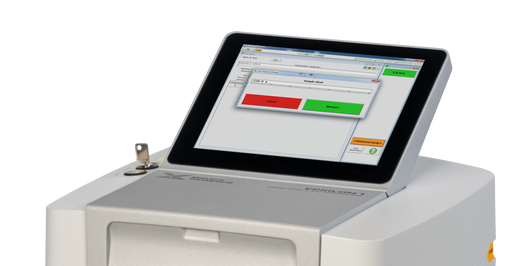
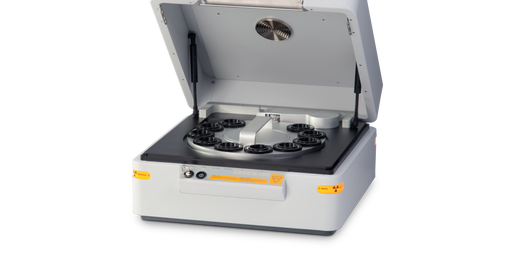
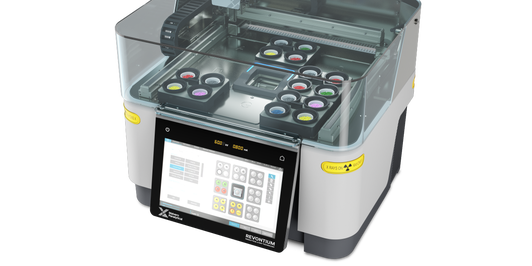
| Epsilon 1 | Epsilon 4 | Revontium | |
|---|---|---|---|
| Overview | Get started | Automate for higher throughput | Automate; prepare your methods for QC and full regulatory compliance |
| Sensitivity | ✔ | ✔✔ | ✔✔✔ |
| Measurement time per sample | 10 minutes to analyze 5 elements | 45 minutes to analyze 20 elements according to ICH-Q3D | 30 minutes to analyze 20 elements according to ICH-Q3D |
| Sample throughput (automation) | 1 | 10 | 32 |
| Catalyst residue according to ICH Q3D guideline* | ✔ | ✔ | ✔ |
| Detection of toxic elements according to ICH Q3D guideline* | -- | ✔
1 g daily dose* |
✔✔
10 g daily dose |
| Detect wear elements (Cr, Mn, V, Ni, Cu) | ✔ | ✔ | ✔ |
| Find out more | Discover Epsilon 1 | Discover Epsilon 4 | Discover Revontium |
| *e.g. ‘Big 4’: Cd, Pb, As, Hg [big 4 or toxic 7] according to ICH Q3D guideline | |||
With decades of experience in the field of pharmaceuticals, Malvern Panalytical has built a reputation for excellence. Our extensive portfolio of innovative instruments and technologies is designed to meet the complex needs of pharmaceutical research, development, and manufacturing.
We are committed to continuous innovation and maintaining the highest standards of quality. By investing in research and development, Malvern Panalytical consistently introduces cutting-edge solutions that address the evolving challenges in pharmaceuticals, including dissolution testing.
Find out more about how Revontium and Epsilon XRF Spectrometers can enhance your drug development workflow. To explore ED XRF applications in more details, contact us today. Our experts are ready to provide you with detailed information, demonstrations, and tailored solutions to meet your needs.