



Looking for more information?
To request a quote, more information or download a brochure select an option below.
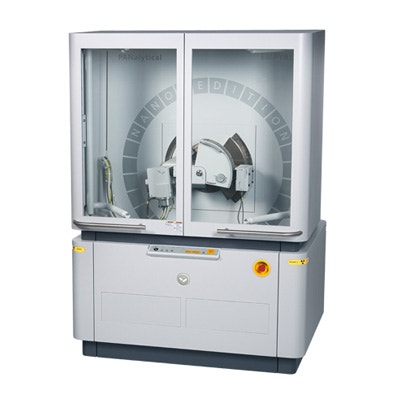
The Empyrean Nano edition is a hybrid laboratory X-ray scattering instrument. It uniquely enables a variety of techniques for the structural characterization of (nano)materials on multiple length scales. Applications include:
Several other applications, such as powder diffraction, thin film analysis, and CT can be included. These can also be added later as upgrades.
The high performance and flexibility of the instrument are driven by a high-resolution goniometer platform, a modular concept, and the latest detector technology.
 Works with OmniTrust: Malvern Panalytical's compliance solution for the regulated environment
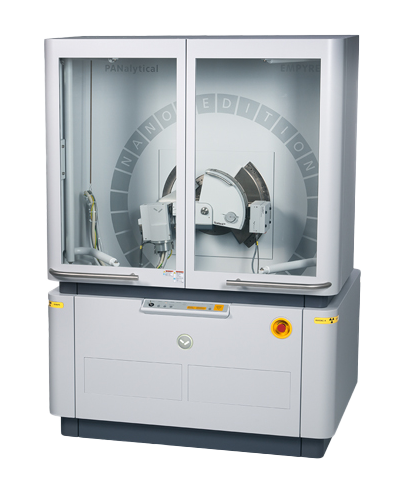
Like no other lab instrument on the market, the Empyrean Nano edition covers Bragg spacings from sub-Ångströms to microns and a scattering vector q-range spanning over almost five decades - without any gaps.
The combination of USAXS with SAXS/WAXS and PDF measurements on the Empyrean Nano edition uniquely enables for the characterization of hierarchical structures on multiple length scales, covering Bragg spacings from sub-Ångström to micron(s).
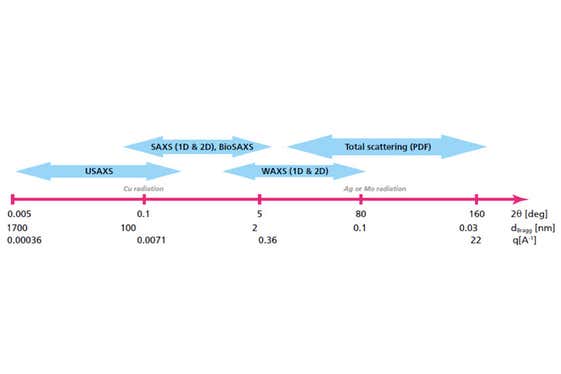
Empyrean supports variety of X-ray scattering techniques:
SAXS is the main application on the Empyrean Nano edition. It is one of the most versatile tools to analyze nanoscale structures and dimensions on a variety of sample types (liquids, powders, solids, gels, etc). Samples may be amorphous, crystalline or semi-crystalline.
Typical samples that can be investigated with SAXS include colloidal dispersions, surfactants, polymers, biomacromolecules, membranes, nanocomposites, nanopowders and porous materials. The orientation of anisotropic nanoscale structures can be investigated by measuring 2D SAXS patterns.
Small-angle X-ray scattering applied to dilute protein solutions has become an accepted and rapidly growing structural biology technique. It provides information e.g. about the overall protein size and shape, folding and unfolding, aggregation behavior, stability and molecular weight.
Measurements can be done under near native conditions, and under variation of e.g. protein concentration, pH, ionic strength or temperature. SAXS ultimately also allows for a low-resolution molecular shape envelope reconstruction and thus delivers information that is complementary to that obtained from single crystal XRD or NMR.
Malvern Panalytical's EasySAXS software is available for basic bio-SAXS data analysis. Data can be exported in a format that is compatible with the EMBL ATSAS software, which can be used for 3D protein shape reconstruction and other advanced tasks.
Based on the diffraction pattern measured at the higher angles one can identify and quantify crystalline phases that are present in a given sample, as well as estimate the size of nanocrystallites.
The orientation of the crystal lattice in anisotropic structures, e.g. in polymers, can be investigated by measuring 2D WAXS patterns.
For the characterization of samples containing particles or structural features in the size range of several hundreds of nanometers the resolution of a conventional SAXS setup is insufficient.
On the Empyrean Nano edition high-resolution optics in combination with the high-resolution goniometer enable for accessing ultra-small angles, down to as low as 0.005 deg 2theta.
The characteristic oscillations in the scattering curve from highly monodisperse particles can be readily resolved, even with a particle diameter as large as 1.5 µm.
Total scattering experiments use hard X-ray radiation and scans up to very high 2theta angles so as to acquire data up to highest possible scattering vectors. From the deduced atomic pair distribution function (PDF) the short-range atomic order in nanocrystalline and disordered materials can be deduced.
The Empyrean Nano edition equipped with the GaliPIX3D detector and with effective anti-scatter devices enables for obtaining very high-quality experimental data, and optionally under non-ambient conditions. Results are in good agreement with those that are obtained at synchrotron radiation facilities.
Depending on your specific research interest the Empyrean Nano edition can be further upgraded, e.g. by adding thin film techniques such as GISAXS and X-ray reflectivity, classical powder X-ray diffraction or computed tomography.
Malvern Panalytical also constantly develops additional options, improvements and analytical solutions that are back-compatible with the existing Malvern Panalytical instrument platforms.
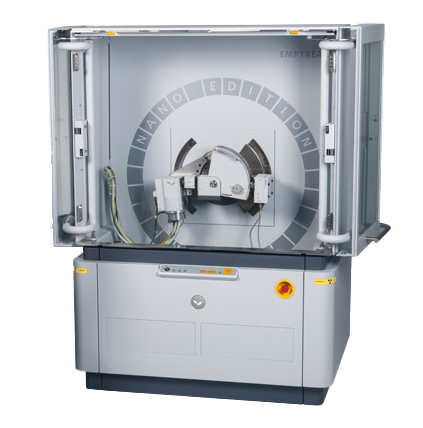
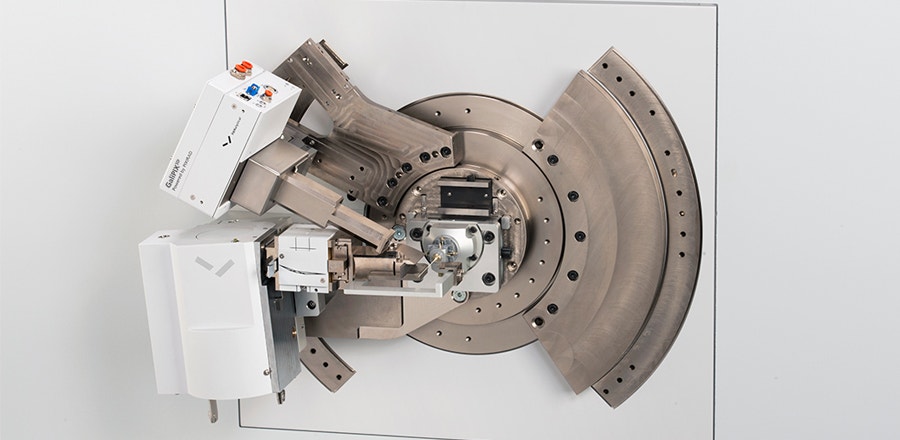
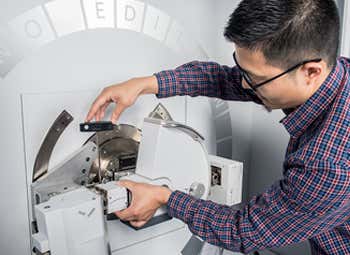
The unique flexibility to easily and quickly configure the Empyrean Nano edition for the different X-ray scattering techniques is enabled by a 2-circle goniometer platform on which quickly interchangeable, pre-aligned X-ray modules (PreFIX) and sample stages can be mounted.
Whereas SAXS measurements can be readily done with a static detector, the goniometer comes into play for accessing the extended angular range that is required for WAXS and ultimately for total scattering (PDF) measurements.
With a smallest 2theta step width of 0.0001 deg the high-resolution goniometer also readily supports the USAXS application. For accessing highest possible scattering vectors, the standard Cu X-ray tube can be easily exchanged against a Ag or Mo one.
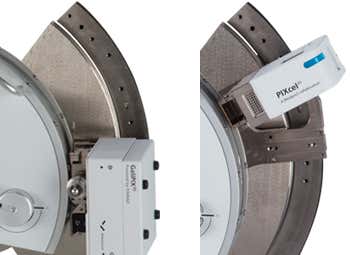
The performance of the X-ray detector is critical for obtaining high-quality X-ray scattering data.
Our hybrid pixel area detectors, GaliPIX3D and PIXcel3D, excel by their very low intrinsic noise and a high dynamic range. Their high spatial resolution enables for experimental setups that are rather compact and conveniently fit within the 240 mm goniometer radius.
The GaliPIX3D detector, having 100% absorption efficiency for Cu, Mo and Ag radiation, is the detector of choice when you want to perform not only SAXS/WAXS but also fast PDF measurements.
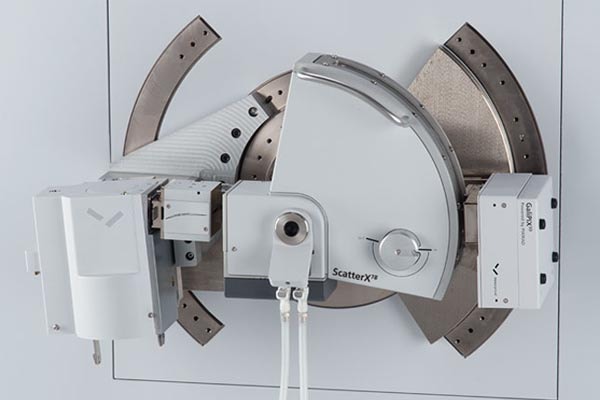
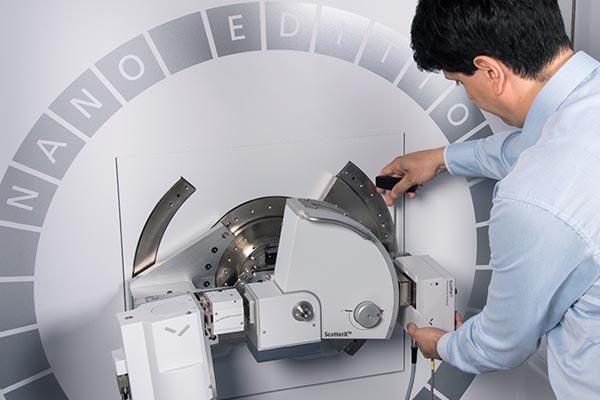
With the ScatterX78 module, you can perform small- and wide-angle X-ray scattering (SAXS/WAXS) measurements on nanomaterials.
The SAXS signal allows for the dimensional and structural analysis of a material on the nanoscale. Complementary information about the crystalline phases, the size of nanocrystallites and their orientation can be obtained from the WAXS signal. ScatterX78 can be used for the characterization of a variety of samples, such as colloidal dispersions, polymers, protein solutions, surfactants, nanopowders and liquid crystals.
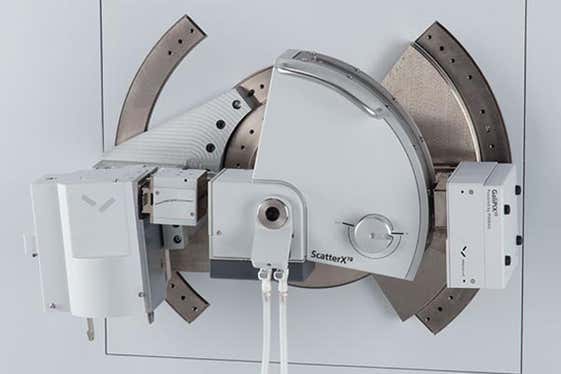
On the Empyrean Nano edition the resolution can be pushed to ultra-small angles by using a Bonse-Hart type of experimental setup based on pre-aligned, high-resolution optical components.
With such a USAXS setup the smallest accessible scattering angle is approximately 0.005°, with a corresponding largest Bragg spacing of 1700 nm.
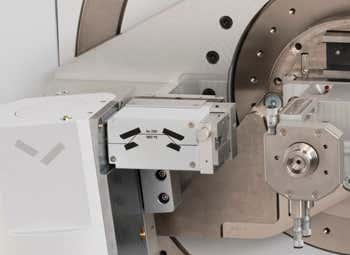
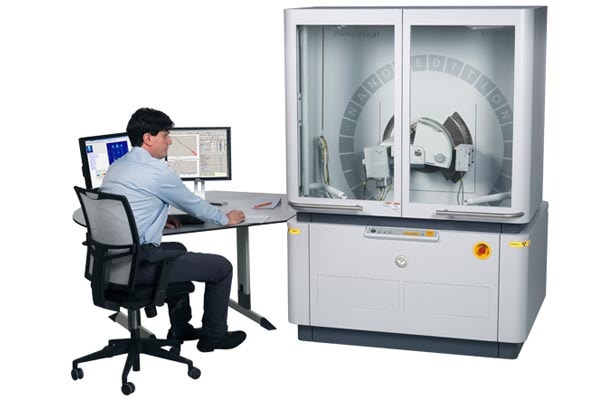
The Empyrean Nano edition meets all relevant worldwide regulations regarding electrical, mechanical and X-ray safety, by default also for hard X-rays.
The experimental setup is within a radiation-safe enclosure that has large see-through windows.
Wide-opening doors enable for easy access to the setup when required.
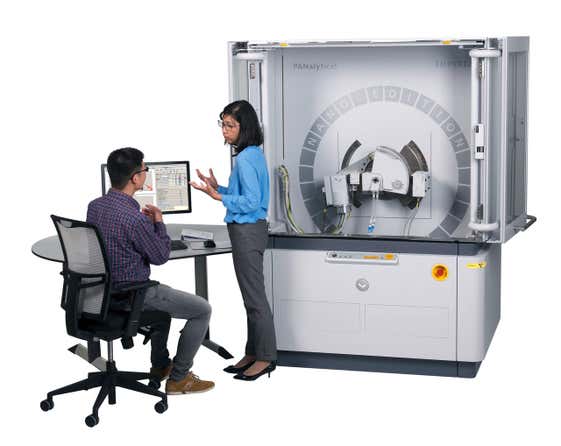
If I moved to another company, and have chance to purchase, Empyrean would be the one.
Raeann Wu — Teva Pharmaceuticals
| Enclosure rating | Radiation-safe enclosure with large see-through windows and wide opening doors |
|---|---|
| Type | Vertical 2-circle goniometer; theta - theta geometry |
| Radius | 240 mm |
| Resolution | 0.0001 ° |
| Interface | PreFIX type, enabling quick exchange of pre-aligned optics, stages and detectors |
| Camera | 480 mm |
|---|---|
| X-ray tubes | Sealed high-resolution X-ray tube (Cu anode) |
| Collimation type | Line collimation (standard)
Possibility to transform to point collimation |
| Incident beam optics | 1D focusing X-ray mirror |
| Beam path | ScatterX78, evacuated (< 0.1 mbar); includes sample capsule |
| Sample holders | Liquids, solids, powders |
| Temperature control range | Temperature-controlled capillary holder (5-70 °C)
Uses disposable, low-background capillaries |
| Beam stop | Beamstops for line and point collimation - easily switchable; semi-transparent |
| Detector | Low-noise, hybrid pixel area detectors:
GaliPIX3D: CdTe sensor; resolution 60 µm or
PIXcel3D: Si sensor; resolution 55 µm |
| Measurement type | Static or scanning detector (1D or 2D full pattern) |
| Accessible 2θ range | 0.08 - 78 ° |
| Accessible q-range | 0.006 - 5.14 Å-1 |
| Maximum Bragg spacing | 100 nm |
| Software | Data Collector , EasySAXS , XRD2Dscan , HighScore (Plus) |
| X-ray generator | Sealed high-resolution X-ray tube (Cu anode) |
|---|---|
| Collimation type | Line collimation |
| Incident beam optics | 4-crystal Ge(220) monochromator |
| Receiving optics | 3-bounce Ge (220) analyzer crystal |
| Sample holders | Liquids, solids, powders |
| Sample changing | Optional for solids and powders |
| Detector | Proportional counter, PIXcel3D or PIXcel1D |
| Measurement principle | Step scanning (0D) |
| Accessible 2θ range | Min. 0.005 ° |
| Accessible q-range | Min. 0.00036 Å-1 |
| Maximum Bragg spacing | 1700 nm |
| Software | Data Collector, EasySAXS |
| X-ray generator | Sealed X-ray tube (Ag or Mo anode) |
|---|---|
| Collimation type | Line collimation |
| Incident beam optics | 1D focusing X-ray mirror or slit system |
| Detector | GaliPIX3D: CdTe sensor with 100% efficiency, also for hard radiation or scintillation counter |
| Measurement principle | Scanning (1D or 0D) |
| Accessible 2θ range | Max. 160 ° |
| Accessible q-range | Max. 22 Å-1 |
| Software | Data Collector, HighScore (Plus) |
The first detector to bring 0D-1D-2D and 3D data to your diffractometer

Extending the range of 2D solid-state pixel detectors

Advanced SAXS data analysis software

Visualization and conversion of 2D data

The ideal tool for crystallographic analysis and more

The high-performance X-ray tube

| Title | Version | Date | Download |
|---|---|---|---|
| {{ row.title }} | {{ row.softwareVersion }} | {{ row.date }} | Download |
Sorry, no manuals are available for this product
| Title | Version | Date | Download |
|---|---|---|---|
| {{ row.title }} | {{ row.softwareVersion }} | {{ row.date }} | Download |
Sorry, no software downloads are available for this product
To assure that your instrument remains in top condition and performs on the highest level, Malvern Panalytical offers a wide range of services. Our expertise and support services assure an optimal functioning of your instrument.
Service for a lifetime
Adding value to your processes
Versatile, hybrid and flexible (nano)material structural characterization. See your nanomaterials like never before.

 Powered by Bioz