
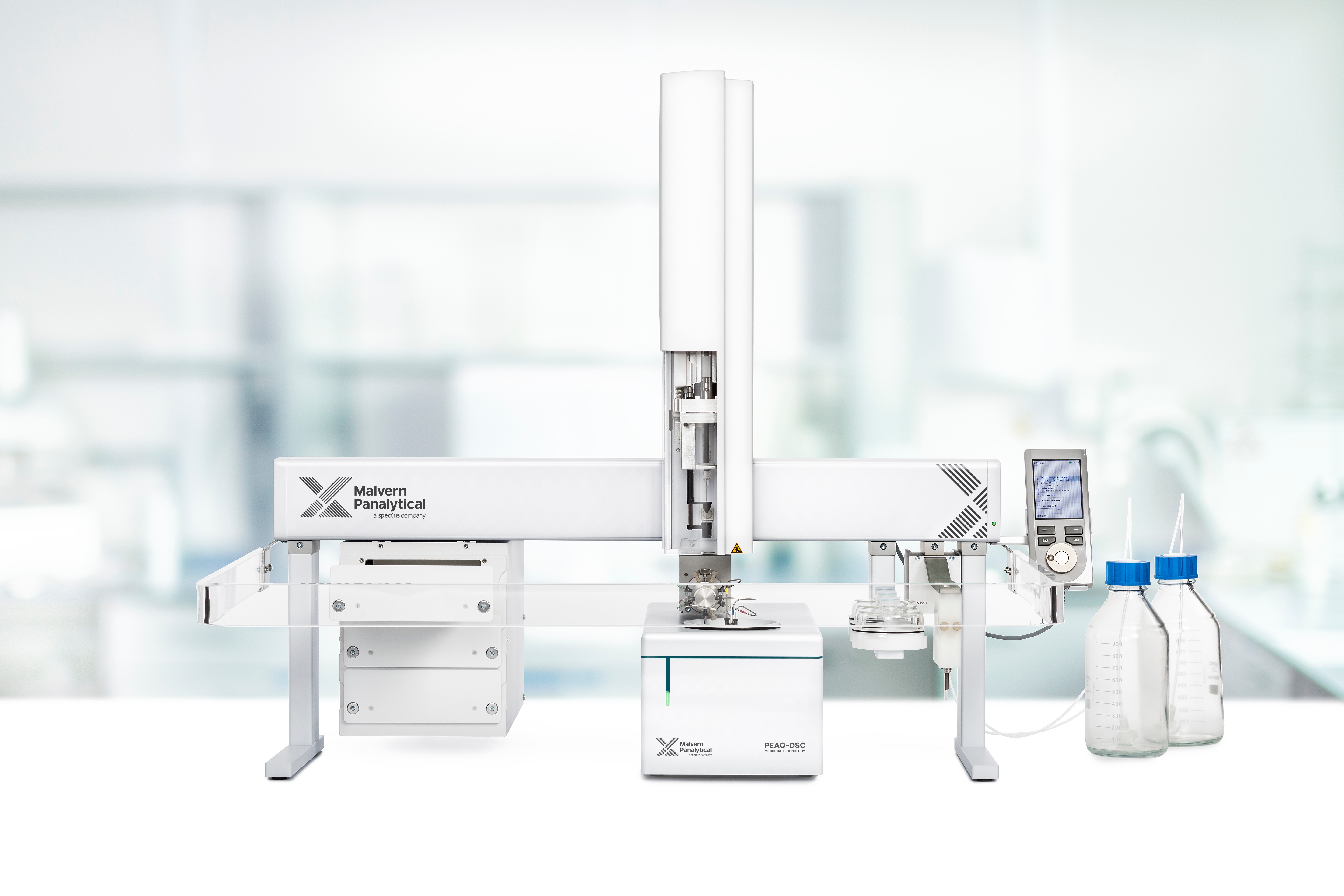
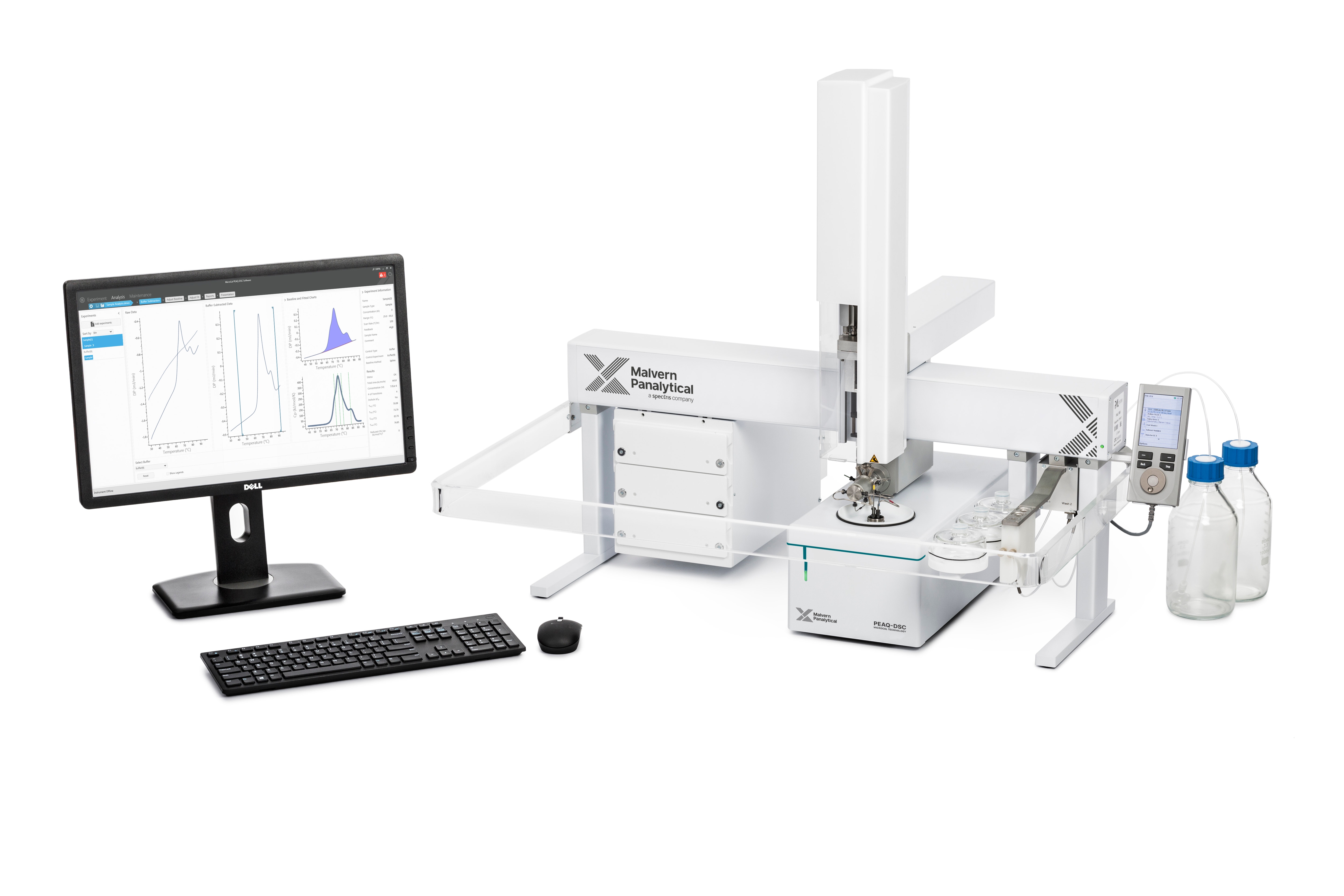
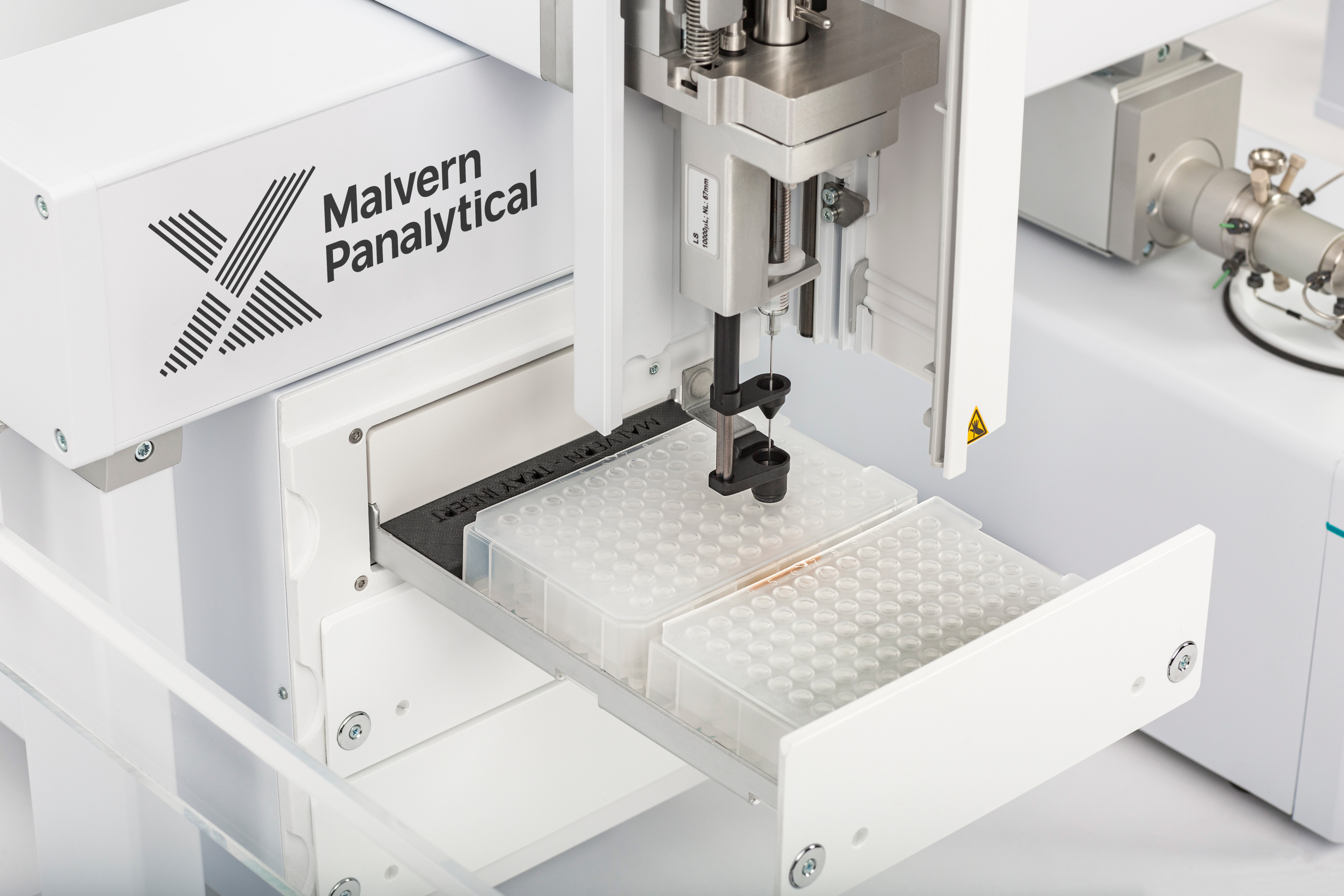

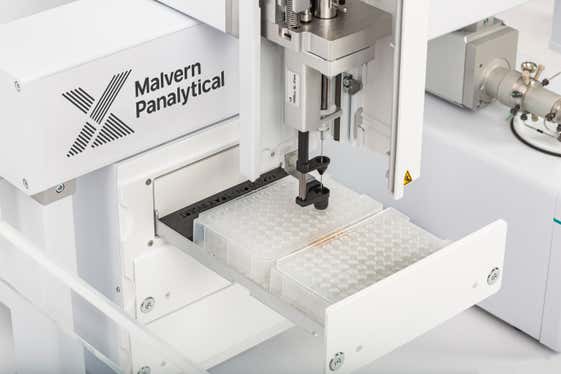
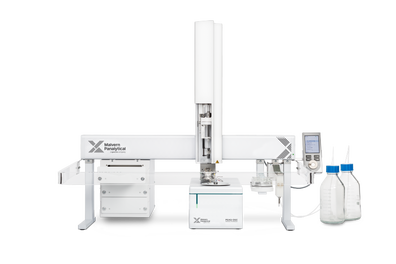
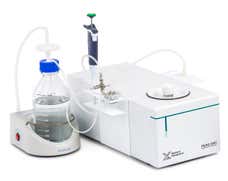
The PEAQ-DSC Automated, a MicroCal technology, delivers high throughput, highly sensitive protein stability analysis with low sample consumption, in an automated, integrated platform for increased productivity. All cell filling and cleaning functions are fully automated for walk-away operation.
Select a model:
Looking for more information?
To request a quote, more information or download a brochure select an option below.
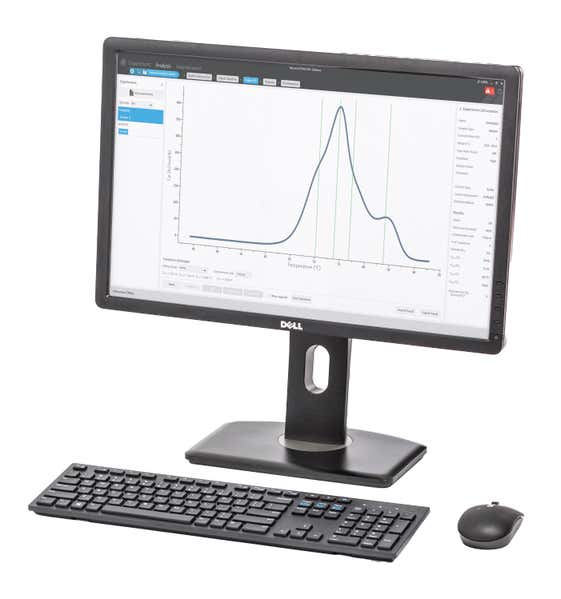
The high-throughput, high-sensitivity PEAQ-DSC Automated, a MicroCal technology, features software that streamlines workflows through simplified experimental setup and flexible instrument scheduling.
Automated data analysis supports the generation of high-integrity thermal stability data and delivers compliance with regulatory requirements, whilst allowing easy integration into existing data handling and transfer systems.
The PEAQ-DSC is also available as a manual system without the autosampler.
Gold standard stability-indicating technique requiring minimal assay development
Direct and label-free measurement of biomolecular native-state stability in solution
Standard 96-well plate format for high capacity and easy loading, with thermostatically-controlled storage of up to 6 plates
Fully integrated autosampler enables unattended analysis of up to 50 samples per day
Automated cell filling and cell cleaning functions permit unattended operation
Measurement of very tight binding constants, up to 1020M-1
Powerful PEAQ-DSC software minimizes typical data analysis time
Data generated by the MicroCal PEAQ-DSC Automated provide critical guidance for biopharmaceutical development in protein engineering, (pre)formulation development, process development, manufacturing change control and biosimilarity and biocomparability studies.
Unattended operation enables 24-hour screening, while the integrated software streamlines workflows, facilitates non-subjective data analysis, performance qualification and compliance with 21 CFR Part 11 and Annex 11 regulations, all delivering high integrity data and driving productivity in biopharmaceutical research.
Powerful MicroCal PEAQ-DSC software minimizes typical data analysis time and includes:
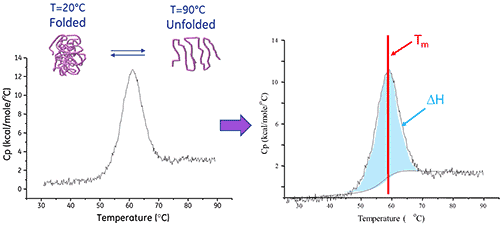
Differential Scanning Calorimetry (DSC) is a powerful analytical tool for characterizing the thermal stability of proteins and other biomolecules. The technique measures the enthalpy (ΔH) and temperature (Tm) of thermally-induced structural transitions of molecules in solution. This information provides valuable insights into factors that stabilize or destabilize proteins, nucleic acids, micellar complexes and other macromolecular systems.
The data are used to predict shelf-life of biomolecular products including biopharmaceuticals, to enable batch-to-batch and biosimilar versus innovator molecule comparisons, to develop purification strategies, to characterize and evaluate protein constructs, and to rank the affinities of ligands to their protein targets in small molecule drug discovery programs.
Data analysis and measured/derived parameters are described in greater detail on the Differential Scanning Calorimetry technology page.
Functional structures formed by proteins and other macromolecules often undergo temperature-induced conformational changes, such as unfolding. These changes result in the absorption of heat as a result of the redistribution of non-covalent bonds within the molecule. Differential Scanning Calorimeters measure this heat uptake very precisely.
The thermal core of the PEAQ-DSC system contains a sample cell (containing the sample of interest) and a reference cell (containing a matched buffer solution), both of which are housed within an insulating jacket. These two cells are always maintained at the same temperature, and during a measurement, they are heated at a constant scan rate.
As the molecule within the sample cell unfolds, heat is absorbed, creating a temperature difference (ΔT) between the sample cell and the reference cell. This results in a thermal gradient across the Peltier units, creating a proportional voltage, which is in turn converted to power to form a feedback loop to the Peltier units, in order to return ΔT to zero.
Since protein unfolding is an endothermic event, it is observed as a positive displacement in the thermogram. The midpoint of this protein ‘melting’ transition is the Tm, and the area under the curve is the enthalpy (ΔH) of the unfolding process.
The PEAQ-DSC Automated is trusted throughout the biopharmaceutical industry to provide valuable stability data for biotherapeutics in discovery, development and manufacturing. This is because of the universal nature of the detection method, the ability to detect very subtle changes in the conformation of biologic drugs and the high reproducibility of the data.
Webinar: Solve stability problems in preformulation and process development using DSC
Application note: Using Differential Scanning Calorimetry to accelerate liquid formulation development for protein biopharmaceuticals
The highly reproducible nature of the MicroCal PEAQ-DSC instruments and the ability of the technique to detect even changes to a single amino acid in a protein have been the core drivers behind the use of DSC data in submissions for approval for biosimilar drugs. The MicroCal PEAQ-DSC software has a biosimilarity tool for statistical comparison with the innovator drug.
DSC, DLS and other biophysical technique can be used to study the stability of Antibody Drug Candidates and the effects of antibody drug ratios on their stability and propensity to aggregate. The example below also show how DSC can be used to measure the kinetics of inactivation by heating over a broad range of scan rates.
Webinar: Biophysical and stability characterization of antibody-drug conjugates
| Technology | Differential Scanning Calorimetry |
|---|---|
| Measurement type | Temperature midpoint (TM)
Enthalpy (ΔH)
Heat capacity change (ΔCp) |
| Cell | Capillary |
|---|---|
| Cell material | Tantalum |
| Cell volume | 130 μL |
| Sample capacity | 288 (6 × 96-well plates) |
|---|---|
| Sample volume | 325 µL |
| Typical sample concentration | 0.01 mg/mL – 10 mg/mL 1 |
| Sample throughput | ≤50 samples/day |
| Sample storage temperature range | 4 - 40 °C |
| Noise | 0.05 μCal/°C 2 |
|---|---|
| Baseline repeatability | 1 μCal/°C 2 |
| Response time | 5s 2 |
| Repeatability | <0.2 µCal/°C 3 |
| Reproducibility | <0.08 °C St. Dev. TM
<2% RSD on ΔH 4 |
| System reproducibility | <0.1 °C St. Dev. TM
<5% RSD on ΔH 4 |
| Multiple feedback modes | Yes (passive, high gain and low gain) |
| Temperature range | 2 - 130 °C 2, 5 |
| Maximum scan rate | 240 °C/h |
| Reverse scanning | Yes |
| Pressure perturbation calorimetry (PPC) | N/A |
| Cleaning routines | 3 pre-programmed routines |
| Cleaning solvents | Water and detergent used as standard |
| 21 CFR part 11 | Yes, with PEAQ-Compliance software option |
|---|---|
| Network ready | Yes, with email alert capability |
| Operating temperature (°C) | 10 - 28 °C |
|---|---|
| Storage temperature | -20 - 50 °C |
| Humidity | 10% to 70%, non-condensing (10% to 90% for storage) |
| Ingress Protection (IP) rating | IP21 |
| Power | 100-240 V A/C, 50/60 Hz, 70 W (cell), 400 W (max, autosampler), PC as supplied |
| Certification | CE (EN61010-1), EMC (EN61326-2-1, EN61326-1, FCC, ICES, VCCI), ISO9001:2008 |
| Dimensions (W, D, H) | 101 cm × 68 cm × 70 cm |
|---|---|
| Weight | 25 kg |
1 Sample dependent
2 Typical results for ribonuclease (RNase) in 50 mM KAc buffer at pH 5.5, at 60°C/h with high feedback
3 Rescans of a stable buffer
4 Using ribonuclease (RNase)
5 Range may be extended down to -10°C upon request |
| Title | Version | Date | Download |
|---|---|---|---|
| {{ row.title }} | {{ row.softwareVersion }} | {{ row.date }} | Download |
Sorry, no manuals are available for this product
| Title | Version | Date | Download |
|---|---|---|---|
| {{ row.title }} | {{ row.softwareVersion }} | {{ row.date }} | Download |
Sorry, no software downloads are available for this product
![[Technical support services cut corner engineer icon.jpg] Technical support services cut corner engineer icon.jpg](https://dam.malvernpanalytical.com/d0c70f08-9e0d-4e18-867a-b25d00ea46ae/Technical%20support%20services%20cut%20corner%20engineer%20icon_Original%20file.jpg)
|
Unmatched uptime and performanceMalvern Panalytical instruments are built to last and good maintenance and care ensure continued peak performance for many years to come. Service Agreements build this into your schedule and budget, based on preventive maintenance and remote support . Different levels include repair visits, response times and parts coverage as needed. OQ services, training and application consultancy can be added as well.
|
|
![[Training and expertise cut corner presenter icon.jpg] Training and expertise cut corner presenter icon.jpg](https://dam.malvernpanalytical.com/1bad9bc7-37d8-4ce9-bda4-b25d00ea443a/Training%20and%20expertise%20cut%20corner%20presenter%20icon_Original%20file.jpg)
|
Advanced analysis and actionable insights
|
|
![[Product support cut corner cog icon.jpg] Product support cut corner cog icon.jpg](https://dam.malvernpanalytical.com/0e7d58ab-5b41-4676-98dc-b25d00ea45f5/Product%20support%20cut%20corner%20cog%20icon_Original%20file.jpg)
|
Easy start and streamlined routine operations
|
|
![[Service team and contact cut corner agent icon.jpg] Service team and contact cut corner agent icon.jpg](https://dam.malvernpanalytical.com/02a7577c-c20c-4a3b-9a1a-b25d00ea45e3/Service%20team%20and%20contact%20cut%20corner%20agent%20icon_Original%20file.jpg)
|
Want to speak to a service expert or find the services that are just right for you?Reach out to our experts and evaluate your services needs and business risks by answering a few questions around the usage of your Malvern Panalytical instrument. |
|
|
*Please note that the exact details of our services and their availability are determined by a variety of customer-specific factors, such as product type, product configuration, or location. |
||
Powerful characterization tools for characterization of the thermal stability of proteins and other biomolecules in biopharmaceutical development, manufacture and beyond. Simple to use, requires little assay development, and needs no labeling or immobilization.

![[People in lab] shutterstock_1104131795.jpg](https://dam.malvernpanalytical.com/eedc1b6c-d045-48a7-8ee0-adea00ba9692/shutterstock_1104131795_Original%20file.jpg)
 Powered by Bioz