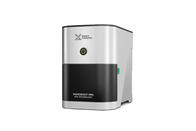
NanoSight Pro
NTA 粒子径分析装置
Nanobubbles are opening new possibilities across pharmaceutical development, water treatment, advanced materials, food production and many other scientific fields. Their exceptionally small size and high surface-area-to-volume ratio allow them to influence gas transfer, interfacial interactions and particle behaviour in ways that larger bubbles cannot.
However, the properties that make nanobubbles valuable also make them difficult to study. They cannot be observed using conventional optical microscopy, and their behaviour can change with gas composition, liquid chemistry, temperature, pH and the presence of surfactants or suspended particles.
Reliable characterisation is therefore essential. Researchers need to determine whether nanobubbles are present, understand the size and concentration of the measured population, assess how it changes over time and establish whether the generation process can be reproduced consistently.
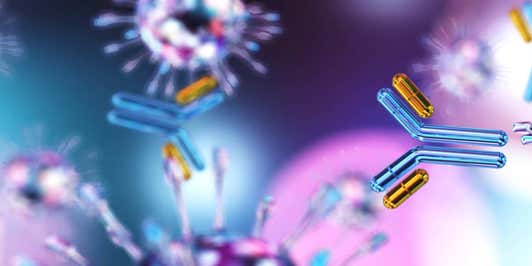
Nanobubbles are nanoscale gas-filled cavities dispersed within a liquid. Although definitions vary across the scientific literature, bulk nanobubbles are generally described as submicrometre bubbles, with many reported populations concentrated below approximately 200 nanometres.
At this scale, their behaviour differs substantially from that of conventional microbubbles and macrobubbles. Their low buoyancy can allow them to remain dispersed rather than rapidly rising to the surface, while their large interfacial area can support efficient interactions between the encapsulated gas and the surrounding liquid.
Depending on the liquid environment, nanobubbles may also possess an interfacial charge. This charge can influence interactions between bubbles, particles, dissolved species, and biological materials, as well as the overall stability of the dispersion.
These characteristics make nanobubbles scientifically and commercially interesting because they can potentially:
Their behaviour is highly dependent on the surrounding matrix. Measurements must therefore be performed under representative and carefully controlled conditions.
A nanobubble generation system may produce populations that vary in size, concentration and stability as operating conditions change. Gas flow, pressure, temperature, liquid composition, generation time and sample handling can all affect the resulting dispersion.
Without reliable measurement, it is difficult to determine whether an apparent improvement in application performance results from the nanobubbles themselves or from another change in the process. It also becomes challenging to compare generation methods, optimise operating parameters or demonstrate batch-to-batch reproducibility.
A robust nanobubble characterisation strategy should consider:
No single analytical result provides a complete description of a nanobubble system. Combining complementary measurement techniques can produce a more comprehensive and defensible understanding.
NTA 粒子径分析装置
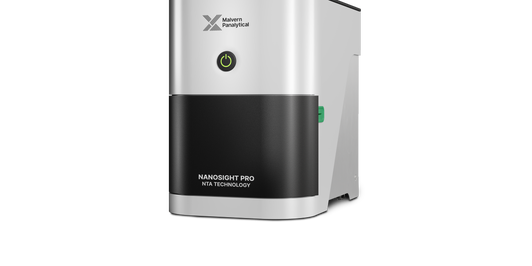
NanoSight Pro uses Nanoparticle Tracking Analysis, or NTA, to visualise the light scattered by individual nanoscale objects moving under Brownian motion. The system records this movement and tracks each object separately. The translational diffusion coefficient is then related to an equivalent hydrodynamic diameter using the Stokes-Einstein equation.
This particle-by-particle approach provides a number-based size distribution together with a measurement of particle concentration. It is particularly valuable when researchers need to investigate heterogeneous samples, compare different generation conditions or identify changes in a population that may be obscured by an ensemble average.
NanoSight Pro can support nanobubble research by enabling scientists to:
NTA detects and characterises light-scattering objects, but scattering measurements alone do not prove that every detected object is a gas-filled bubble. Solid nanoparticles, droplets, micelles and contaminants may also contribute to the measured population. Appropriate controls and complementary analytical techniques should therefore be used when confirming nanobubble identity, particularly in complex sample matrices.
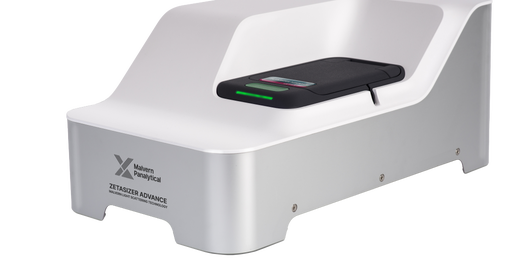
The Zetasizer Advance range provides complementary ensemble measurements using Dynamic Light Scattering, or DLS, and Electrophoretic Light Scattering, or ELS.
DLS measures fluctuations in scattered light produced by the Brownian motion of an ensemble of particles or bubbles. It provides an intensity-weighted hydrodynamic size measurement and can be used to assess overall sample quality, monitor changes in the dispersion and investigate stability over time.
Zeta potential measurements provide insight into the electrokinetic behaviour of the dispersed population. The magnitude and direction of the measured zeta potential can help researchers investigate how surface charge, pH, conductivity and formulation composition influence interactions within the sample.
Together, NanoSight Pro and Zetasizer Advance provide complementary perspectives:
Nanobubbles have a wide range of applications across pharmaceutical, environmental, biological and advanced materials sectors.
Find out more about each application below.
Nanobubbles are being investigated as potential carriers and responsive delivery systems for pharmaceutical applications. Depending on their composition and functionalisation, they may support localised delivery, controlled release or activation through external stimuli such as ultrasound.
In these applications, size and concentration can influence circulation, cellular interactions, loading efficiency, therapeutic response and safety. A broad or changing population may also affect dose consistency and the reproducibility of preclinical studies.
NanoSight Pro provides number-based size distributions and concentration measurements that can help researchers compare formulations, monitor changes during development and assess consistency between batches. Zetasizer Advance complements these measurements by providing ensemble size and zeta potential data for formulation and stability studies.
Together, these techniques can support a more complete understanding of how formulation conditions affect the physical properties of a nanobubble-based delivery system.
Gas-liquid interfaces can influence proteins and other sensitive biological materials. Nanobubbles may therefore be relevant to studies involving protein stability, aggregation, formulation behaviour and process consistency.
Biological formulations can contain several nanoscale populations, including proteins, aggregates, vesicles, excipient structures and other particulate matter. This complexity makes careful experimental design particularly important.
NanoSight Pro can measure the size and concentration of detectable light-scattering objects and reveal changes in heterogeneous populations. When appropriate fluorescent markers are available, fluorescence-capable NTA can help distinguish labelled biological particles from the overall scattering population.
Zetasizer Advance can support the investigation of ensemble size, aggregation trends and zeta potential. Used together with suitable controls, these measurements can help researchers investigate relationships between nanobubbles, biological particles and formulation stability.
Nanobubbles are being investigated and deployed in water treatment processes because their large interfacial area and prolonged dispersion may improve gas transfer and interactions with suspended or dissolved contaminants.
Potential applications include:
NanoSight Pro can measure changes in the size and concentration of the detectable nanoscale population as generation parameters or water conditions change. This information can help researchers compare generator performance, examine nanobubble persistence and investigate the effect of treatment conditions.
Natural water and wastewater can contain colloids, microorganisms, mineral particles and organic matter that also scatter light. NTA data should therefore be interpreted alongside appropriate untreated controls and, where necessary, complementary methods capable of confirming chemical or gaseous identity.
Zetasizer Advance can provide additional insight into changes in ensemble size and zeta potential as pH, conductivity, ionic strength or contaminant loading varies.
Nanobubbles can influence particle surfaces, nucleation, dispersion, flotation and chemical reactions. These effects are relevant to fields such as mineral processing, catalyst development, nanoparticle synthesis, surface cleaning and functional material production.
The performance of a nanobubble-assisted process may depend on the number of bubbles present, their size distribution and their interaction with solid particles or liquid interfaces.
NanoSight Pro can reveal number-based distributions and changes in population heterogeneity, helping researchers compare processing conditions and assess reproducibility. Zetasizer Advance adds ensemble size and zeta potential measurements that can be used to investigate dispersion stability and particle-bubble interactions.
This combined approach can help connect nanoscale changes within the liquid to processing efficiency and final material performance.
Nanobubbles are being explored for applications including oxygenation, cleaning, sanitation, washing and process-water management. Their ability to introduce gases with a high interfacial area may create opportunities to improve process efficiency while reducing water, chemical or energy consumption.
For these benefits to be demonstrated, the generated nanobubble population must be characterised under relevant processing conditions. Changes in dissolved solids, oils, proteins, surfactants or other ingredients may affect both nanobubble behaviour and the analytical result.
NanoSight Pro can be used to compare the size and concentration of detectable nanoscale populations across treatment conditions. Zetasizer Advance can support ensemble size and stability investigations, helping researchers determine how changes in formulation or process chemistry influence the system.
Nanobubbles are being investigated in cosmetic formulations, cleansing systems and processes involving the delivery or dispersion of active ingredients. Their potential effects on interfacial behaviour may also make them relevant to product texture, foaming, stability and sensory performance.
Cosmetic formulations are often complex and may contain emulsified droplets, micelles, pigments, polymers and solid particles. These components can overlap with the size range of nanobubbles and contribute to light-scattering measurements.
NanoSight Pro can provide detailed information about the number-based size distribution and concentration of detectable objects within appropriately prepared samples. Zetasizer Advance can then provide complementary ensemble size and zeta potential measurements.
Careful use of blanks, formulation controls and orthogonal techniques is essential when attributing a measured population specifically to nanobubbles.
The value of nanobubbles depends on more than their presence. Researchers must establish how the measured population relates to the performance of the application.
A structured characterisation programme can help answer practical questions such as:
NanoSight Pro provides the particle-by-particle size and concentration information needed to examine population-level changes. Zetasizer Advance adds ensemble size and zeta potential measurements that can help explain stability and interactions within the wider dispersion.
By combining these complementary insights with suitable controls and application-specific performance data, researchers can move from simply generating nanobubbles to understanding and controlling the process.
Nanobubbles have the potential to support more efficient gas transfer, more targeted delivery and more sustainable industrial processes. Their applications are expanding, but successful development depends on scientifically defensible measurement.
Reliable characterisation allows researchers to compare generation technologies, optimise process conditions, monitor stability and establish reproducibility. It also helps separate genuine nanobubble behaviour from the effects of contaminants, solid particles or other nanoscale structures within the sample.
When scientists can visualise, size and quantify the nanoscale population, and combine those results with complementary measurements of ensemble size and zeta potential, they can make better-informed decisions throughout research, development and process optimisation.
Fast answers for our most common questions.
Nanobubbles are nanoscale gas-filled cavities dispersed within a liquid. Definitions vary, but bulk nanobubbles are generally described as submicrometre bubbles, with many reported populations occurring below approximately 200 nanometres.
Nanobubbles are used or investigated in water and wastewater treatment, pharmaceutical delivery, bioprocessing, aquaculture, agriculture, food production, advanced materials, mineral processing and surface cleaning. Their potential value arises from their small size, high interfacial area and ability to remain dispersed within liquids.
Nanobubbles are being investigated as carriers and externally activated delivery systems. Their size, concentration, composition and stability may influence loading, dosing, biological interactions and therapeutic performance, making reliable characterisation essential during development.
Nanobubbles can be investigated using complementary methods that assess size, concentration, electrokinetic behaviour and stability. NanoSight Pro uses NTA to provide number-based hydrodynamic size distributions and concentration measurements. Zetasizer Advance provides complementary ensemble size and zeta potential analysis.
NTA visualises and tracks light-scattering objects, but scattering measurements alone cannot conclusively distinguish gas-filled nanobubbles from solid particles, droplets or other nanoscale structures. Appropriate blanks, controls and complementary analytical methods should be used when confirming nanobubble identity.
Concentration can influence gas-transfer capacity, dosing, reaction efficiency and interactions with particles or biological systems. Monitoring concentration also helps researchers compare generator performance and assess consistency between experiments or production batches.
Zeta potential provides information about the electrokinetic behaviour of the dispersed population. It can help researchers investigate how interfacial charge, pH, ionic strength and formulation composition influence interactions and stability within a nanobubble system.
Nanobubble populations can change through dissolution, coalescence, aggregation or interaction with other sample components. Measuring size and concentration at defined time points helps establish persistence, stability and the appropriate window for processing or application.
NanoSight Pro provides particle-by-particle, number-based size and concentration measurements, while Zetasizer Advance provides sensitive ensemble size and zeta potential data. Combining the two techniques creates a more complete picture of the population and helps strengthen the interpretation of complex nanobubble systems.