Looking for more information?
To request a quote, more information or download a brochure select an option below.
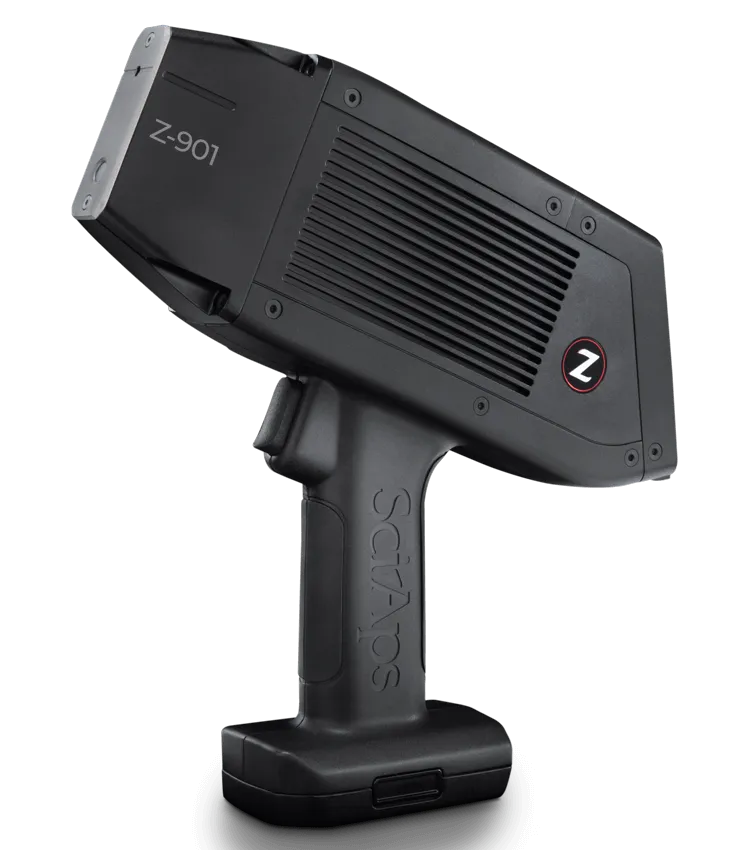
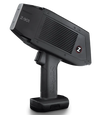
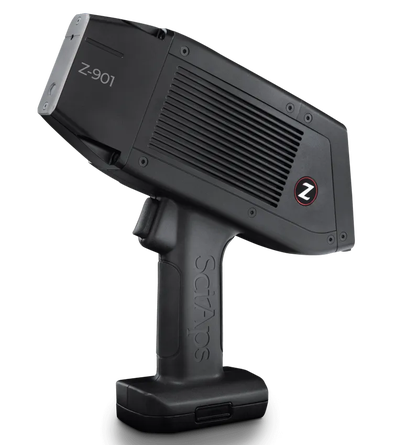
The SciAps Z-901 handheld LIBS analyzer features an all-new ergonomic design, weight reduction to ~3.5 lbs. (1.6 kg), improved heat dissipation, and refreshed software and processing electronics.
The Z-901 offers a single spectrometer to cover the 200-440 nm wavelength range. The instrument is factory calibrated for a suite of 15-20 elements, depending on the application. Operators may also use the accompanying Profile Builder software package to customize to specific elements, their own calibration standards, and spectral processing.
The Z-901 can be set up to measure the emissions of any element except Li, Na, H, C, N, O, Cl, Br, F, Ce, Rb, S. Common factory-calibrated Z-901 applications include alloy, mining and environmental analysis, typically for beryllium in soil.
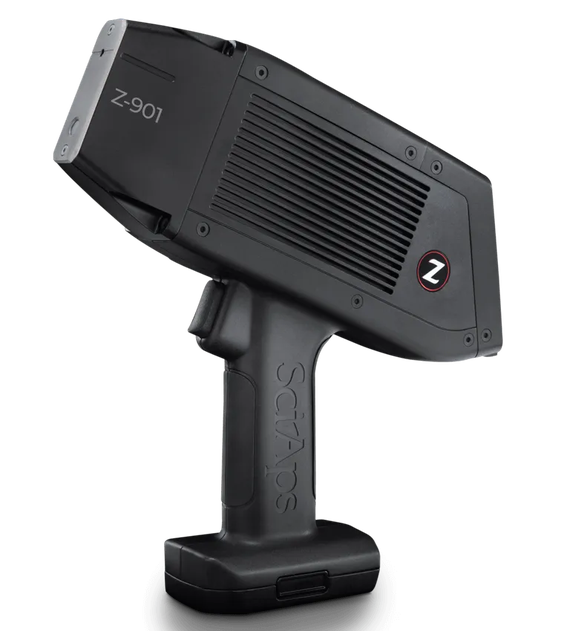
LIBS sensor: advanced spectrometer design for high resolution and wide range
Internal camera: precise targeting of analysis location
Macro-camera: photo documentation of samples, reading barcodes and QR codes
Report generation: full featured, with available cloud data management and reporting
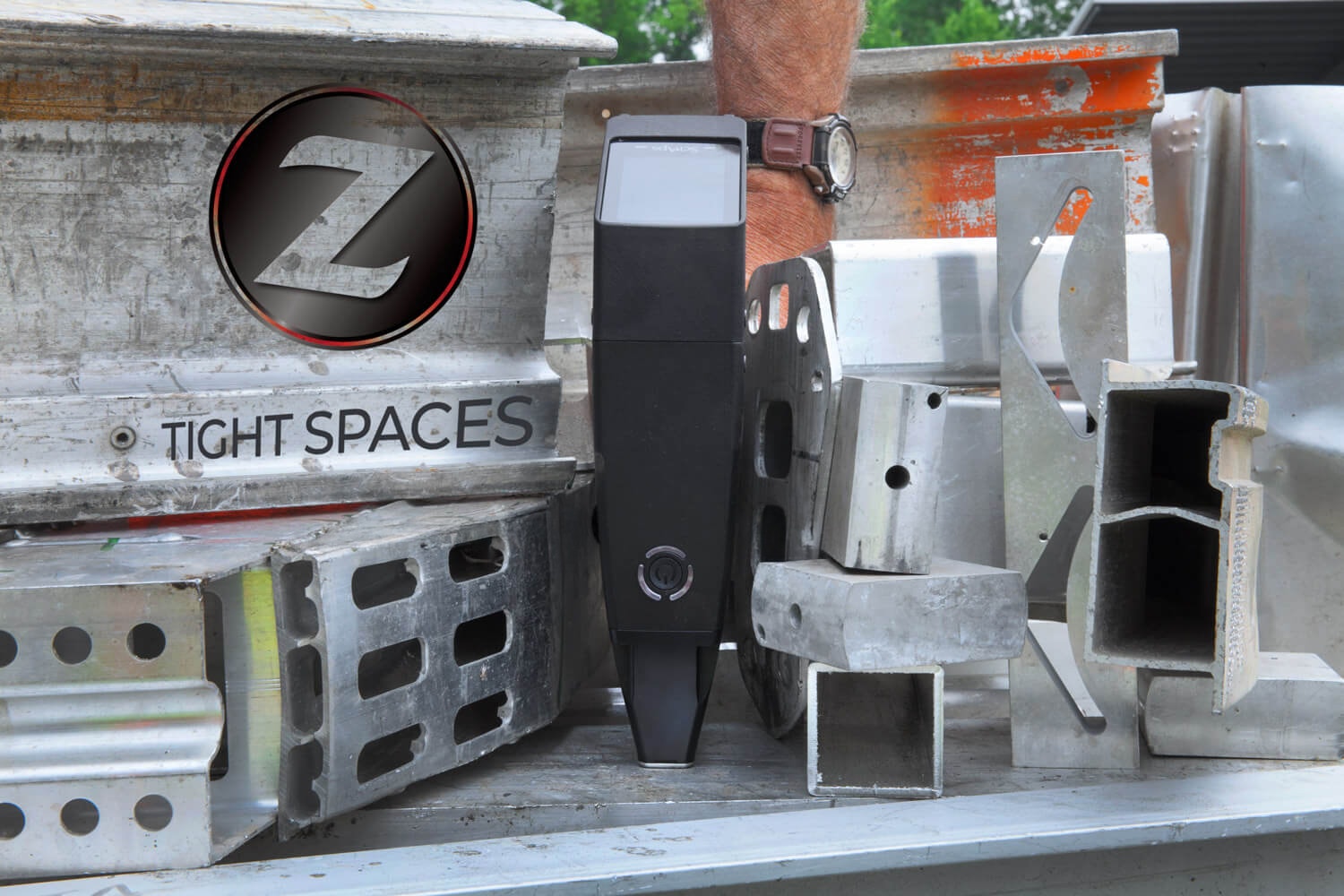
Narrow snout: tapered for wields or difficult to access test locations
Laser safety sensor: patented sample sensor allows Class 1 operation subject to LSO approval
Intuitive Android operating system with app based software
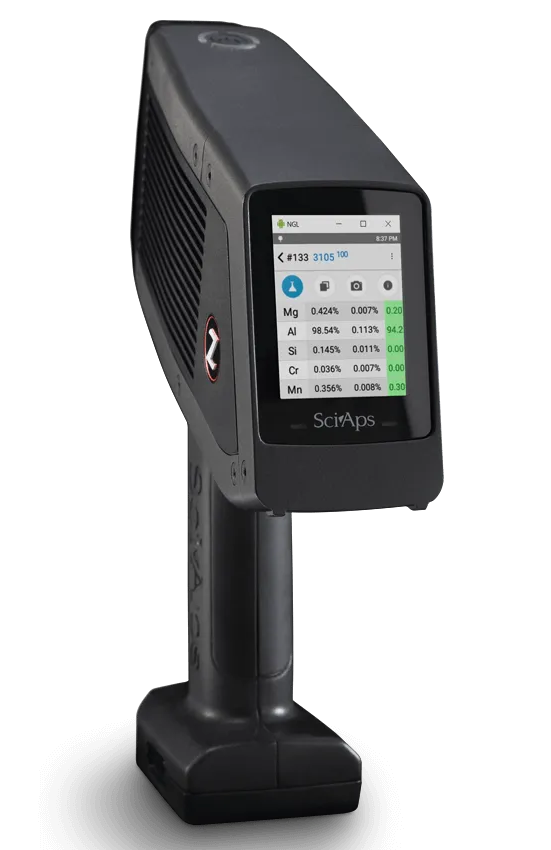
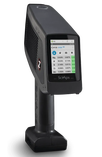
High resolution display: rear-facing display for easy viewing
Rugged metal body: maximum durability and minimal service costs
| Model | Range (nm) | Best application |
|---|---|---|
| Z-901 | 200 - 420 | General alloy testing for scrap sorting, PMI/NDT or quality assurance. Does not measure carbon. |
| Z-901 CSi | 190 - 260 | Analyzes carbon and silicon only. The perfect complement to your XRF. |
| Z-901 Li | 380 - 680 | Purpose built for lithium in soils, ores and rocks. |
| Z-901 Be | 200 - 420 | Purpose built for beryllium measurements, generally paired with XRF to cover all 13 EPA Priority Pollutant elements. Handheld XRF cannot measure Be. |
Factory calibrations do not include every element, but are provided for a set of 15-20 elements, depending on the application. Elements exclude unstable and radioactive elements. Detection limits vary greatly by element and sample type.
The Z-901 software allows you to choose between fast and basic QuickSort, or high-precision Alloy.
The Z-901 for alloy analysis measures 15-20 elements in 7 common alloy bases, including aluminum, stainless, iron, copper, titanium, nickel and cobalt bases. Other bases may be added for a small fee, or users may add their own calibrations.
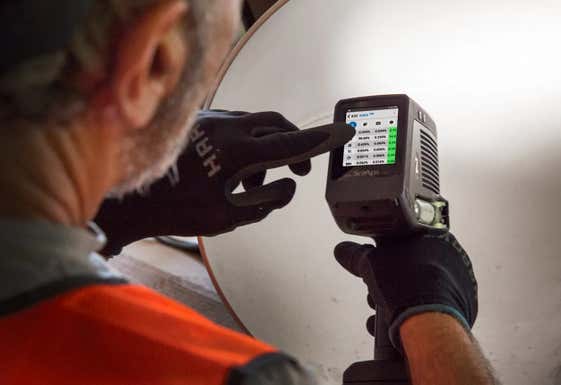
Air-burn for rapid material sorting or grade identification.
| Weight | 3.87 lbs. (1.75 kg) with battery |
|---|---|
| Dimensions | 10.75 x 2.375 x. 8.625 inches |
| Display | 3.5-inch high-brightness color touchscreen, readable in all conditions. Rear-facing display for easy results viewing |
| Power | On-board rechargeable Li-ion battery, rechargeable inside device or with external charger, AC power |
| Data Transfer | Built on Google’s Android platform for real-time data exporting, including built-in Wi-Fi (IEEE 802.11b/g/n), Bluetooth (BR/EDR+BLE), GPS and USB-C to connect to virtually any information management system |
| Processing electronics and host processor | |
| Data storage | Results storage: 32 GB SD card |
| Drift | On-board automated drift correction software with factory-provided or user-provided reference materials |
| Regulatory testing | CE, RoHS, USFDA registered. Class 3b laser
Sample sensor on board, allows for operation under Class 1 conditions subject to local LSO approval |
| Security | Password protected
Multi-user support with configurable access settings |
| Calibration check | 316 stainless steel standard for automated calibration and wavelength scale validation |
| Spectral bandwidth | 380 nm – 680 nm
|
| Sample Interface | Integrated camera and laser target indicator for viewing sample before and during analysis provide proper sample alignment
Includes second “macro camera” for scanning QR or bar codes and for photo-documentation and report generation |
| Laser raster | On-board Y stage for rastering laser to discrete locations for targeted analysis or averaging |
| Environment | SciAps proprietary Opti-Purge inert argon environment that improves spectral signal-to-noise ratio and performance in UV range |
The perfect companion to XRF, the SciAps Z-901 CSi rivals the size and weight of most handheld XRF units. It's the world's smallest, lightest weight, sleekest analyzer for carbon analysis in alloys.
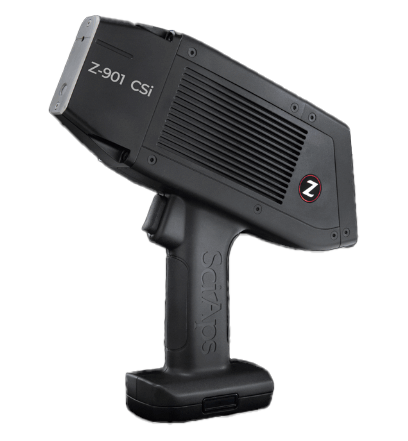
Many operators own one or more XRF instruments for PMI/NDT. It’s their preferred tool for high temp alloys, and for elements contributing to carbon equivalents (CE), residuals, and stainless steel grades: V, Mn, Cr, Ni, Cu, Nb, Mo.
However, XRF does not measure carbon and therefore no carbon equivalents, no separation of L- and H-grade stainless, nor can you use the more forgiving low RE formula (Ni + Cu) < 0.15%.
The SciAps Z-901 CSi is the perfect tool for operators who own XRF and need the occasional carbon measurement. It delivers fast, reliable carbon results to complement XRF tests, at a lower cost than the full LIBS system for carbon plus alloys. SciAps cloud-driven data merging and report generation brings all your data together in one report.
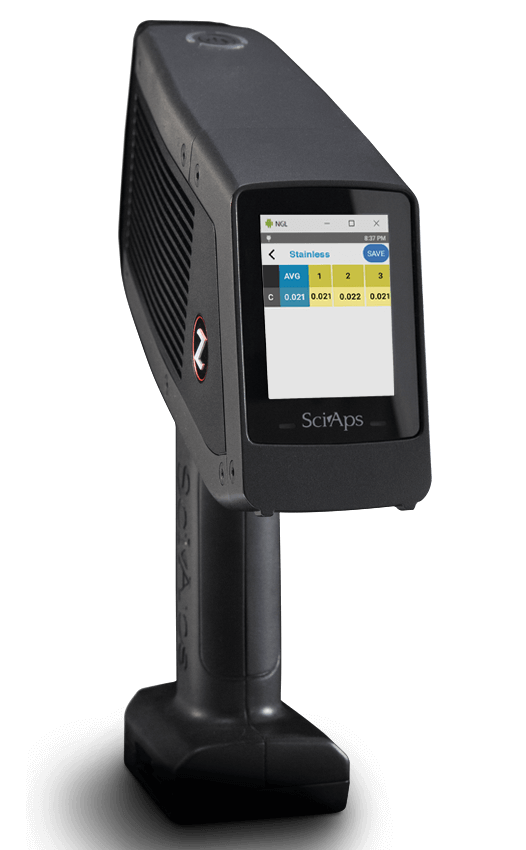
The SciAps Z-901 CSi rear display shows multiple carbon and silicon measurements, and the average. It meets multi-test averaging protocols required by some refineries and pipeline operators.
SciAps breakthrough LIBS technology is widely accepted for carbon testing. It’s included in API 578 2nd Edition, it’s accepted at most every major refinery, and in use worldwide by fabricators, pipeline owners/operators, power plants, and other users of carbon steels and L- and H-grade stainless.
Two analyzers means twice the reporting hassle, right? No. SciAps offers a cloud-based data merge and reporting tool so you can quickly merge CSi and XRF data to produce reports combining carbon and silicon from the LIBS with metals analysis from the XRF.
Are you using a different XRF brand? No problem – ask your supplier for the data structure of their data export and we’ll incorporate it into our SciAps Cloud package. The data structure generally follows an industry standard and doesn’t involve proprietary software.
| LIBS | XRF | Report |
|---|---|---|
| C, Si | Mn, Cr, Mo, V, Cu, Ni | CE Report (cloud-based) |
| C, CE | Cr, Ni, Cu, V, Nb | Low RE Report (cloud-based) |
The SciAps Z-901 Li is purpose-built for exploration, production and recycling of lithium, and is the world’s only handheld that analyzes lithium in rocks, ores, and powders.
In use globally for lithium exploration projects, with no travel restrictions or licensing headaches.
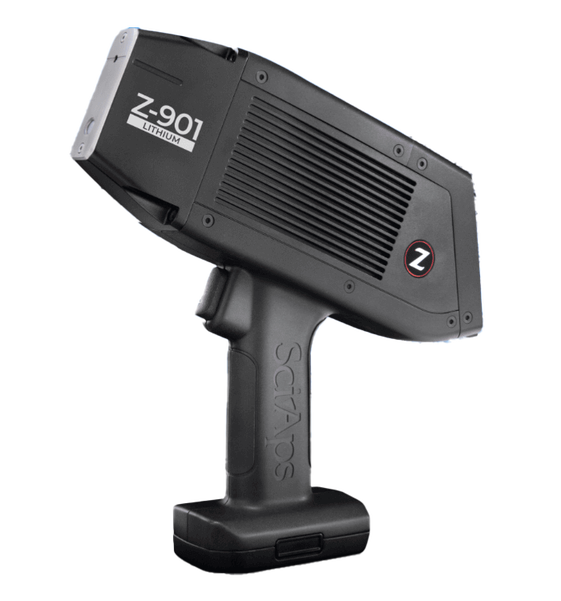
The Z-901 comes Factory calibrated for lithium in pegmatite, clays, and mica-schists, including relevant base elements in the 380 - 680 nm range.
SciAps also offers the Z-903, containing a third spectrometer to extend the analytical range down to 190 nm for users testing brines for other elements, including boron, magnesium, calcium, and potassium.
Android operating system and app-based software assure quality testing by every operator.
Built-in Wi-Fi and Bluetooth, with GPS capability, allow users to print, email, and connect to virtually any information management system for real-time, full-featured reporting.
Automatically merge XRF and LIBS tests with SciAps Cloud Services. Easily manage operations from anywhere.
SciAps LIBS series handheld analyzers are incredibly lightweight, at just 3.87 lbs. (1.75 kg) including the battery. The Z-901 has an internal camera for precise targeting of analysis locations; a macro camera for photo-documentation of samples, reading bar codes and QR codes; a patented sample sensor that allows Class 1 operation (subject to LSO approval); high-resolution, rear-facing display for easy viewing; rugged metal body for maximum durability; a narrow snout for difficult-to-access test locations; and user-replaceable argon that provides hundreds of tests at pennies per test.
Pair with Profile Builder software for PC or tablet and achieve full benchtop functionality.
LIBS complements handheld XRF because it is especially good at measuring low atomic number elements - including those too light for handheld XRF.
The SciAps Z-Series is currently used at multiple government facilities for beryllium screening and clean-up.
Forensics, Quality Control, Research, Education
The Z-901 features our desktop/tablet Profile Builder software package to add elements, create calibrations and apply advanced spectral processing.
| Title | Version | Date | Download |
|---|---|---|---|
| {{ row.title }} | {{ row.softwareVersion }} | {{ row.date }} | Download |
Sorry, no manuals are available for this product
| Title | Version | Date | Download |
|---|---|---|---|
| {{ row.title }} | {{ row.softwareVersion }} | {{ row.date }} | Download |
Sorry, no software downloads are available for this product
Lightweight, rugged, handheld LIBS analyzer. Fast and easy elemental analysis. Enhance your XRF with Carbon and Lithium capabilities.
