Chemical speciation
Identifying chemical bonding states and species of elements


Identifying chemical bonding states and species of elements
Many materials contain elements that can exist in multiple chemical forms or bonding environments. Determining the chemical speciation of these elements is critical for understanding reactivity, stability, and functionality across applications such as catalysis, energy storage, and environmental science.
X-ray absorption spectroscopy (XAS) enables element-specific chemical speciation by probing the electronic structure and local bonding environment of atoms within a material. This allows different chemical species of the same element to be identified even in complex or multiphase systems.
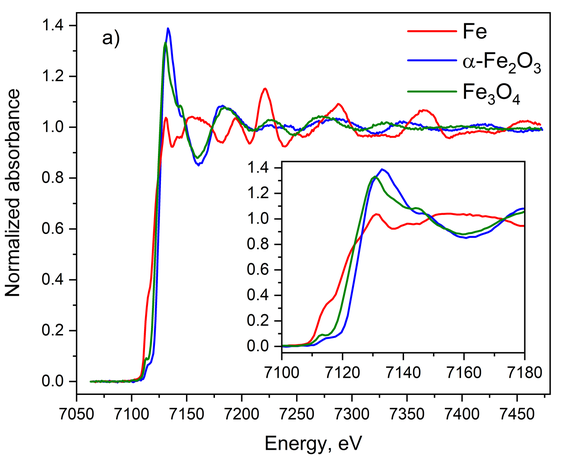
Chemical speciation analysis is important whenever elements can occur in multiple bonding configurations.
Because XAS is element-specific, it enables selective identification of chemical states, even within complex mixtures or overlapping phases. X-ray absorption spectroscopy (XAS) is now available in your lab with Empyrean XAS, our modular, future-proof materials characterization platform.
Typical scenarios and key research questions are shown below to help determine when to use chemical speciation.
Chemical speciation is primarily determined using X-ray absorption near-edge structure (XANES), which is highly sensitive to chemical bonding and electronic structure.
The near-edge region of the absorption spectrum reflects:
Each chemical species produces a distinct spectral “fingerprint”. By comparing measured spectra with reference compounds or spectral libraries, the chemical species present in a sample can be identified and, in many cases, quantified.
This enables detailed analysis of complex systems containing multiple overlapping chemical states.
The toxicity, mobility, and bioavailability of a substance depend heavily on its chemical form, not just its total amount. You can use chemical speciation to assess heavy metal toxicity in soil and sediment, monitor water quality, and measure atmospheric chemistry.
Speciation data unlocks more accurate ecological risk assessments, better-targeted remediation strategies, and a deeper mechanistic understanding of how pollutants behave in complex environmental systems.
The cleantech transition demands better catalysts. Understanding the exact chemical state of active species is essential for explaining catalytic performance, guiding catalyst design, and diagnosing deactivation mechanisms.
By combining synchrotron-based X-ray techniques like XAS with mass spectrometry or gas analysis in a single operando experiment, researchers can simultaneously track structural and chemical changes in the catalyst alongside product formation, making the connection between speciation and performance direct and unambiguous.
The efficiency of chemical transformations in energy storage depends on which chemical species are present, in what proportions, and how they evolve over time and with cycling.
Chemical speciation analysis is critical to determining the impact of these transformations on the charge/discharge performance, cycle life, and safety of batteries and other devices. XAS can supercharge your experiments on working electrochemical cells, sometimes with sub-second time resolution.
The identity and distribution of chemical species – in bulk alloys, at grain boundaries, on surfaces, and within corrosion products – determine mechanical properties, processability, and long-term durability.
Chemical speciation analysis can be used to measure the precipitate phases, grain boundary chemistries, passive film compositions, and corrosion product identities to predict both the mechanical performance of alloys and their resistance to degradation.
Chemical speciation analysis using XANES has traditionally been carried out at synchrotron facilities, where high-resolution spectra are used to distinguish between similar chemical states.
However, many speciation studies require comparison across multiple samples, conditions, or time points. In these cases, limited access to synchrotron beamtime can restrict the scope and speed of analysis.
Laboratory-based XAS is now enabling more accessible speciation studies, allowing researchers to build reference libraries, compare spectra under controlled conditions, and perform systematic investigations of complex materials.
This is particularly important for heterogeneous systems, where multiple species may coexist and evolve over time. Routine access to speciation measurements allows these changes to be tracked more effectively, supporting improved interpretation of chemical processes.
Add local chemical insight to your multipurpose X-ray platform
The Empyrean XAS enables chemical speciation analysis by combining XANES measurements with diffraction-based phase identification in a single platform.
This integrated approach allows researchers to distinguish between chemical species while also understanding their structural context. For example, different oxidation states or compounds identified through XANES can be directly linked to crystalline phases observed by XRD.
The ability to perform both measurements within the same system simplifies workflows and ensures consistent experimental conditions, improving the reliability of comparative studies.
By supporting laboratory-based speciation analysis, Empyrean enables more efficient characterization of complex materials, where multiple chemical states contribute to overall behavior.