
X-ray analysis techniques using X-ray fluorescence, X-ray diffraction, and X-ray absorption spectroscopy instruments

In many production or R&D settings, X-rays can be used to characterize materials and samples. The X-ray wavelength range (from 0.01 to 10nm) makes them exceptionally suitable for analyzing structures, elements, and chemical states at the atomic level.
There are a few main techniques through which X-rays can be used to help characterize your sample.
X-ray diffraction (XRD) and x-ray scattering can be used, for example, to analyze a samples’ crystal structure (X-ray crystallography) or to identify and quantify crystalline phases in a sample (X-ray powder diffraction / XRPD).
X-Ray diffractometers can also be extended with tools and accessories to visualize the internal structure an object, or use x-ray scattering to determine nanoparticle size distributions.
X-ray fluorescence (XRF) is a widely used non-destructive and fast technique to determine the elemental composition of a material requiring only minimal sample preparation.
XRF analyzers can be used for various applications, ranging from screening incoming goods for toxic elements to precise analysis in high-throughput, production-critical environments.
Malvern Panalytical has a range of XRF analyzers to meet your challenges.
X-ray absorption spectroscopy (XAS) is a powerful element-specific technique used to investigate the local chemical environment, oxidation state, and atomic coordination of elements within a material.
By measuring how x-rays are absorbed as their energy is varied across an element’s absorption edge, XAS provides detailed information about electronic structure and short-range order, even in amorphous, disordered, or dilute systems where diffraction techniques may be limited.
XAS encompasses techniques such as X-ray Absorption Near Edge Structure (XANES) and Extended X-ray Absorption Fine Structure (EXAFS), making it valuable for research in catalysis, energy storage, environmental science, mining, advanced materials, and life sciences.
Malvern Panalytical offers XAS solutions that enable researchers to gain deeper insight into material chemistry and structure.

XRD, XRF, and XAS are complementary techniques with several similarities, as all use X-ray interactions to provide information about materials. However, the information provided by each technique is very different.
XRD provides information about the crystalline phases present in a sample and can distinguish between compounds, for example, different oxidation states (Fe₂O₃/Fe₃O₄) or different polymorphs (hematite vs. maghemite, both being ferric oxide Fe₂O₃).
XRF provides information about the chemical (elemental) composition of a sample, i.e., which elements (Fe, O) are present and in which quantities. One of the main benefits of XRF is that it can detect the amount of a chemical element down to 100 ppb (parts per billion). XRF sample preparation is also fast, easy, and safe compared to alternative techniques.
XAS provides information about the local atomic environment and electronic structure of a specific element. It can determine oxidation states, coordination numbers, bond distances, and chemical speciation, making it particularly useful for studying catalysts, battery materials, geological samples, and complex functional materials.
Together, these techniques provide a comprehensive understanding of a material’s composition, structure, and chemistry.
Malvern Panalytical is a world-leading provider of X-ray analytical equipment with decades of experience.
We offer a wide range of solutions, ranging from easy-to-use benchtop systems to full-power, comprehensive floor-standing systems for XRF, XRD, and XAS applications.
These techniques are complementary, and in many production and research environments, multiple X-ray analysis methods are used together to ensure optimal quality control, process understanding, and materials characterization.
Compact benchtop X-ray diffractometers
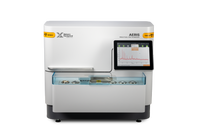
The intelligent diffractometer
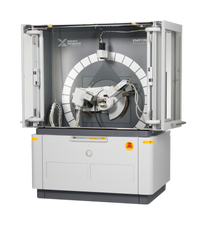
High end floor-standing WDXRF spectrometers
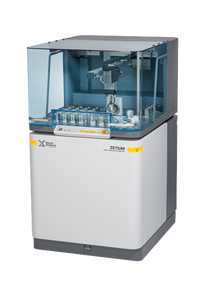
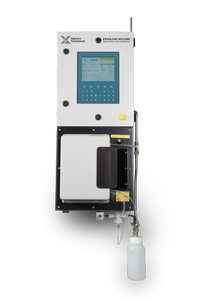
EDXRF benchtop and on-line spectrometers
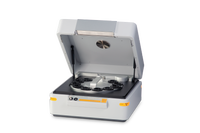
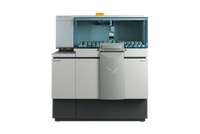
High throughput simultaneous WDXRF spectrometer
Direct insight into your liquid process parameters