Dynamic Light Scattering (DLS)
Dynamic Light Scattering for size characterization of proteins, nanoparticles, polymers and colloidal dispersions


Subscribe for Biologics updates. Sign up
Sign upDynamic Light Scattering for size characterization of proteins, nanoparticles, polymers and colloidal dispersions
Dynamic light scattering (DLS) is a non-invasive, well-established technique for measuring the size and size distribution of molecules and particles typically in the submicron region, and with the latest technology, lower than 1nm.
DLS is so named as it measures the small changes in the intensity of light scattered from an ensemble of particles over very short time periods, it’s this dynamic change that DLS utilizes.
The intensity changes of the scattered light arise from the small movements that particles make as they are randomly bombarded by the surrounding solvent molecules, this is called Brownian Motion after Robert Brown who first observed the effect.
Scattered light from two or more moving particles will change phase with respect to each other, leading to constructive and destructive interference of the scattered light from the diffusing particles, seen as intensity fluctuations over short time periods.
DLS measures the rate of these light fluctuations using a high sensitivity single photon counting module. The rate of intensity change is directly related to the rate the particles move (diffuse) and to their particle size, by the Stokes-Einstein equation.
In simple terms the rate particles diffuse is related to their size and the viscosity of the suspending fluid; small particles will diffuse faster than larger particles. The faster the particles diffuse the faster the scattered light intensity changes – the rate of this decay is what DLS uses to measure particle size.
This phenomenon and how it’s analyzed maybe better understood in our “Introduction to Dynamic Light Scattering” video.
Dynamic Light Scattering is a powerful analytical technique, and when coupled with advanced instruments like the Zetasizer Advance and Zetasizer Core, it becomes indispensable across various industries.
Here's how the Zetasizer Advance, with its dynamic light scattering technique, offers unparalleled insights into particle size, stability, and interactions across a wide range of sectors:
DLS has become a well-established technique in nanoparticle characterization for drug delivery systems, ensuring precise size distribution analysis crucial for drug efficacy and stability.
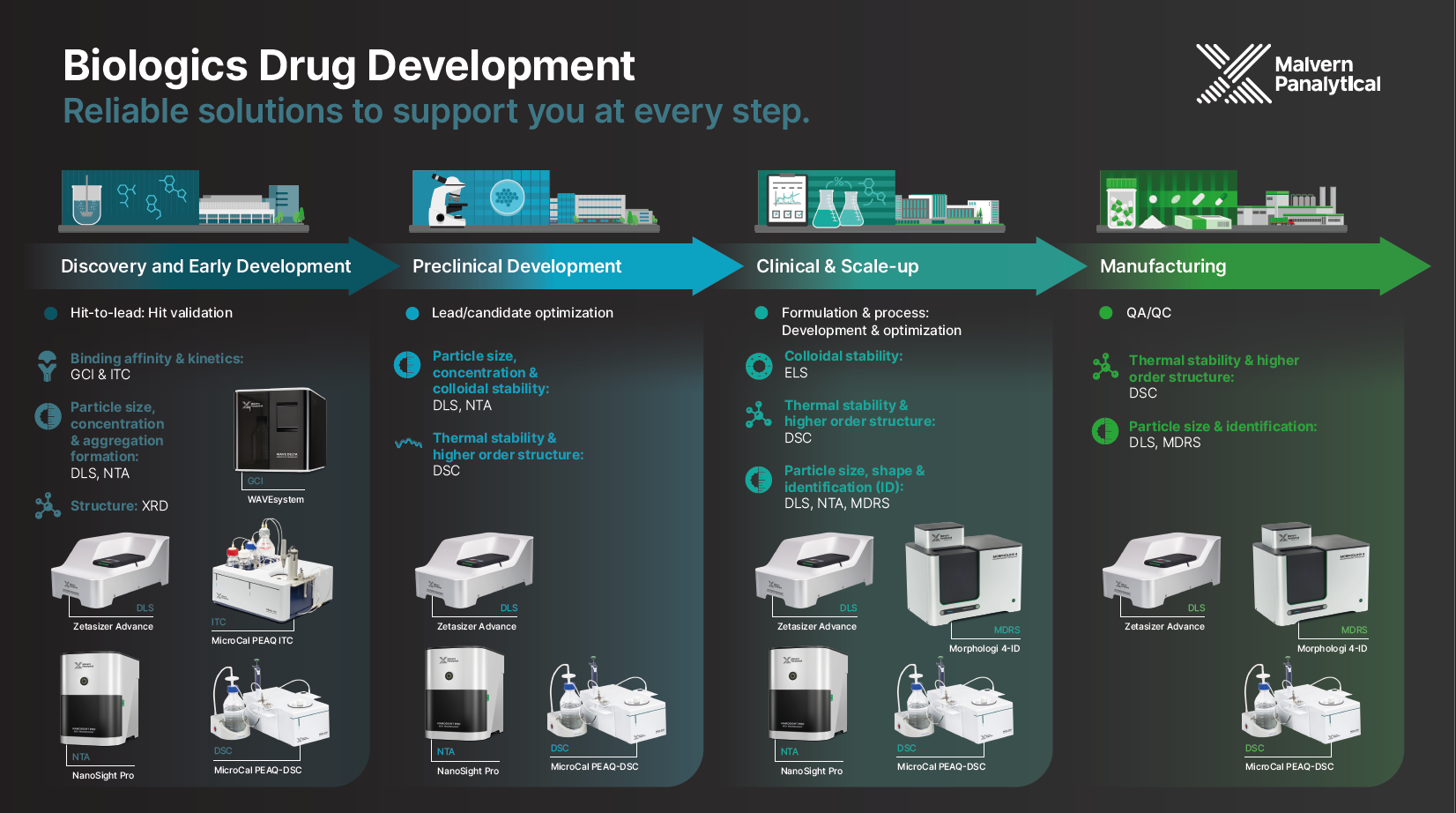
Zetasizer Core facilitates the study of protein or vesicle size, polydispersity and aggregation kinetics, typically at the drug candidate and formulation screening stages where its ability to rapidly scan multiple candidates and condition samples using microplates, enabling researchers to quickly obtain the data to optimize formulations for efficacy and stability.
Zetasizer Advance offers similar capabilities but in a batch system, offering great data quality needed for those more critical measurements that may be needed in late-stage development, production and QC stages. Zetasizer Advance and Zetasizer Core help the biopharmaceutical manufacturing sector ensure efficient drug discovery, development and final product quality.

In the cosmetics industry, Malvern Panalytical’s DLS technology helps in characterizing the size and stability of colloidal dispersions, essential for the formulation of creams, lotions, and emulsions.
It aids in assessing the stability of nanoparticles in sunscreen formulations, ensuring effective UV protection and long-term stability of the product.
Malvern Panalytical’s DLS systems assists in analyzing the particle size distribution and aggregation behavior of food emulsions, influencing product texture, stability, and sensory attributes.
They are used to evaluate the stability of colloidal suspensions in beverages, ensuring product clarity and shelf life stability.
In materials science, Malvern Panalytical's DLS instruments are employed for nanoparticle sizing and characterization, guiding the synthesis and optimization of functional nanomaterials for diverse applications.
They aid in studying the stability and aggregation kinetics of nanoparticles in coatings and composites, influencing material properties such as mechanical strength and optical transparency.
Malvern Panalytical's DLS technology contributes to environmental monitoring efforts by analyzing the size distribution and aggregation behavior of nanoparticles in environmental samples, helping assess their impact on ecosystems and human health.
Our DLS instruments aid in studying the behavior of engineered nanoparticles in wastewater treatment processes, ensuring efficient removal and minimizing environmental exposure as well as monitoring floc size and fines levels for extending filter life.
Discover MP Academy: expert-led courses and video lessons on materials characterization technologies, all in one place.
Learn at your own pace. Earn certificates. Accelerate your academic journey.

At Malvern Panalytical, we offer state-of-the-art DLS instruments designed to meet the diverse needs of researchers and industry professionals. Our Zetasizer Advance Range combines precision, reliability, and user-friendly features to deliver accurate and insightful data.
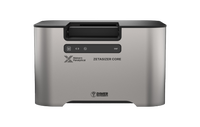
Our Zetasizer Core offers unparalleled speed combing DLS, DSF and static light scattering, all with the convenience of sample presentation in microplate format, for insights into candidate and formulation screening and stability studies.
Key capabilities and advantages include:
Zetasizer Advance
Zetasizer Core
Light Scattering for every application
Next generation biophysical screening at scale
Resources