Covalent Organic Frameworks (COFs)
Advanced characterization solutions for covalent organic frameworks, helping researchers optimize structure, porosity, stability, and application performance.

Advanced characterization solutions for covalent organic frameworks, helping researchers optimize structure, porosity, stability, and application performance.
Covalent organic frameworks (COFs) are crystalline, porous materials built from organic building blocks joined by strong covalent bonds. Their tunable structures, pore environments, and chemical functionality make them promising for applications including gas capture and separation, catalysis, energy storage, sensing, and environmental remediation. Reliable characterization is essential for connecting synthesis and structure with material performance—and for progressing promising COFs from discovery toward scalable applications.
The performance of a covalent organic framework depends on the relationship between its chemistry, crystalline structure, pore architecture, and particle properties. Small changes in synthesis or processing can affect framework ordering, accessible porosity, adsorption behaviour, stability, and ultimately application performance.
A complementary characterization workflow helps researchers:
Together, these insights reveal structure–property–performance relationships and provide the evidence needed to translate laboratory discoveries into reliable, application-ready materials.
Several interdependent characteristics determine whether a COF will deliver the required performance.
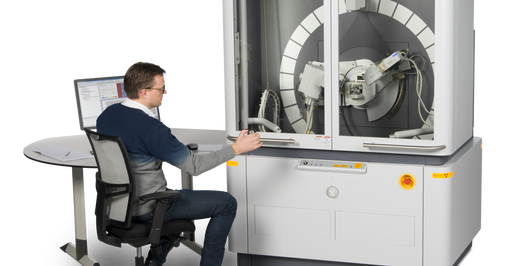
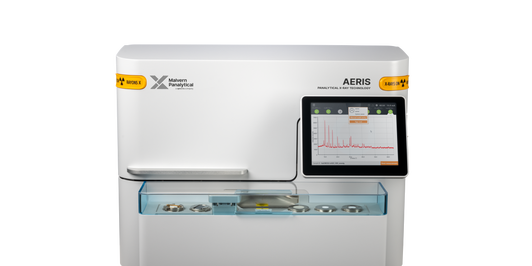
Framework ordering and phase purity can influence adsorption, molecular selectivity, catalytic activity, charge transport, and long-term stability. X-ray diffraction helps confirm whether the intended crystalline framework has formed, distinguish unwanted phases, and compare the effects of different synthesis conditions.
Relevant solutions: Empyrean; Aeris
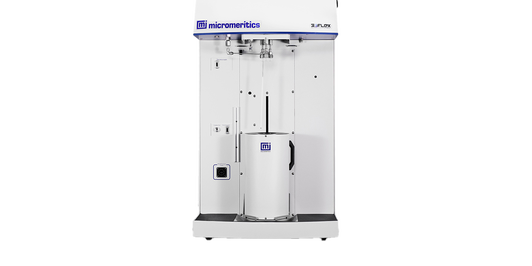
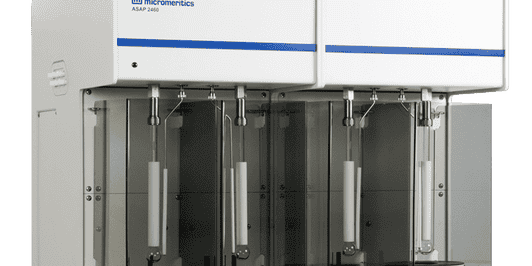
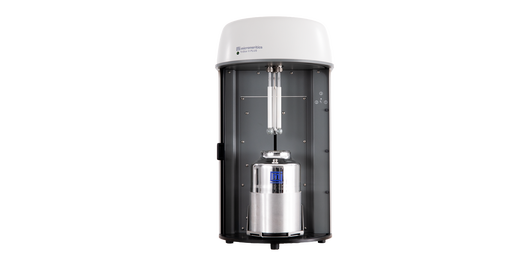
COFs derive many of their advantages from highly porous architectures. Gas adsorption measurements quantify specific surface area, pore size distribution, pore volume, and gas uptake. High-pressure adsorption measurements can also evaluate gas storage capacity and adsorption behaviour under application-relevant pressure conditions. Together, these measurements show how accessible micropores and mesopores contribute to storage capacity, separation selectivity, diffusion, and catalytic accessibility.
Relevant solutions: 3Flex; ASAP 2460; TriStar II Plus; AccuSorp HP
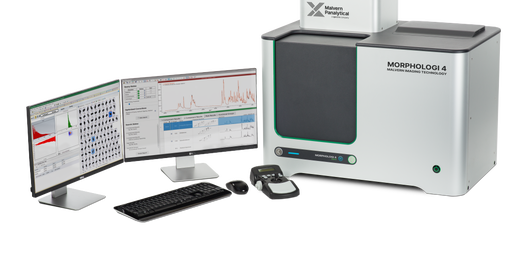
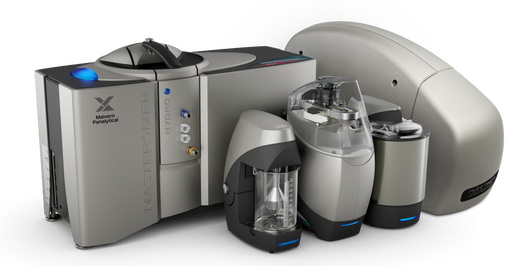
Particle size distribution, shape, and agglomeration can affect powder flow, packing, dispersion, formulation, and processing. Monitoring these properties helps researchers maintain consistency throughout synthesis, milling, handling, and scale-up.
Relevant solutions: Mastersizer 3000+; Morphologi 4
Elemental analysis helps verify the intended composition, identify residual inorganic species or contaminants, compare batches, and investigate changes after use. Combined with structural and porosity measurements, it provides greater confidence that the desired material has been produced and remains intact under relevant conditions.
The ability to tailor pore size, surface chemistry, framework composition, and functionality makes COFs attractive for a growing range of advanced applications.
High surface areas and controllable pore environments make COFs promising for carbon dioxide capture, hydrogen and methane storage, and selective gas separation. Surface area, pore size distribution, adsorption isotherms, and structural stability help researchers assess capacity, selectivity, and cycling behaviour.
Relevant solutions: 3Flex; ASAP 2460; AccuSorp HP
Tailored functional groups, active sites, and accessible pore networks can support heterogeneous catalysis, photocatalysis, and electrocatalysis. Relating composition, crystallinity, particle properties, and porosity to activity and selectivity helps guide catalyst development and evaluate durability.
Relevant solutions: Empyrean; Revontium; Mastersizer 3000+
Conductive or redox-active COFs are being explored for batteries, supercapacitors, proton-conducting materials, and optoelectronic devices. Framework ordering, composition, particle morphology, and stability can all affect charge transport, electrode processing, and device performance.
Relevant solutions: Empyrean; Morphologi 4; Epsilon
Functionalized pores can enable selective interactions for chemical sensing, contaminant removal, water treatment, and targeted molecular capture. Understanding accessible porosity, composition, particle size, and stability helps researchers evaluate performance under realistic operating conditions.
Malvern Panalytical provides complementary characterization technologies for the COF development lifecycle—from confirming early-stage synthesis to optimizing performance, reproducibility, and scale-up.
X-ray diffraction can verify the intended crystalline structure, identify unwanted phases, and compare synthesis routes. X-ray fluorescence adds elemental information to help confirm composition and identify inorganic species or contaminants.
Relevant solutions: Empyrean; Aeris; Revontium; Epsilon
Gas adsorption measurements reveal specific surface area, pore size distribution, pore volume, and gas uptake. Using different adsorptives and measurement conditions can provide deeper insight into accessible porosity and adsorption behaviour, helping researchers tune COFs for capture, storage, separation, and catalysis.
Relevant solutions: 3Flex; ASAP 2460; TriStar II Plus; AccuSorp HP
Particle size distribution and morphology data support reproducible synthesis, downstream processing, formulation, packing, and scale-up. They can also reveal agglomeration or changes introduced by milling, dispersion, and handling.
Relevant solutions: Mastersizer 3000+; Morphologi 4
No single measurement fully describes a COF. Combining structural, compositional, porosity, and particle characterization provides a more complete view of the material and supports consistent workflows for screening synthesis conditions, comparing batches, investigating degradation, and establishing the structure–property–performance relationships needed for application development.