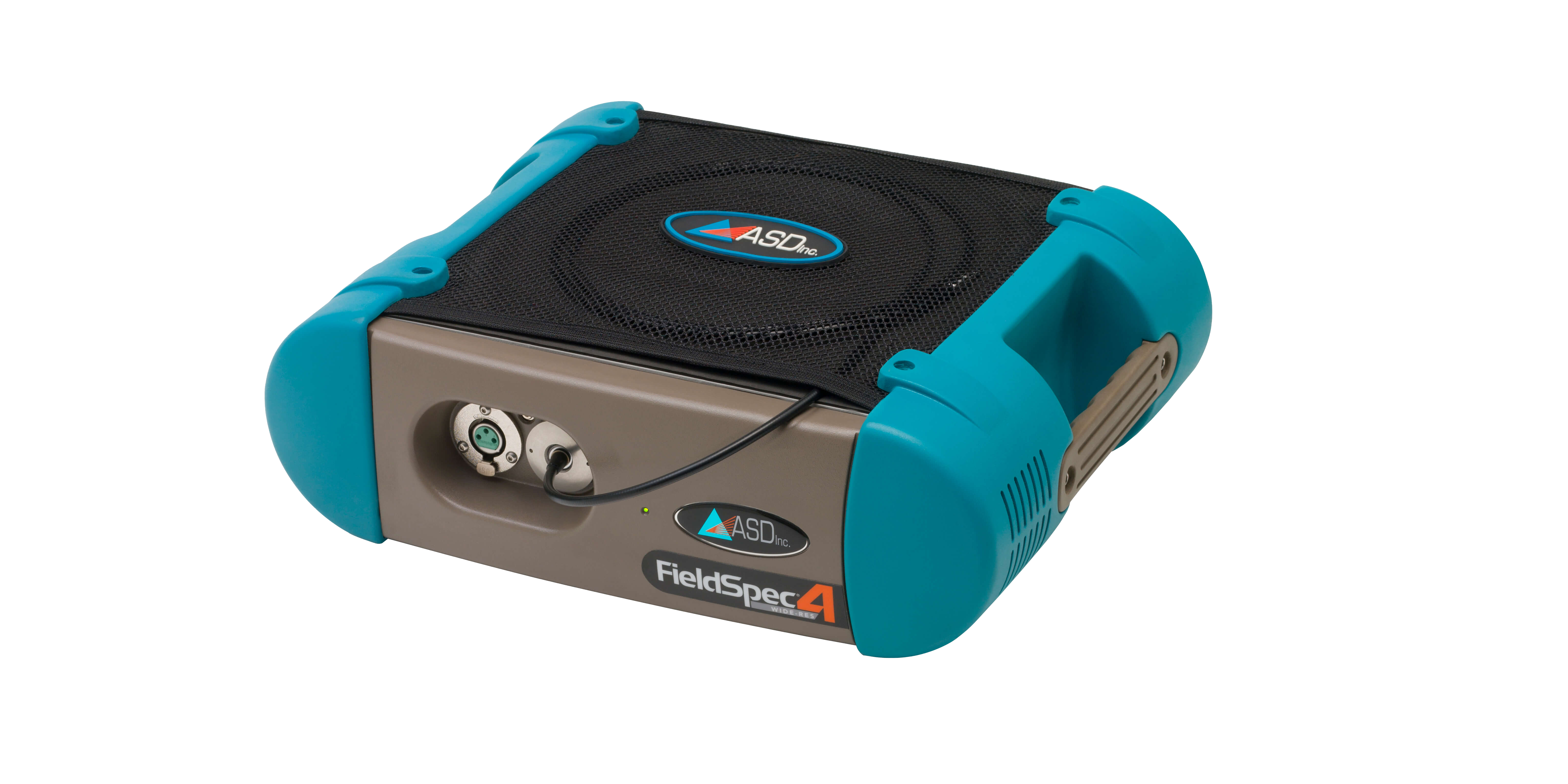
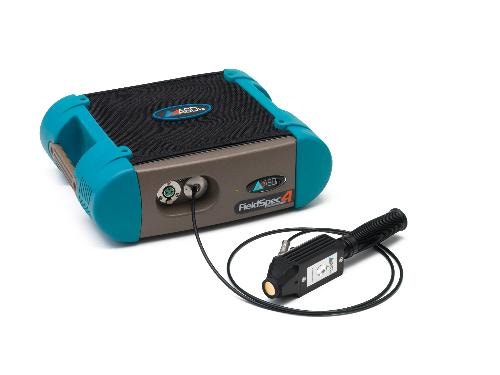
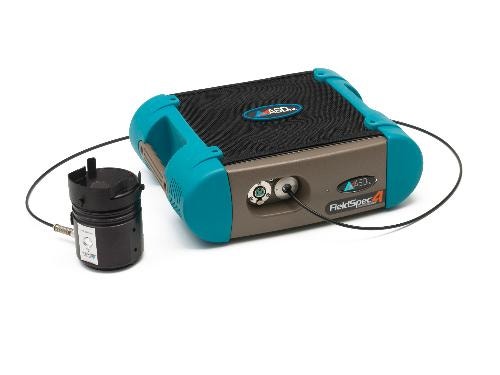
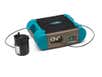
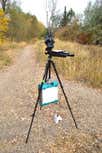
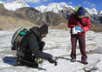
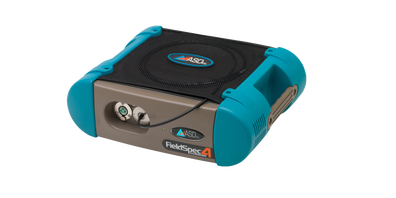
ASD FieldSpec 4 Hi-Res NG Spectroradiometer

The next generation of hyperspectral sensors

  • 6 nm enhanced SWIR resolution
  • Smallest available spectral sampling interval in a field portable device
  • Covers full 350-2500 nm spectral range

Looking for more information?

To request a quote, more information or download a brochure select an option below.

Overview

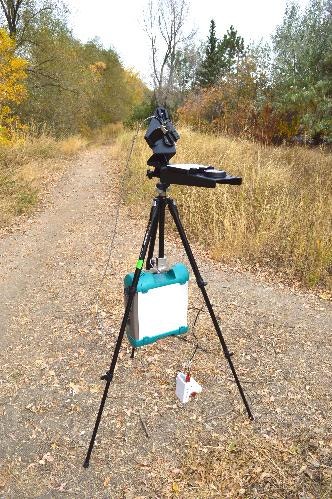
The FieldSpec 4 Hi Res NG spectroradiometer offers maximum sensitivity and is ideal for outdoor and remote sensing applications.

Higher resolution hyperspectral sensors yield greater precision for remote sensing classification applications, producing more information from every pixel generated in an image than ever before. The enhanced spectral resolution of the FieldSpec 4 Hi-Res NG has been designed to meet the rigorous demands of the next generation hyperspectral imaging systems such as AVRIS-NG and HySpex ODIN-1024.

In addition to superior spectral resolution, it incorporates graded index InGaAs photodiode SWIR detectors to provide the smallest available spectral sampling interval in a field portable device, with 1,875 measured wavelengths over the full 350 to 2500 nm spectral range. This ensures detection of even the most subtle spectral features.
Features

  • Best for: users requiring maximum sensitivity, outdoor and remote sensing applications

  • Superior signal-to-noise ratio: twice as sensitive; the best choice for working with limited natural light sources like sunlight

  • Permanent fiber optic cable: factory-installed to eliminate signal loss at junction points, ensuring optimal performance

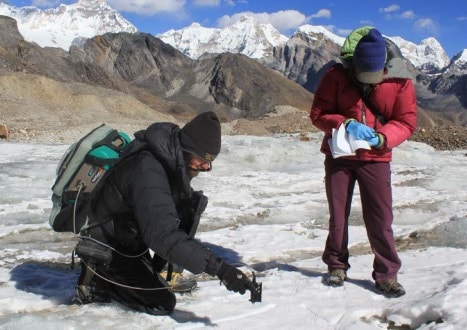
  • Ideal for remote sensing: used for ground-truthing overflight sensors, matching satellite data, and ensuring accurate spectral measurements under varying environmental conditions

  • Recommended for sunlight use: essential for reliable data collection under natural light
Why post-dispersive technology matters

Pre-dispersive systems: Disperse light before reaching the sample, relying on an internal light source.

Post-dispersive systems: Disperse light after reflection, allowing external light sources like the sun to be used.

The post-dispersive system technology used in ASD instruments offers superior analysis capabilities:
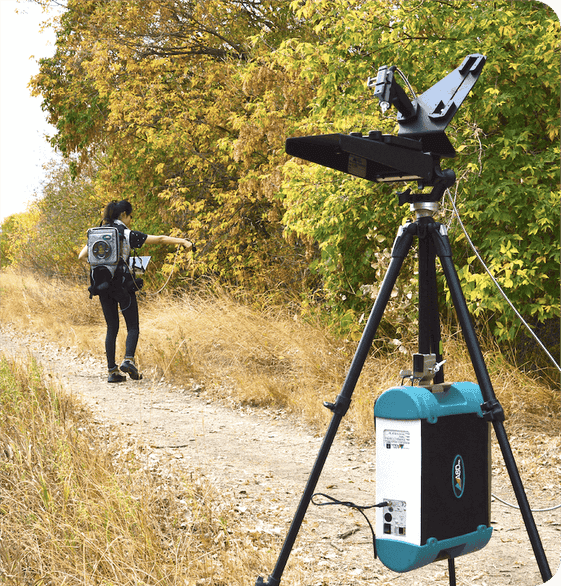
  • Measures reflected energy from external light sources
  • Adapts to different lighting conditions without internal light dependence
  • Provides reliable calibration for spectral radiometry

Key applications

Remote sensing
  • Spectral remote sensing: Collection of visible, near infrared, and short-wave infrared images for the detection, identification, and quantification of surface materials, biological, and chemical processes for research and analysis in numerous environmental and military applications.
  • Remote sensing and geology: ASD’s spectroradiometers have been used for decades for remote geologic interpretation. Accurate field conditions replication is crucial for supporting overflight sensors.
  • Atmospheric remote sensing research: observations of direct, diffuse, and total spectral solar irradiance, as well as sky and cloud radiance, are essential for atmospheric research in many climate and ecosystem energy balance studies.
  • Airborne remote sensing measurements: the collection of spectra over areas that are too large or inaccessible for ground-based measurement.
Ground Truthing

Laboratory-quality in situ field measurements with equivalent illumination and viewing geometry for accurate correlation to satellite and aircraft sensor data.

Field spectroscopy

Field spectroscopy — the study of the interrelationships between the spectral characteristics of objects and their biophysical attributes in the field environment.

Plant physiology

ASD systems are used to determine plant physiological status, including disease status, nutritional status related to nitrogen uptake and moisture balance.

Camouflage characterization and detection

The detection of camouflaged or hidden objects requires a measurement that provides a contrast between the object and background materials.

Calibrations
  • Sensor calibration: an accurate radiance calibration of an imaging sensor is critical to many remote sensing applications.
  • Spectroradiometry and radiometric calibration: spectroradiometry, the measurement of absolute optical radiation at each wavelength, is applicable to a variety of settings, including measuring the spectral energy output of a lamp, LED display, or other light source to determination of the flux of sunlight reaching a forest floor or other scene.
Supervised classification

Supervised classification can be performed using either image-derived or field-measured spectral signatures.

Landscape ecology and ecology research

The ability to accurately perform reflectance and radiometric measurements of vegetation and soil in the field is critical to understanding light utilization and partitioning within a plant community.

Biomass analysis

From characterization of oil content of soybeans and other crops, to quantification of key parameter levels in biofuel processing and quality analysis of final product, near-infrared spectroscopy is the ideal measurement tool.
The mineral exploration process

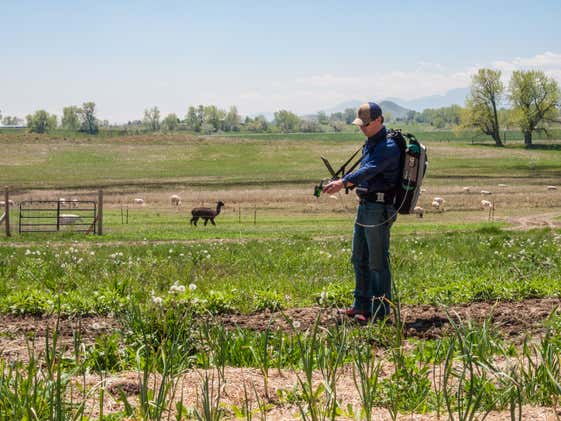
  1. Aerial survey with sensors: Specialized sensors scan large areas for mineral deposits
  2. Ground-level confirmation with FieldSpec: Validates and refines aerial survey images
  3. Targeted drilling: Uses confirmed data to identify precise drilling locations
  4. Material analysis: XRF identifies metals, while NIR pinpoints specific mineral compositions

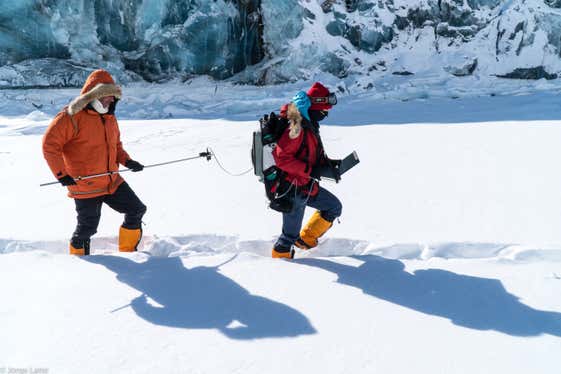
The ASD FieldSpec 4 full spectral range makes it ideal for field campaigns needed to ground-truth orbital measurements, which typically extend to the longer wavelengths.

Dr. Ulyana Horodyskyj — CEO of Science in the Wild

Specification

Spectral performance 350-2500 nm
Resolution
3 nm @ 700 nm
6 nm  @ 1400/2100 nm
Spectral bandwidth
1.4 nm @ 350-1000 nm
1.1 nm @ 1001-2500 nm
Measurement time 100 milliseconds
Light source VNIR 0.02%, SWIR 1 & 2 0.01%
Wavelength reproducibility 0.1 nm
Wavelength accuracy 0.5 nm
Maximum radiance VNIR 2X Solar, SWIR 10X Solar
Channels 2151
Detector
VNIR detector (350-1000 nm): 512 element silicon array
SWIR 1 detector (1001-1800 nm): Graded Index InGaAs Photodiode, Two Stage TE Cooled
SWIR 2 detector (1801-2500 nm): Graded Index InGaAs Photodiode, Two Stage TE Cooled
Input 1.5 m fiber optic (25° field of view). Optional narrower field of view fiber optics available.
Noise Equivalent Radiance (NEdL)
VNIR  1.0 X10⁻⁹  W/cm2/nm/sr @700 nm
SWIR 1  8.0 X10⁻⁹  W/cm2/nm/sr @ 1400 nm
SWIR 2  8.0 X10⁻⁹  W/cm2/nm/sr @ 2100 nm
Weight 5.44 kg (12 lbs)
Calibration type Wavelength, absolute reflectance, radiance*, irradiance*. All calibrations are NIST traceable.
(*radiometric calibrations are optional)
Computer Windows® 10 64-bit laptop (instrument controller)
Warranty One year full warranty including expert customer support

Accessories

Probes and Lighting

General

User manuals

Software downloads

24 August 2017

6.5.6.1

Indico Pro
6.5.6.1

23 October 2017

6.40

Wavelength Verification ASD Puck 6 nm Resolution
6.40

05 April 2018

6.4.4

FieldSpec4 v6.4.4 software and documentation installation
6.4.4

07 June 2017

6.4.3

RS3
6.4.3

26 June 2014

6.20

ViewSpec Pro Software Install
6.20

07 June 2016

4.0.1

Instrument Configuration v4.0.1
4.0.1

16 August 2016

1.20

Dark Current calibration
1.20

Support

Services

Solutions to maximize the return on your investment

To assure that your instrument remains in top condition and performs on the highest level, Malvern Panalytical offers a wide range of services. Our expertise and support services assure an optimal functioning of your instrument.

Support

Service for a lifetime

  • Phone and remote support
  • Preventive maintenance and checkups
  • Flexible Customer Care Agreements
  • Performance certificates
  • Hardware and software upgrades
  • Local and global support

Expertise

Adding value to your processes 

  • Sample preparation development/optimization
  • Analytical methodologies 
  • Turnkey solutions for XRD 
  • Operations via IQ/OQ/PQ, quality assurance (GLP, ISO17025) or round robins/inter laboratory studies
  • Consultancy services

Training and education

  • Training on-site or at our competence centers
  • Broad range of basic and advanced courses on products, applications and software

Overview

The FieldSpec 4 Hi Res NG spectroradiometer offers maximum sensitivity and is ideal for outdoor and remote sensing applications.

Higher resolution hyperspectral sensors yield greater precision for remote sensing classification applications, producing more information from every pixel generated in an image than ever before. The enhanced spectral resolution of the FieldSpec 4 Hi-Res NG has been designed to meet the rigorous demands of the next generation hyperspectral imaging systems such as AVRIS-NG and HySpex ODIN-1024.

In addition to superior spectral resolution, it incorporates graded index InGaAs photodiode SWIR detectors to provide the smallest available spectral sampling interval in a field portable device, with 1,875 measured wavelengths over the full 350 to 2500 nm spectral range. This ensures detection of even the most subtle spectral features.

Features

  • Best for: users requiring maximum sensitivity, outdoor and remote sensing applications

  • Superior signal-to-noise ratio: twice as sensitive; the best choice for working with limited natural light sources like sunlight

  • Permanent fiber optic cable: factory-installed to eliminate signal loss at junction points, ensuring optimal performance

  • Ideal for remote sensing: used for ground-truthing overflight sensors, matching satellite data, and ensuring accurate spectral measurements under varying environmental conditions

  • Recommended for sunlight use: essential for reliable data collection under natural light

Why post-dispersive technology matters

Pre-dispersive systems: Disperse light before reaching the sample, relying on an internal light source.

Post-dispersive systems: Disperse light after reflection, allowing external light sources like the sun to be used.

The post-dispersive system technology used in ASD instruments offers superior analysis capabilities:

  • Measures reflected energy from external light sources
  • Adapts to different lighting conditions without internal light dependence
  • Provides reliable calibration for spectral radiometry

Key applications

Remote sensing
  • Spectral remote sensing: Collection of visible, near infrared, and short-wave infrared images for the detection, identification, and quantification of surface materials, biological, and chemical processes for research and analysis in numerous environmental and military applications.
  • Remote sensing and geology: ASD’s spectroradiometers have been used for decades for remote geologic interpretation. Accurate field conditions replication is crucial for supporting overflight sensors.
  • Atmospheric remote sensing research: observations of direct, diffuse, and total spectral solar irradiance, as well as sky and cloud radiance, are essential for atmospheric research in many climate and ecosystem energy balance studies.
  • Airborne remote sensing measurements: the collection of spectra over areas that are too large or inaccessible for ground-based measurement.
Ground Truthing

Laboratory-quality in situ field measurements with equivalent illumination and viewing geometry for accurate correlation to satellite and aircraft sensor data.

Field spectroscopy

Field spectroscopy — the study of the interrelationships between the spectral characteristics of objects and their biophysical attributes in the field environment.

Plant physiology

ASD systems are used to determine plant physiological status, including disease status, nutritional status related to nitrogen uptake and moisture balance.

Camouflage characterization and detection

The detection of camouflaged or hidden objects requires a measurement that provides a contrast between the object and background materials.

Calibrations
  • Sensor calibration: an accurate radiance calibration of an imaging sensor is critical to many remote sensing applications.
  • Spectroradiometry and radiometric calibration: spectroradiometry, the measurement of absolute optical radiation at each wavelength, is applicable to a variety of settings, including measuring the spectral energy output of a lamp, LED display, or other light source to determination of the flux of sunlight reaching a forest floor or other scene.
Supervised classification

Supervised classification can be performed using either image-derived or field-measured spectral signatures.

Landscape ecology and ecology research

The ability to accurately perform reflectance and radiometric measurements of vegetation and soil in the field is critical to understanding light utilization and partitioning within a plant community.

Biomass analysis

From characterization of oil content of soybeans and other crops, to quantification of key parameter levels in biofuel processing and quality analysis of final product, near-infrared spectroscopy is the ideal measurement tool.

The mineral exploration process

  1. Aerial survey with sensors: Specialized sensors scan large areas for mineral deposits
  2. Ground-level confirmation with FieldSpec: Validates and refines aerial survey images
  3. Targeted drilling: Uses confirmed data to identify precise drilling locations
  4. Material analysis: XRF identifies metals, while NIR pinpoints specific mineral compositions

The ASD FieldSpec 4 full spectral range makes it ideal for field campaigns needed to ground-truth orbital measurements, which typically extend to the longer wavelengths.

Dr. Ulyana Horodyskyj — CEO of Science in the Wild

Specification

Spectral performance 350-2500 nm
Resolution
3 nm @ 700 nm
6 nm  @ 1400/2100 nm
Spectral bandwidth
1.4 nm @ 350-1000 nm
1.1 nm @ 1001-2500 nm
Measurement time 100 milliseconds
Light source VNIR 0.02%, SWIR 1 & 2 0.01%
Wavelength reproducibility 0.1 nm
Wavelength accuracy 0.5 nm
Maximum radiance VNIR 2X Solar, SWIR 10X Solar
Channels 2151
Detector
VNIR detector (350-1000 nm): 512 element silicon array
SWIR 1 detector (1001-1800 nm): Graded Index InGaAs Photodiode, Two Stage TE Cooled
SWIR 2 detector (1801-2500 nm): Graded Index InGaAs Photodiode, Two Stage TE Cooled
Input 1.5 m fiber optic (25° field of view). Optional narrower field of view fiber optics available.
Noise Equivalent Radiance (NEdL)
VNIR  1.0 X10⁻⁹  W/cm2/nm/sr @700 nm
SWIR 1  8.0 X10⁻⁹  W/cm2/nm/sr @ 1400 nm
SWIR 2  8.0 X10⁻⁹  W/cm2/nm/sr @ 2100 nm
Weight 5.44 kg (12 lbs)
Calibration type Wavelength, absolute reflectance, radiance*, irradiance*. All calibrations are NIST traceable.
(*radiometric calibrations are optional)
Computer Windows® 10 64-bit laptop (instrument controller)
Warranty One year full warranty including expert customer support

Accessories

Probes and Lighting

General

User manuals

Software downloads

24 August 2017

6.5.6.1

Indico Pro
6.5.6.1

23 October 2017

6.40

Wavelength Verification ASD Puck 6 nm Resolution
6.40

05 April 2018

6.4.4

FieldSpec4 v6.4.4 software and documentation installation
6.4.4

07 June 2017

6.4.3

RS3
6.4.3

26 June 2014

6.20

ViewSpec Pro Software Install
6.20

07 June 2016

4.0.1

Instrument Configuration v4.0.1
4.0.1

16 August 2016

1.20

Dark Current calibration
1.20

Support

Services

Solutions to maximize the return on your investment

To assure that your instrument remains in top condition and performs on the highest level, Malvern Panalytical offers a wide range of services. Our expertise and support services assure an optimal functioning of your instrument.

Support

Service for a lifetime

  • Phone and remote support
  • Preventive maintenance and checkups
  • Flexible Customer Care Agreements
  • Performance certificates
  • Hardware and software upgrades
  • Local and global support

Expertise

Adding value to your processes 

  • Sample preparation development/optimization
  • Analytical methodologies 
  • Turnkey solutions for XRD 
  • Operations via IQ/OQ/PQ, quality assurance (GLP, ISO17025) or round robins/inter laboratory studies
  • Consultancy services

Training and education

  • Training on-site or at our competence centers
  • Broad range of basic and advanced courses on products, applications and software
Maximum sensitivity, wherever you go.

Maximum sensitivity, wherever you go.

Take the lab with you with the FieldSpec 4 Hi Res NG. Ideal for remote sensing and outdoor applications.

Contact sales Request a quote Request a demo