
Vaccine development
Immunize the world
Need help characterizing viral and lipid-based vectors? Sign up for our Vector Analytics Masterclass. Register now
Register nowImmunize the world
Realize a future of safe, stable and life-changing vaccines – made possible with our world-leading tools.
Innovation in vaccine development and production is moving at speed. However, developing novel vaccines is uniquely challenging.
Do you recognize these challenges?
Whatever approach you are taking to vaccine development, we can help you implement the characterization tools and know-how you need to bring your life-changing vaccines to the world.
From material characterization to vaccine manufacturing and quality control – we can help you overcome your challenges:
Are you ready to combine next-level analytical tools with decades-long experience to help drive forward the next wave of vaccine products?
Want to know more? Take a look at our tools and resources to support your vaccine development:
Thermal stability
| Sample homogeneity
| Viral titer
|
Colloidal stability
| Particle concentration
| Recombinant protein candidate selection and stability prediction
|
Adjuvant selection and suitability
| Polysaccharide composition
| Got a question?
Contact us |
Differential Scanning Calorimetry (DSC) enables understanding and monitoring of the higher-order structure (HOS) and thermal stability of proteins at every stage of virus-based vaccine development, and during process development for recombinant products. DSC is also used to understand the thermal stability of liposomes used as carriers in nucleic acid-based vaccines.
Dynamic Light Scattering and laser diffraction have wide-ranging application for the measurement of particle size and size distribution, to detect the presence of aggregates and ensure sample homogeneity in the development of vaccines of all types.
Better data. Faster results. No expert required.
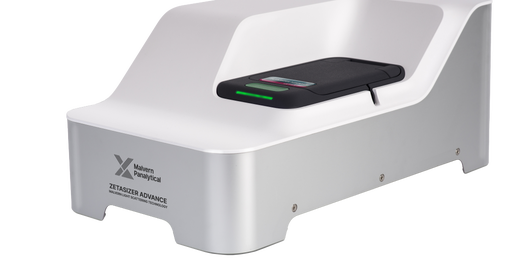
Electrophoretic light scattering is used in the characterization and formulation development of products such as mRNA vaccines that use virus-like particles (VLPs), liposomes and other nanoparticles as carriers, to determine size and colloidal stability.
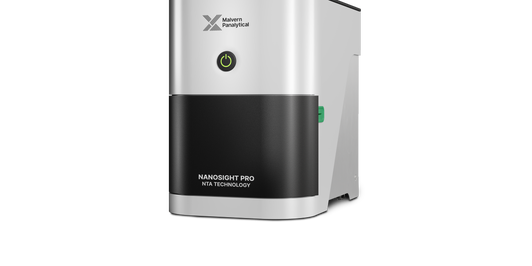
Particle concentration is critical when using carriers such as VLPs, liposomes and other nanoparticles. Nanoparticle Tracking Analysis and Multi-Angle Dynamic Light Scattering are used to measure particle concentration during characterization and formulation development stages.
Differential Scanning Calorimetry is a fundamental tool for characterizing proteins and plays a key role in the understanding of protein stability under various conditions. Dynamic Light Scattering is used to investigate and predict protein stability and to provide stability-indicating data that is used throughout development.
Many vaccines require the presence of an adjuvant in the formulation to ensure an effective immune response. Depending on the vaccine type, Electrophoretic Light Scattering, laser diffraction, Nanoparticle Tracking Analysis and Differential Scanning Calorimetry all have roles in optimizing formulation with adjuvants.
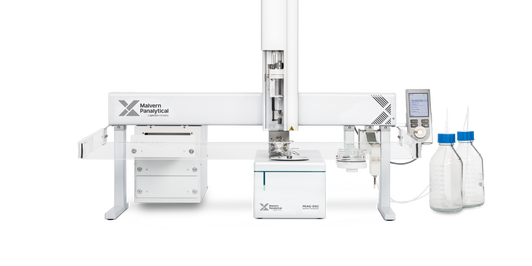
Size Exclusion Chromatography with advanced detection aids in the compositional analysis of the protein and polysaccharide content of polysaccharide-conjugate vaccines during process development and manufacturing.
Whatever characterization challenges you are facing, chances are we’ve worked with a team just like yours and helped them implement the technology and methods needed to make safe and effective vaccines.
To find out how our team of experts can help you overcome your challenges, contact us today.