Carbon capture, utilization, and storage (CCUS)


Performance under pressure: publication-grade high-pressure adsorption with walk-away automation. Join us on June 30
Join us on June 30
Across the energy sector, the decarbonization of hard-to-abate industries is gaining momentum – and carbon capture, utilization, and storage (CCUS) is a critical enabler. CCUS involves the separation of CO2 from industrial process streams, followed by compression, transport, and either geological sequestration or conversion into value-added products.
CCUS technologies are essential for reaching net-zero targets, as their carbon offsetting allows for the continued use of some fossil fuels during the energy transition. This approach is particularly relevant for sectors like cement, steel, and petrochemicals, where direct emissions are difficult to eliminate, and therefore these industries must find alternative ways to contribute to lowering carbon gases in the atmosphere.
However, the deployment of CCUS technologies still faces technical and economic challenges. Capture efficiency, solvent regeneration energy, and integration with existing infrastructure require ongoing optimization.
Recent advances in sorbent materials, membrane technologies, and subsurface monitoring are accelerating scalability. Additionally, coupling CCUS with hydrogen production and synthetic fuels can support broader energy system decarbonization. As part of a multi-pathway strategy, CCUS is indispensable for achieving climate targets while maintaining industrial competitiveness.
Material characterization is critical to optimizing CCUS technologies, from sorbent development to geological storage validation. Accurate analysis of surface area, porosity, particle size, density, powder flow, catalyst activity and phase composition directly impact capture efficiency, reaction kinetics, and long-term stability. Malvern Panalytical offers a powerful combination of complementary analytical solutions that unlock precise control over material properties across the CCUS value chain.
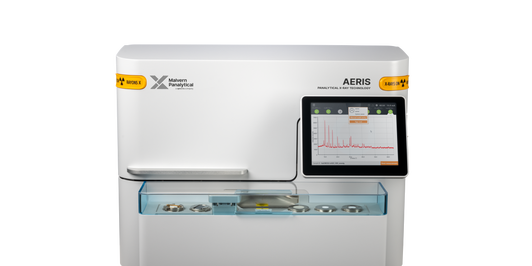
Our combined expertise in gas adsorption and porosimetry supports the design of high-performance capture media, such as metal organic frameworks (MOFs), promising covalent organic frameworks (COFs), and membranes, while advanced X-ray diffraction (XRD), X-ray fluorescence (XRF) and light scattering analysis instruments ensure optimal structural integrity and compliance with regulatory standards. Together, these systems provide actionable insights that accelerate innovation, enhance process efficiency, and support robust environmental reporting – making them indispensable for scalable, cost-effective CCUS deployment.
By delivering the analytical confidence required for investors and developers alike, these solutions also help de risk and validate bankable CCUS projects, ensuring technologies are ready for commercial scale-up and long term operational success. By providing the performance evidence and data confidence required by developers, EPCs, and investors, these solutions help reduce technical risk, validate long-term operability, and support the development of bankable CCUS projects ready for commercial scale-up.
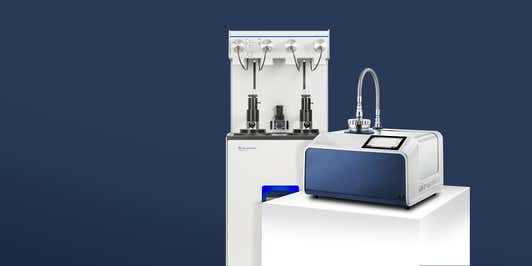

Malvern Panalytical is at the forefront of innovation in materials characterization, delivering cutting edge tools that address the complex demands of adsorbent, membrane, and catalyst analysis for carbon capture, utilization, and storage (CCUS).
Our solutions are trusted by research laboratories, process developers, and industrial manufacturers worldwide to provide rapid, accurate insights into material performance. These insights enable teams to make informed decisions that improve capture efficiency, separation selectivity, and long-term material durability in CCUS workflows, while also delivering the data confidence required to de-risk and validate bankable projects ready for commercial deployment.
Our comprehensive portfolio of adsorption, porosimetry, and capillary flow porometry instruments provides in depth characterization of surface area, pore structure, gas sorption behavior, and membrane transport properties. This suite of tools supports material innovation across development and quality control, helping organizations optimize process efficiency, improve reliability, and reduce operating costs.
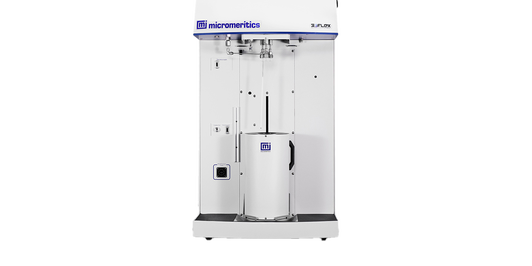
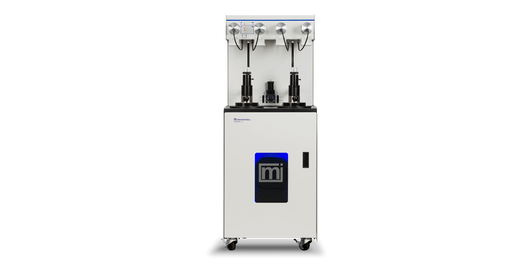
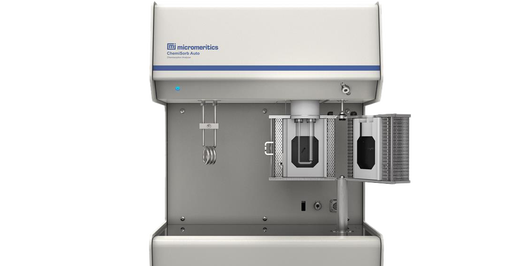
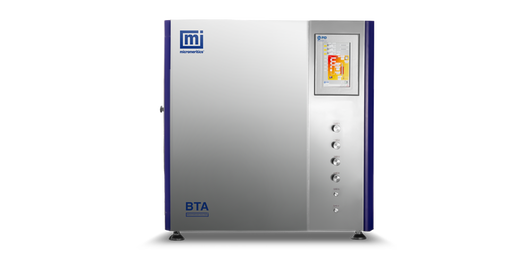
Our lineup includes the 3Flex for high resolution adsorption and micropore and mesopore analysis, the BreakThrough Analyzer (BTA) for dynamic gas separation performance under process conditions, the AutoPore V for advanced pore structure determination, and the AccuPore for through pore characterization of membranes and porous sheets. Together, these instruments offer a complete solution for understanding how porous materials and membranes behave in realistic CCUS environments.
With Malvern Panalytical, customers gain a trusted partner committed to accelerating CCUS material innovation, making it easier to meet performance targets, ensure manufacturing consistency, and deliver reliable, cost-effective carbon capture technologies.
The 3Flex delivers high‑resolution physisorption and chemisorption data essential for developing next‑generation adsorbents.
Key capabilities include:
![[3Flex CCUS graph complete pore size distribution using dual nldft for activated carbon.png] 3Flex CCUS graph complete pore size distribution using dual nldft for activated carbon.png](https://dam.malvernpanalytical.com/7896c101-bb03-40bc-a5c0-b43600ccbe04/3Flex%20CCUS%20graph%20complete%20pore%20size%20distribution%20using%20dual%20nldft%20for%20activated%20carbon_Original%20file.png)
The BTA provides precise evaluation of adsorbents and membranes during real world gas separation scenarios.
Key capabilities include:
![[Breaktrhough Analyzer CCUS graph CO2 breakthrough curves sia loaded with PEI.png] Breaktrhough Analyzer CCUS graph CO2 breakthrough curves sia loaded with PEI.png](https://dam.malvernpanalytical.com/c47f51d3-e507-47c4-ae20-b43600ccff48/Breaktrhough%20Analyzer%20CCUS%20graph%20CO2%20breakthrough%20curves%20sia%20loaded%20with%20PEI_Original%20file.png)
AutoPore V provides unmatched insight into pore structure, critical for optimizing diffusion and adsorption behavior.
Key capabilities include:
![[AutoPore V CCUS graph NaY zeolite cumulative intrusion vs pore size.png] AutoPore V CCUS graph NaY zeolite cumulative intrusion vs pore size.png](https://dam.malvernpanalytical.com/957e25ec-77ef-419a-8c41-b43600cd208f/AutoPore%20V%20CCUS%20graph%20NaY%20zeolite%20cumulative%20intrusion%20vs%20pore%20size_Original%20file.png)
AccuPore enables accurate measurement of through pore properties essential for efficient ion and gas transport.
Key capabilities include:
![[AccuPore - Micromeritics - increase-pressure-graphic.jpg] AccuPore - Micromeritics - increase-pressure-graphic.jpg](https://dam.malvernpanalytical.com/ad9eeeaf-d792-4904-b022-b26b00ffd87e/AccuPore%20-%20Micromeritics%20-%20increase-pressure-graphic_Original%20file.jpg)
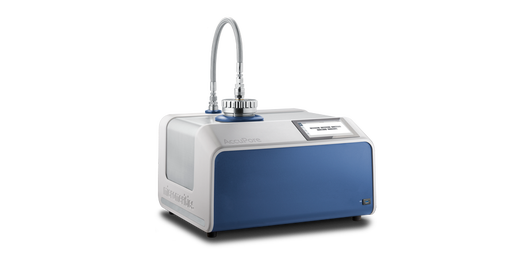
Physisorption and static/dynamic chemisorption for catalyst and support characterization.
Key capabilities include:
![[Carbon capture industry - 3flex graph interactions of h2 on supported ni catalyst.png] Carbon capture industry - 3flex graph interactions of h2 on supported ni catalyst.png](https://dam.malvernpanalytical.com/8724c4bc-9fc1-420a-865d-b42c00df499b/Carbon%20capture%20industry%20-%203flex%20graph%20interactions%20of%20h2%20on%20supported%20ni%20catalyst_Original%20file.png)
Dynamic chemisorption techniques to characterize active sites in catalytic materials.
Key capabilities include:
![[Carbon capture industry - Autochem graph deconvolution co2 desorbed by CaO MgO.jpg] Carbon capture industry - Autochem graph deconvolution co2 desorbed by CaO MgO.jpg](https://dam.malvernpanalytical.com/ea5bceb2-2ff0-44b8-90fb-b42c00efeec2/Carbon%20capture%20industry%20-%20Autochem%20graph%20deconvolution%20co2%20desorbed%20by%20CaO%20MgO_Original%20file.jpg)
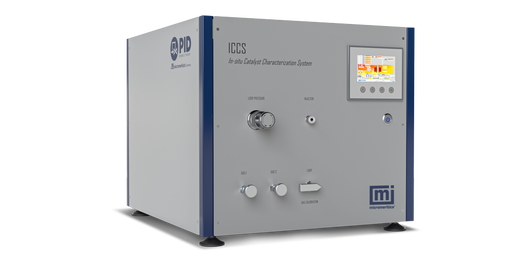
In-situ catalyst characterization under real reaction conditions.
Key capabilities include:
![[Carbon capture industry - ICCS graph - pressure impact on reduction temperature cu oxide catalyst.png] Carbon capture industry - ICCS graph - pressure impact on reduction temperature cu oxide catalyst.png](https://dam.malvernpanalytical.com/a82b73f0-adb4-4e8b-8763-b42c00e0c327/Carbon%20capture%20industry%20-%20ICCS%20graph%20-%20pressure%20impact%20on%20reduction%20temperature%20cu%20oxide%20catalyst_Original%20file.png)
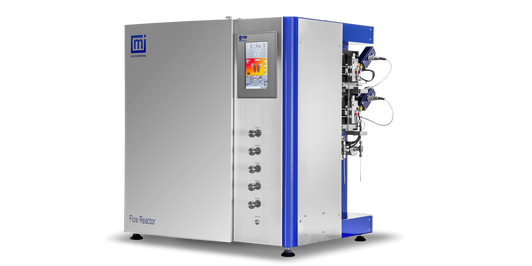
Benchtop reactor for optimizing catalyst performance.
Key capabilities include:
![[Carbon capture industry - Flow Reactor graph - reduction of co2 in the sabatier reaction.png] Carbon capture industry - Flow Reactor graph - reduction of co2 in the sabatier reaction.png](https://dam.malvernpanalytical.com/9b878052-5d2c-4a04-974b-b42c00e151d1/Carbon%20capture%20industry%20-%20Flow%20Reactor%20graph%20-%20reduction%20of%20co2%20in%20the%20sabatier%20reaction_Original%20file.png)
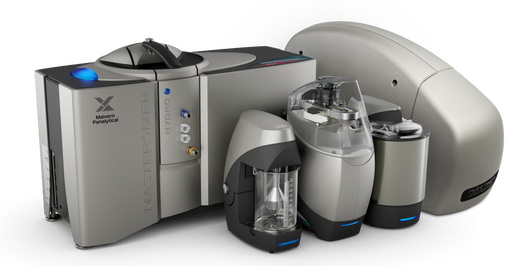
Best in class laser diffraction for catalyst particle size analysis.
Key capabilities include:
![[Carbon capture industry - Mastersizer graph - laser diffraction.png] Carbon capture industry - Mastersizer graph - laser diffraction.png](https://dam.malvernpanalytical.com/3e13fa4c-0951-4122-9da3-b40100d2268a/Carbon%20capture%20industry%20-%20Mastersizer%20graph%20-%20laser%20diffraction_Original%20file.png)
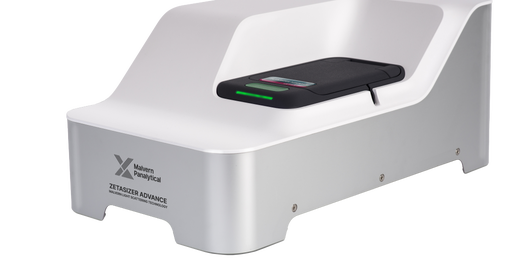
Light scattering for nanoparticle size and zeta potential.
Key capabilities include:
High-resolution XRD for rapid phase characterization.
Key capabilities include:
![[Carbon capture industry - Empyrean graphs - in situ xrd diffractogram of MOF.png] Carbon capture industry - Empyrean graphs - in situ xrd diffractogram of MOF.png](https://dam.malvernpanalytical.com/269f621b-36db-47c0-a2ff-b40100d225a7/Carbon%20capture%20industry%20-%20Empyrean%20graphs%20-%20in%20situ%20xrd%20diffractogram%20of%20MOF_Original%20file.png)
XRF for elemental composition and catalyst loading control
Key capabilities include:

Carbon capture, utilization, and storage (CCUS) is vital for reducing emissions and building a more sustainable future. Its success depends on advanced materials and reliable monitoring. That’s where Malvern Panalytical instruments make all the difference, helping CCUS become more effective, reliable, and scalable.
CCUS depends on advanced materials, including high-performance adsorbents, selective membranes, and durable catalysts that remain stable under harsh conditions. Malvern Panalytical provides an innovative and holistic toolkit for developing CCUS technologies, encompassing benchtop solutions for rapid QC to advanced multipurpose platforms for cutting-edge research. Our instruments provide world-class analytical insight that helps optimize the processes that transform CO₂ into useful products, supporting the entire CCUS value chain.
With Malvern Panalytical, CCUS projects can move faster, operate more safely, and deliver greater value. With Malvern Panalytical, CCUS projects can move faster, operate more safely, and deliver greater value. By providing high-quality material insights, we help organizations accelerate innovation and build investment-ready bankable projects that contribute meaningfully to global sustainability goals.
Want to know more about carbon capture? We have a range of resources available: