Katalysatorcharakterisierung
Analysegeräte zur Charakterisierung von Katalysatormaterial für Anwender, Hersteller und Forscher


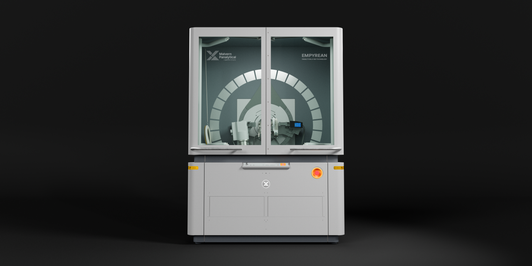
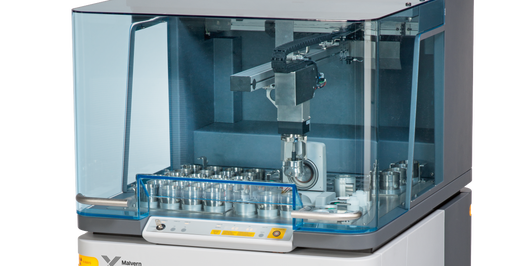
Untersuchen Sie aktive Zentren, Oxidationszustände und Reaktionspfade mit Empyrean XAS. Mehr erfahren
Mehr erfahrenAnalysegeräte zur Charakterisierung von Katalysatormaterial für Anwender, Hersteller und Forscher
Schätzungen zufolge kommen bei 90 % aller gewerblich produzierten chemischen Produkte zu einem bestimmten Zeitpunkt während ihrer Herstellung Katalysatoren zum Einsatz. Die Nachfrage nach Katalysatoren wird auf etwa 30 Milliarden US-Dollar geschätzt und wird voraussichtlich im nächsten Jahrzehnt wachsen, da die Nachfrage nach Chemikalien, Polymeren und Petrochemikalien steigt, was mit der wachsenden Notwendigkeit einhergeht, Prozesskosten, Energieverbrauch und Emissionen zu reduzieren.
Doch nicht nur die chemische Produktion wird die Nachfrage nach besseren Katalysatoren vorantreiben. Auch die Umweltanforderungen treiben den Bedarf nicht nur an sauberer Energie, sondern auch an der Nutzung von Abfallmaterialien wie Polymeren und CO2 voran, was wiederum die Entwicklung neuer Prozesse und Katalysatormaterialien erfordert. Beispiele sind u. a.:
Diese Anforderungen kommen zu den bereits bestehenden Anforderungen hinzu, wie z. B. die Optimierung und Produktion von Katalysatoren für die Automobilindustrie und effizienteren Katalysatoren für das Fluid Catalytic Cracking (FCC) für die petrochemische Industrie.
Die Charakterisierung ist sowohl für den Entwurf als auch für die Entwicklung neuartiger Katalysatoren wichtig, aber auch für die Prozessentwicklung und -optimierung, einschließlich Upscaling und Fehlerbehebung. Die meisten heterogenen Katalysatoren bestehen beispielsweise aus einem katalytisch aktiven Metall oder Metalloxid auf der Oberfläche eines Metalloxidträgers. Daher ist es wichtig, die Struktur- und Oberflächenchemie zu optimieren, um die entsprechende Selektivität und Reaktivität für den betreffenden Prozess zu gewährleisten. Andere Eigenschaften wie Partikelgröße, Porosität und Oberfläche sind ebenfalls wichtig, um beispielsweise Diffusion und Adsorption zu optimieren.
Malvern Panalytical bietet eine Reihe ergänzender Lösungen für die physikalische Analyse, strukturelle Analyse und Elementaranalyse von Katalysatormaterialien, einschließlich Partikelgröße, Partikelform, Zetapotenzial, elementare Zusammensetzung und Kristallstruktur:
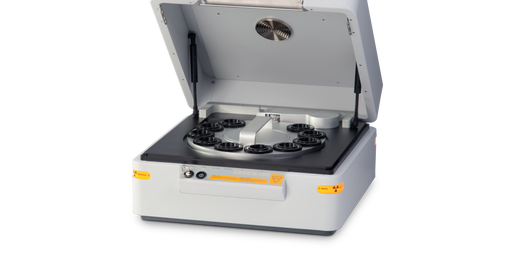
Die Röntgenfluoreszenzanalyse (RFA) wird aufgrund ihrer hohen Präzision und Reproduzierbarkeit häufig zur Analyse der elementaren Zusammensetzung einer Reihe von Katalysatoren verwendet. Beispiele sind Pt, Pd und Rh in Katalysatoren; Al, Ni, V, Ti, Fe und S in FCC-Prozessen (Fluid Catalytic Cracking) und Si/Al-Verhältnisse in Zeolithen. Die RFA kann auch verwendet werden, um das Vorhandensein und die Konzentration von Katalysatorgiften zu erkennen, die zu einer chemischen Deaktivierung führen, einschließlich Cl, S, Sn und Pb. Die RFA kann im Vergleich zu alternativen Techniken viel Zeit und Geld sparen, und Malvern Panalytical bietet drei Hauptlösungen an: EDRFA-Tischsysteme wie Epsilon 4, WDRFA-Standsysteme wie Zetium und Onlinelösungen wie Epsilon XFlow. Malvern Panalytical bietet im Claisse-Portfolio außerdem verschiedene Probenvorbereitungslösungen für RFA, ICP und AA an.
Die Röntgendiffraktion (XRD)
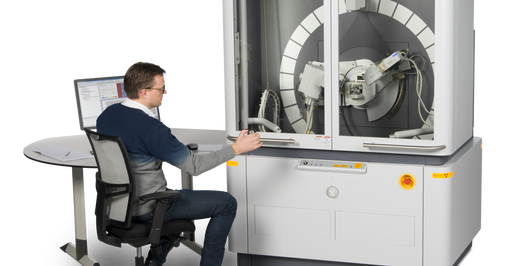
ist ein grundlegendes Verfahren für den Entwurf, die Entwicklung und Herstellung von Katalysatoren, da sie Informationen über die Gesamtstruktur und -zusammensetzung von festen Katalysatormaterialien wie Metalloxiden und Zeolithen liefern kann. XRD-Systeme werden routinemäßig zur Überwachung der Produktion von FCC-Katalysatoren (Fluid Catalytic Cracking) verwendet, insbesondere zur Analyse der Elementarzellengröße und der Kristallinität. Die XRD kann auch zur Bestimmung der Kristallitgröße verwendet werden, entweder durch die Analyse der Peakbreiten aus einer typischen Diffraktionsmessung oder durch die Verwendung der Kleinwinkel-Röntgenstreuung (SAXS). Nicht kristalline Materialien können auch anhand der Paarverteilungsanalyse (PDF) untersucht werden. Malvern Panalytical bietet zwei XRD-Hauptlösungen an: das
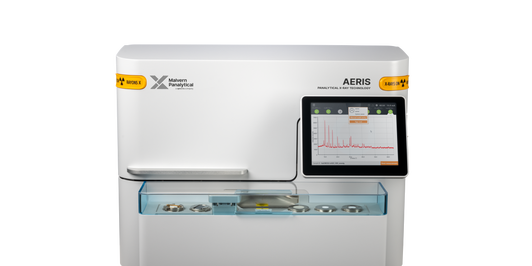
Aeris
-Tisch-Diffraktometer für Routineanalysen und das
Empyrean
-Mehrzweck-Diffraktometer für detailliertere Strukturanalysen.
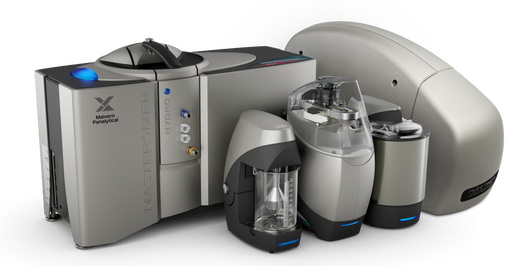
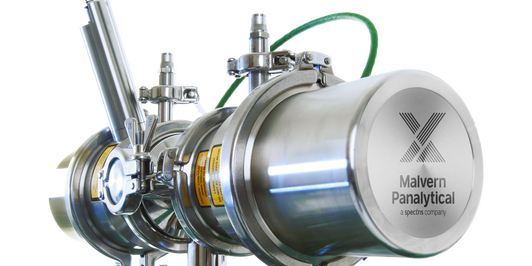
Die Laserbeugung ist ein weit verbreitetes Verfahren zur Partikelgrößenmessung für Materialien mit einer Größe zwischen Hunderten von Nanometern und mehreren Millimetern, das auf Nass- oder Trockendispersionen im Labor oder in einer Prozesslinie angewendet werden kann. Bei Katalysatoranwendungen können die mit der Laserbeugung generierten Partikelgrößendaten zur Berechnung einer spezifischen Oberfläche (SSA) verwendet werden, indem die gemessene Volumenverteilung in eine Oberflächenverteilung umgewandelt wird. Drucktitrationen können auch dazu beitragen, das Risiko von Verschleiß zu verstehen, ein wichtiger Faktor für die Vorhersage der Lebensdauer von Katalysatoren in Wirbelschichtreaktoren. Der Mastersizer von Malvern Panalytical ist das am häufigsten verwendete Partikelgrößenmessgerät für die Katalysatoranalyse in Laborumgebungen, während Insitec für die Onlineanalyse in Produktionsumgebungen verwendet werden kann.
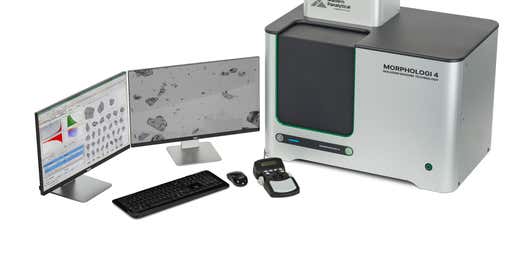
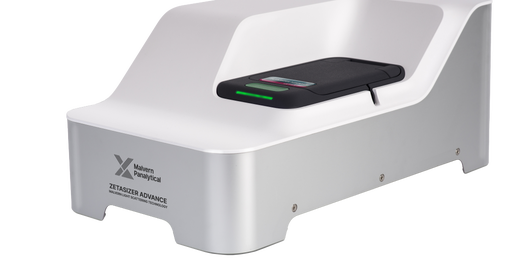
Zusätzlich zu den oben genannten Techniken bietet Malvern Panalytical verschiedene andere Lösungen für die Katalysatoranalyse an, darunter den Zetasizer, der zur Bewertung der Größe und Stabilität von Partikeldispersionen verwendet wird, und das Morphologi 4, das die Bildanalyse zur Bestimmung von Partikelform und Größenverteilung nutzt. Das Morphologi 4 ist auch mit einem integrierten Raman-Spektrometer erhältlich, das partikelspezifische chemische Informationen liefert.
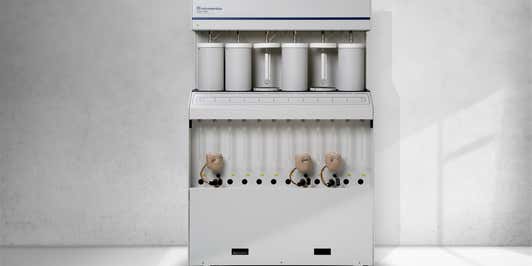
Gas porosimetry enables the measurement of BET surface area and micro/meso pore size distributions (0.35 nm ≤ 50 nm). Mercury porosimetry provides data in the meso/macropore range (3.6 nm ≤ 1,100 µm). This data may be used together in a unified method for pore volume to report micro, meso and macro areas and volumes. The porous properties of the catalyst support impact metal loading/dispersion and diffusion of both reactant and product molecules in use. Initial and in-use characterisation are important fundamental properties that influence design, chemistry and the time for which they can be used if sintering or blockages occur in the process.
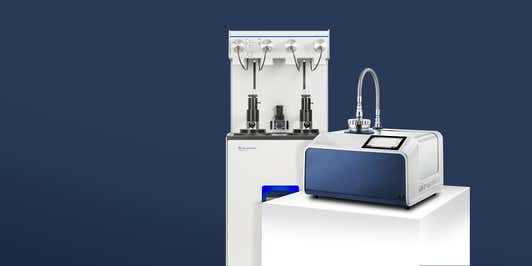
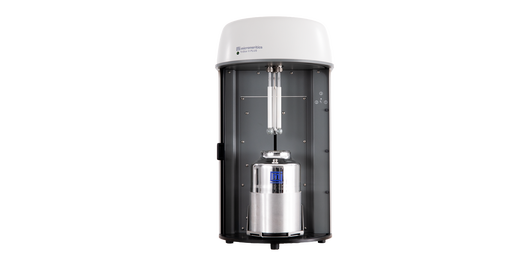
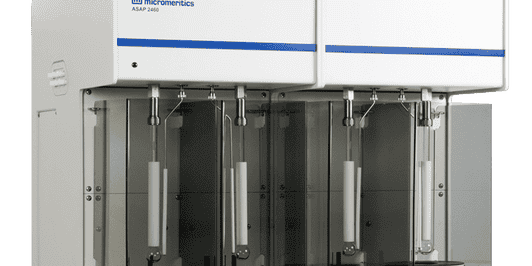
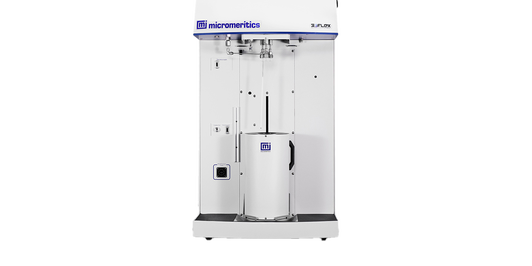
Micromeritics range of gas porosimeters includes multi-station and on-demand analysers in the form of the TriStar, ASAP 2460 and ASAP 2425 and the 3Flex high-resolution micropore analyser delivers exceptional low-pressure data, needed for accurate micropore analysis. Micromeritics AutoPore technology provides mercury porosimetry, studying larger meso/macro pore sizes and porosity, important for understanding reactant and product transfer.
Use of static and dynamic chemisorption experimentation is routine in the catalyst industry. These techniques are used to determine metal surface area, dispersion, and crystallite size. Dynamic chemisorption can also be used to study activation through temperature-programmed reduction (TPR), the range and strength of chemisorbed species through temperature-programmed desorption (TPD), and surface chemistry through temperature-programmed surface reactions (TPSR).
Temperature programmed oxidation (TPO) is another important technique that can be used to study samples that have deactivated due to carbon deposition. In-situ dynamic analysis is a further option where the analysis system can be connected across the reactor, enabling the catalysts to be characterised in-situ at the start and end of an experimental cycle.
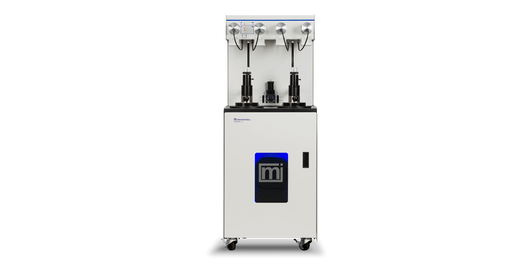
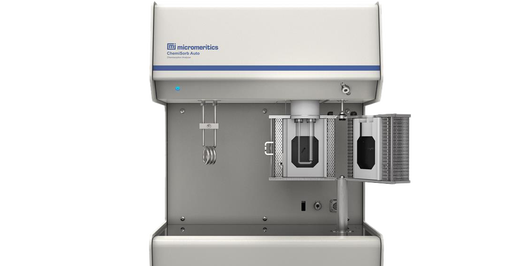
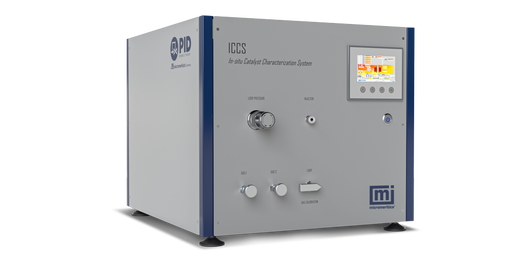
Micromeritics AutoChem and ChemiSorb Auto offer dynamic chemisorption routines whilst the 3Flex can be used for both static and dynamic chemisorption. Our In-situ Catalysts Characterisation System (ICCS) connects directly across the reactor and enables in-situ dynamic chemisorption experimentation.
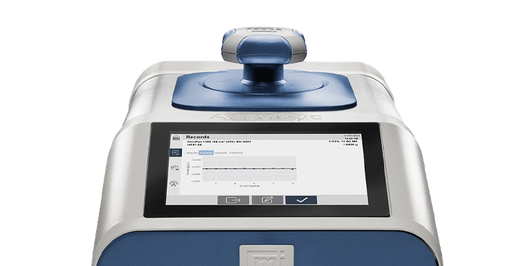
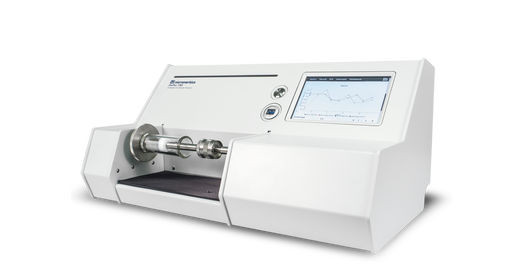
Micromeritics offers two pycnometry technologies: the AccuPyc and GeoPyc. The AccuPyc is a gas pycnometer that determines true density, a useful QC metric since whether a single element or mixture of materials in known proportions are measured, true density can be accurately defined and monitored. The AccuPyc is fast, easy and accurate and can differentiate density to the fourth decimal place. The GeoPyc offers both envelope and bulk density measurement. Envelope density can be carried out in samples such catalyst extrudates and together with the AccuPyc true density allows sample porosity to be determined.
Bulk density is useful metric for particulate materials and be determined with differing consolidation force. Bulk density is influenced by a number of parameters but principally size and shape distributions which can be investigated with our Mastersizer and Morphology products.
X-ray fluorescence (XRF) is widely used for analyzing the elemental composition of a range of catalysts due to its high precision and reproducibility. Examples include Pt, Pd, and Rh in catalytic converters; Al, Ni, V, Ti, Fe, and S in FCC catalytic processes; and Si/Al ratios in zeolites. XRF can also be used to detect the presence and concentration of catalyst poisons that cause chemical deactivation, including Cl, S, Sn and Pb.
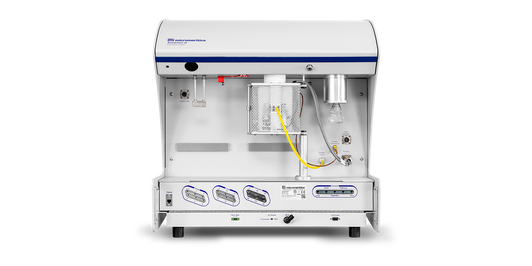
XRF analysis can save a lot of time and money compared with alternative techniques, and Malvern Panalytical provides three main solutions: EDXRF benchtop systems such as Epsilon 4, floor-standing WDXRF systems such as Zetium, and on-line solutions such as Epsilon XFlow.
Malvern Panalytical also provides several sample preparation solutions for XRF, ICP, and AA through its Claisse portfolio.
X-ray diffraction (XRD) is a fundamental tool for the design, development and production of catalysts since it can provide information on the bulk structure and composition of solid catalyst materials such as metal oxides and Zeolites. XRD systems are routinely used for monitoring the production of FCC catalysts, in particular analysing unit cell size and crystallinity.
XRD can also be used to determine crystallite size either by analysing peak widths from a typical diffraction measurement or by using Small Angle X-ray Scattering (SAXS). Non-crystalline materials can also be studied using Pair Distribution Analysis (PDF). Malvern Panalytical provides two main XRD solutions: Aeris compact XRD diffractometer for routine analysis, and the Empyrean multi-purpose diffractometer for more detailed structural analysis.
Laser diffraction is a widely used particle sizing technique for materials ranging in size between hundreds of nanometers and several millimeters, and can be applied to wet or dry dispersions in the laboratory or on a process line. For catalyst applications, the particle size data generated using laser diffraction can be used to calculate a specific surface area (SSA) by converting the reported volume distribution into a surface area distribution.
Pressure titrations can also help to understand the risk of attrition, an important factor for predicting the life of catalysts in fluidized bed reactors. Malvern Panalytical’s Mastersizer is the most widely used particle sizing tool for catalyst analysis in a laboratory setting, while Insitec can be used for on-line analysis in a production environment.
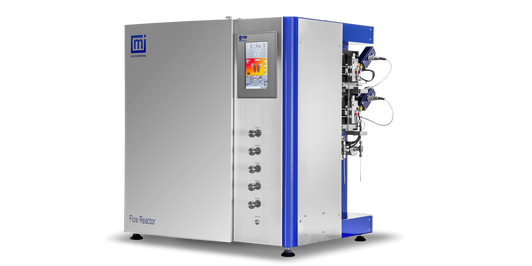
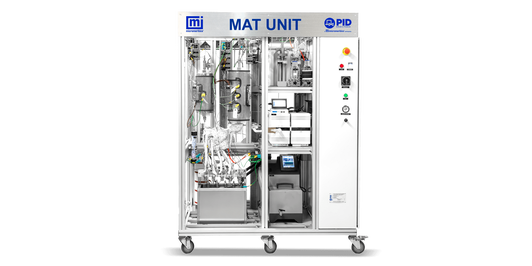
Catalyst characterisation is only half of the story! Having produced a catalyst, it then needs to be evaluated for performance. This is where our PID Flow Reactor and Pilot Plant technologies can be used to perform the chemical reactions of interest over time. These technologies allow for the study of activation, feed composition and rate, temperature and pressure. Our PID reactor technology is highly customisable and features patented technologies for pressure control, solids feeding and gas/liquid or gas/liquid/liquid separation in near real time. These units can also interface with other technologies such as the ICCS, mass spectrometers and GC for the analysis of the product stream.
We have, over many years, produced units for use in gasification, pyrolysis, Fischer-Tropsch, ammonia, pressure/temperature swing adsorption processes as well as photocatalysis. Safety is key here, and our reactor technologies offer comprehensive safety functions, including the ability to interface with central laboratory alarm systems.
In addition to the techniques mentioned above, Malvern Panalytical offers several other solutions for catalyst analysis, including the Zetasizer, which is used to evaluate the size and stability of particulate dispersions, and the Morphologi 4, which uses image analysis to determine particle shape and size distribution. The Morphologi 4 is also available with an integrated Raman spectrometer, which provides particle-specific chemical information.